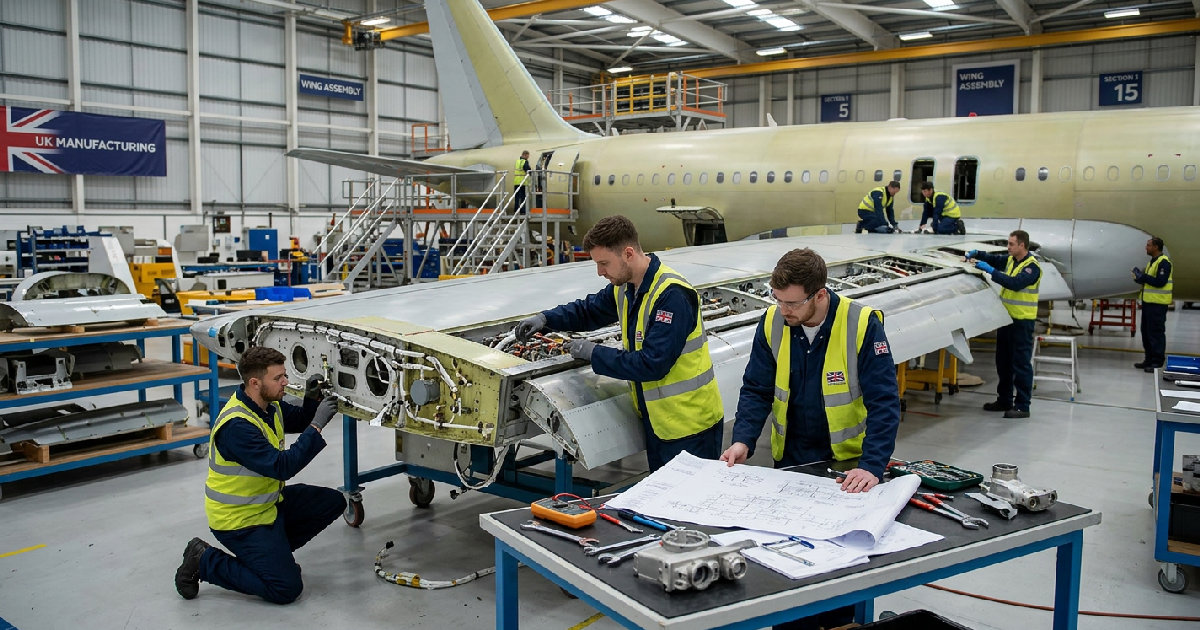
The United Kingdom’s aerospace manufacturing industry has reportedly seen a renewed acceleration in global aircraft deliveries, supported by a broad recovery in the commercial aviation market. Data from industrial trade bodies suggests that British-based manufacturers and their tiered supply chains have contributed to an uptick in narrow-body and wide-body aircraft completions as airlines globally move to replace ageing fleets. This output reflects a push by major original equipment manufacturers (OEMs) to resolve backlogs that have persisted following years of global supply chain volatility.
Engineering firms across the UK’s aerospace clusters, particularly in the South West and the North West, have been scaling production rates to meet this demand. The regional impact of these delivery figures remains substantial, as the UK maintains its status as a Tier-1 partner for major aircraft programmes. These facilities provide high-value components ranging from advanced wing structures to turbine engines. This growth in output comes as industrial players seek to stabilise operations after navigating fluctuations in raw material costs and skilled labour availability.
Industry analysts suggests the current trajectory stems from improved predictability in the global supply chain. While lead times for certain specialty alloys and electronics remain elevated, the overall flow of inventory through UK factories appears to have smoothed. This operational efficiency is vital for maintaining the
infrastructure reliability required to support complex, multi-national manufacturing projects. The ability to meet delivery windows consistently remains a primary differentiator for British engineering firms competing for new long-term contracts.
Production targets and supply chain resilience
The increase in deliveries is driven largely by the single-aisle aircraft segment, which remains the primary driver of global aviation demand. UK plants responsible for wing assembly and engine manufacture have reported higher throughput, enabling airframe manufacturers to approach monthly targets that previously appeared challenging to meet. This acceleration is a result of technical refinements implemented on factory floors to reduce waste and energy consumption during the fabrication process.
And while headline figures focus on completed aircraft, the health of the underlying supply chain is where the real progress is measured. Smaller engineering shops have had to adopt new digital tools to keep pace with the rigorous schedules of the major OEMs. These firms are increasingly looking toward
industrial connectivity and IoT solutions to monitor machine health and predict maintenance needs before they interrupt the production line.
Digital transformation in aerospace engineering
To sustain these delivery levels, the sector is leaning heavily on advanced manufacturing technologies. Additive manufacturing has moved from a prototyping tool to a genuine production method for flight-ready components. This shift allows engineers to design parts that are lighter and stronger than those produced through traditional methods, directly contributing to the fuel efficiency of the final aircraft.
Software integration is also playing an expanding role. From digital twins of the assembly line to AI-driven logistics management, the UK aerospace sector is transitioning into a software and hardware hybrid. This technological pivot ensures that even as
industrial and engineering stocks rally on the back of positive delivery reports, the underlying business models are becoming more resilient to economic shifts.
Sustainability and the future of UK flight
A significant portion of the current output consists of newer, more fuel-efficient models. These aircraft are critical to the aviation industry’s stated goal of reaching net-zero emissions by 2050. UK engineers are currently developing the next generation of ultra-efficient engines and investigating the structural requirements for hydrogen-powered flight. As aircraft are delivered to customers, the older, less efficient units they replace are being retired, leading to a reduction in the global fleet’s carbon footprint.
The challenge for the UK aerospace sector will be maintaining this momentum against increasing global competition. Sustained investment in research and development is required to ensure the UK remains a primary location for high-value aerospace engineering. As order books fill for the coming years, the focus is shifting toward long-term capacity building and the training of the next generation of aeronautical engineers to staff these production floors.