


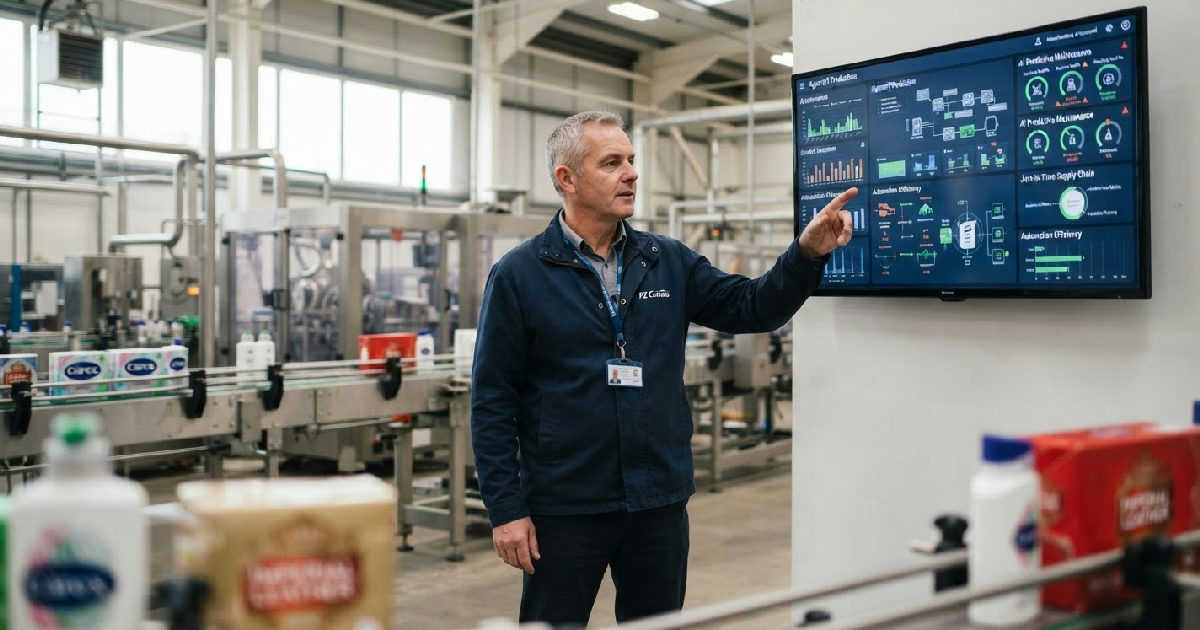
PZ Cussons is investing in digital manufacturing, artificial intelligence (AI) and just-in-time production at its Agecroft site in Greater Manchester. The initiatives aim to improve operational efficiency and help the company respond to changing consumer demand.
Steve Noble, PZ Cussons’ chief supply chain officer and executive committee member, recently outlined the developments.
Automation and just-in-time production at Agecroft
PZ Cussons, whose brands include Carex and Imperial Leather, is using automation to increase flexibility and responsiveness at Agecroft. The site reportedly holds only four hours’ worth of finished-product stock, reflecting its just-in-time production model.
PZ Cussons has continued to use just-in-time manufacturing, while some manufacturers increased inventory buffers during the COVID-19 pandemic. At Agecroft, empty bottles and other packaging reportedly arrive every four hours, making close coordination between packaging deliveries, production and dispatch essential.
The production process combines automated mixing, filling and palletising. Raw materials are stored on-site and mixed into bulk liquids for products such as shower gels and hand washes. Automated lines fill the bottles, while robots handle palletising and prepare products for dispatch. The system is designed to coordinate production with demand and minimise delays.
Maintaining low inventory levels requires reliable machinery and close coordination across the production process. Disruptions can quickly affect output and dispatch schedules. PZ Cussons continues to use this model to manage inventory and make efficient use of storage space.
Digitisation improves production visibility
Although the Agecroft site has used automation for around 20 years, it is now expanding its use of digital systems. Real-time data is being made available to production-line leaders to help them monitor operations and make decisions on the factory floor.
One challenge has been helping employees adapt to new digital systems. Although many staff members have extensive experience at the site and are familiar with automation, new interfaces and data-driven processes require additional training. PZ Cussons is also recruiting new talent with relevant digital skills.
The company runs an apprentice programme, which introduces new individuals with contemporary digital knowledge into the business. Strong relationships with institutions like Manchester Metropolitan University also help PZ Cussons access cutting-edge digital technologies and expertise. This includes bringing in an operations manager whose experience with areas such as AI and robotic manufacturing has broadened the site’s perspective on operational innovation.
AI applications in maintenance and production planning
PZ Cussons uses AI and condition-based monitoring to support predictive maintenance at Agecroft. By tracking machinery performance and identifying deviations from expected operating conditions, the system can alert staff to potential problems and help them schedule maintenance before equipment fails. This can reduce unplanned downtime, which can disrupt a just-in-time production system.
AI is also being used to support supply-chain planning. Improved demand forecasts can help the company align production schedules with expected orders and product requirements. The impact on overall equipment effectiveness (OEE) and production capacity will depend on how these systems are implemented and used.
PZ Cussons is also upgrading robotics across key production lines. At the same time, Agecroft is developing the capacity to manufacture emulsions and other formulations in addition to its traditional range of thinner liquid products.
Local production and sustainability
Although just-in-time production can leave manufacturers more exposed to supply disruptions, PZ Cussons says it has spent the past decade building flexibility into its Agecroft operations. One part of this approach is to focus the UK facility primarily on the domestic market, allowing production to respond to changes in local demand.
Direct communication between the factory, marketing team and commercial team helps the site respond to changes in customer demand. This coordination can allow production schedules to be adjusted in real time. Steve Noble has also highlighted the need to respond to changing consumer preferences.
PZ Cussons also reports sustainability initiatives at Agecroft, including measures to manage Scope 1 and Scope 2 emissions, reduce waste and lower energy consumption. The site uses tracking systems to monitor its environmental performance.
The company is increasing the use of recycled polyethylene terephthalate (rPET) in packaging for products such as Original Source and Carex. This can reduce reliance on virgin plastic and support a circular economy.
PZ Cussons has also joined the UK Packaging Pact, an industry initiative focused on sustainable packaging. The article should specify the company’s commitments under the pact and explain how these relate to packaging design, material use or recyclability.
Manufacturing capabilities and future growth
PZ Cussons aims to grow its brands across its markets, including Carex in the UK, Stella in Nigeria, Cussons Baby in Indonesia and Morning Fresh in Australia. These brands form part of the company’s regional commercial strategies.
Steve Noble identified three priorities for future growth: strong local brands, effective go-to-market capabilities and manufacturing scale.
PZ Cussons’ commercial teams work with customers and monitor consumer needs across key markets. The company can use these insights alongside Agecroft’s production capacity to inform manufacturing and commercial decisions.
Combining market insight, distribution capabilities and manufacturing capacity may help PZ Cussons respond to changing consumer demand. The extent to which this approach supports growth will depend on market conditions and the company’s execution.
The digital initiatives at Agecroft are intended to support manufacturing performance through AI-assisted planning and maintenance, as well as upgrades to robotics. Their impact will depend on how effectively the systems are integrated into production and how well they support the company’s operational and commercial requirements.
