


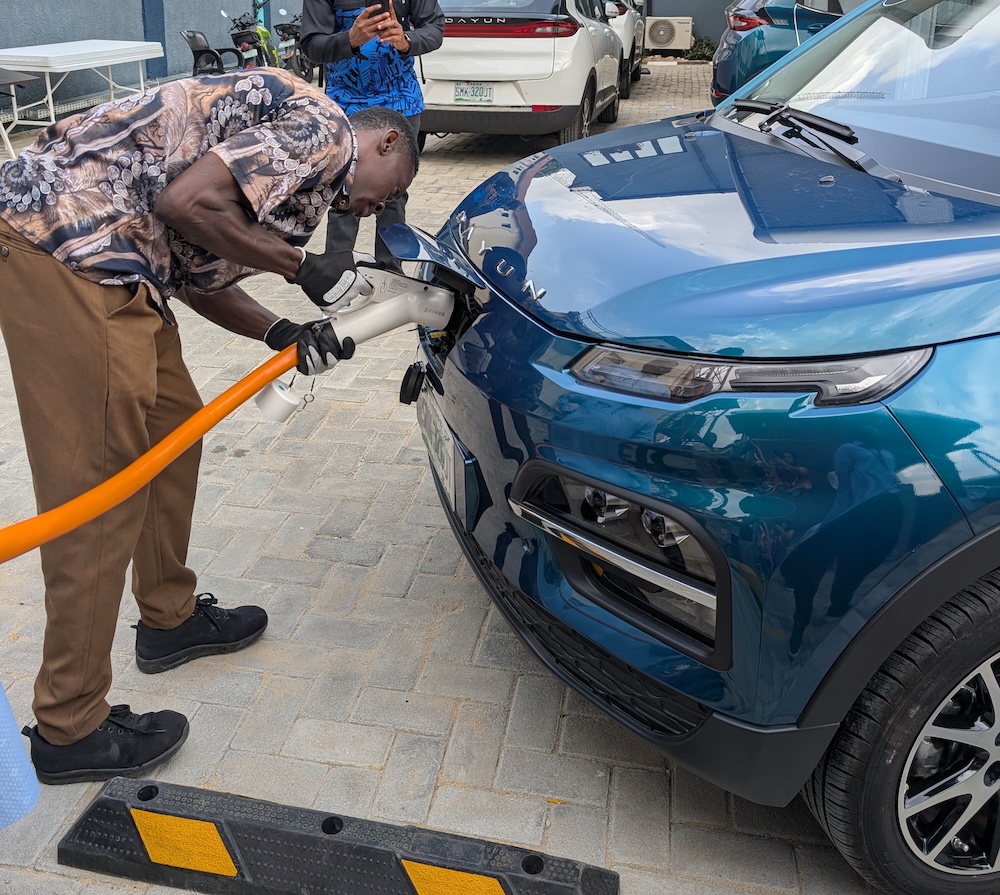
Nigeria’s plans to establish a local electric vehicle sector have been significantly boosted after Hybrid Motors Nigeria won financial pledges totaling around $95 million for EV production and charging infrastructure projects.
The investment package, one of the largest private-sector pledges to Nigeria’s burgeoning electric mobility industry, is intended to help build car production facilities in Lagos and Abuja, as well as fund a statewide charging network to promote EV adoption.
The corporation obtained the pledges through two partnerships struck in China.
The first partnership, with automotive engineering firm Launch Design Shanghai, aims to create electric car manufacturing facilities in Nigeria.
A second cooperation will help to implement a large-scale charging infrastructure in critical urban areas.
According to Hybrid Motors Nigeria, around $75 million would be spent in manufacturing operations, with an additional $20 million to support the charging network, Nairametrics reports.
The program is consistent with Nigeria’s overall attempts to boost domestic car production and reduce dependency on imported vehicles.
What distinguishes the project from many other car assembly companies in Nigeria is its emphasis on local engineering and product development.
Rather than relying exclusively on assembling imported components, Hybrid Motors intends to build a specialized research and development facility to help the design and adaptation of electric cars for Nigerian circumstances.
The company’s main EV brand, Acely, is being developed with the goal of delivering vehicles that are appropriate for local roads, climatic circumstances, and consumer demands.
See here: South Africa to host a Chinese automobile company’s EV production for Africa
Industry experts see such R&D expenditures as an important step toward creating a long-term automobile manufacturing environment capable of encouraging technology transfer and local competence.
At the heart of the project are two proposed manufacturing facilities with a combined yearly production capacity of 70,000 automobiles when completely constructed.
The main plant, located in Lagos’ Lekki Free Trade Zone, is scheduled to produce up to 50,000 automobiles per year, while a second facility in Abuja’s Centenary City Free Zone would have a capacity of 20,000 vehicles.
Construction appears to have commenced, with the business planning for the facilities’ ceremonial opening in the first quarter of 2027.
Production is expected to ramp up gradually, beginning with around 7,000 cars in the first year and expanding over the next decade.
Beyond car manufacture, the initiative addresses one of Nigeria’s most significant impediments to EV adoption: charging infrastructure.
Hybrid Motors intends to build 110 high-capacity charging stations in Lagos and Abuja over the next four years. Each station is scheduled to include 12 charging bays capable of serving up to 24 vehicles at the same time, as well as fast-charging equipment that would power automobiles in around 30 minutes.
