


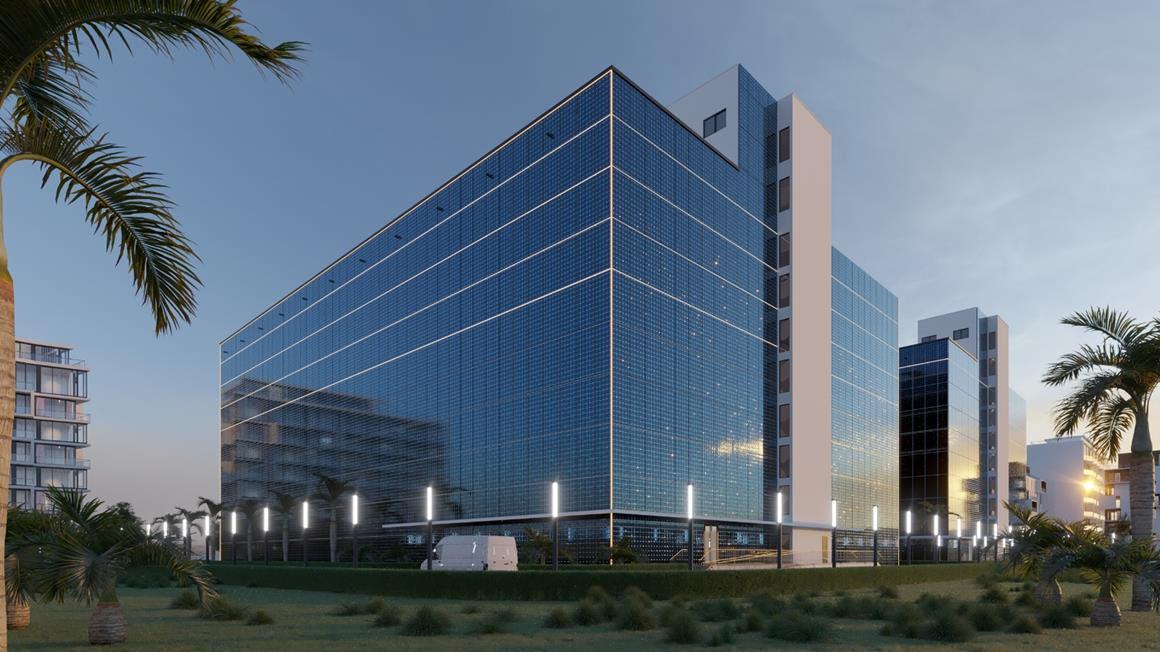
With the opening of the Kasi Cloud LOS1 Data Center, which is now the biggest of its kind in West Africa and the nation’s first hyperscale AI-ready data center, Nigeria has made a major stride toward the future of digital infrastructure.
The recently opened facility is intended to meet the increasing need for artificial intelligence and cloud computing technologies, putting Nigeria in a better position to contribute more to the quickly rising global digital economy.
See also: Equinix bets big on Nigeria with $22 million data centre
Beyond its technological potential, the initiative is anticipated to lower the nation’s reliance on foreign digital services, enhance domestic internet infrastructure, and generate jobs.
The LOS1 facility has four storeys and eight data halls, with two on each floor, ThisDay reports.
Depending on the arrangement, each level may hold 400 to 760 server racks, with extra high-density halls designed exclusively for AI tasks.
The complex was designed with extension in mind, allowing capacity to rise over time as demand grows.
The data center runs on a 100-megawatt power grid, with each level receiving eight megawatts of dedicated power supply.

It also includes several fiber networking channels, two meet-me rooms, and cooling systems optimized for large-scale AI activities.
The facility serves as the foundation of Kasi Cloud’s broader digital ecosystem, which aims to improve communication between cloud providers, telecom carriers, and companies while assisting organizations in scaling effectively.
Without significantly depending on foreign infrastructure, customers may connect directly to cloud environments and internet exchanges through its integrated infrastructure platform.
Johnson Agogbua, the CEO and co-founder of Kasi Cloud, stated during the reveal that artificial intelligence is already revolutionizing a variety of global industries, including finance, healthcare, manufacturing, agriculture, and education.
He emphasized that if Africa wants technology that accurately represents African conditions, it must develop its own AI infrastructure.
Agogbua maintained that AI systems are formed by the data, culture, and views on which they are taught. He believes that depending only on servers and infrastructure located outside of Africa might result in the importation of technology designed around foreign assumptions and objectives rather than local ones.
He also disclosed that Nigerian enterprises now spend an estimated $850 million per year on foreign cloud infrastructure.
“When we were planning the launch of Kasi Cloud Data Centres, we made a deliberate decision to make sure that the custodians of our great cultures were present to witness it not as symbols, not as decoration, but as a statement of what we believe this infrastructure must ultimately serve, because technology without culture is hollow, and infrastructure without identity has no soul,” Agogbua further said.
For him, facilities like the Kasi Cloud LOS1 Data Centre provide a potential to retain more digital investment in the country while also enhancing Nigeria’s technical independence.
The center’s debut comes as governments around the world race to build infrastructure capable of meeting the expanding needs of AI-powered services, cloud storage, and data processing.
