


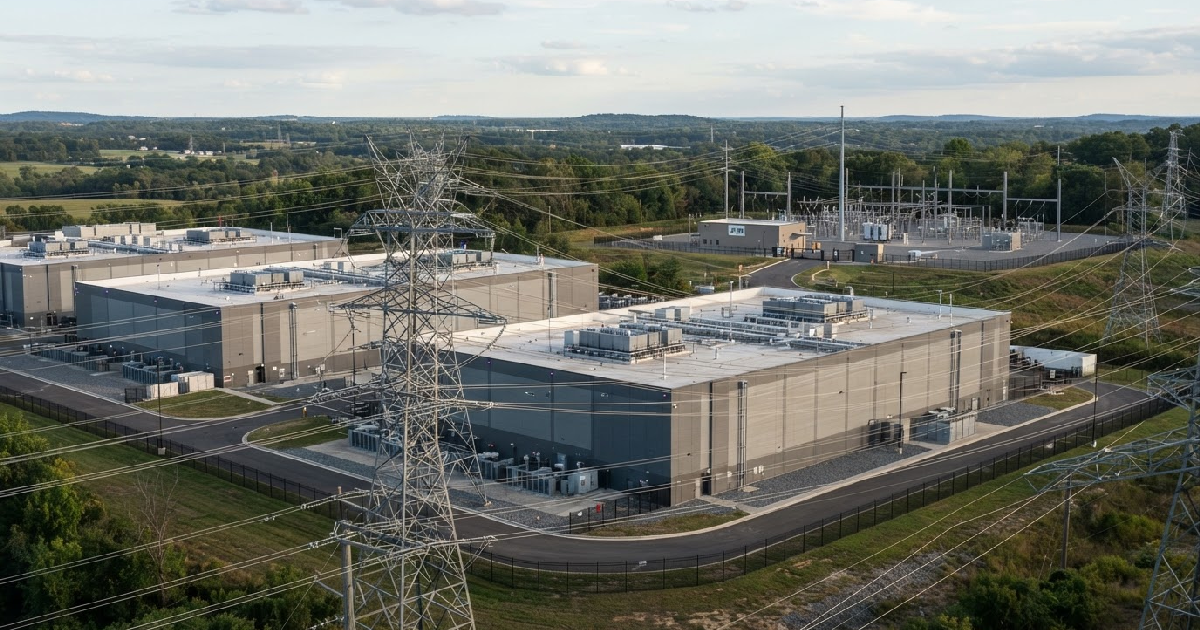
AI data centers can trigger voltage spikes on power grids, as demonstrated by a recent incident involving a fallen power line near Washington, D.C. C. caused a voltage spike on the PJM grid, with AI data centers identified as a factor that can trigger such events.
The rapid shift in demand led to a substantial electricity surplus, taking 11 minutes for grid stabilisation instead of the typical few seconds for such an event. This disruption highlighted a growing AI data center problem, underscoring the urgent need for more resilient power infrastructure and smarter grid integration.
Northern Virginia’s intensifying grid challenge
The incident unfolded in Northern Virginia, home to the world’s highest concentration of data centers and situated within PJM’s territory. When the power line dropped, data centers designed for split-second fail-safes switched to backup power. This collective action removed 3.1 gigawatts of load from the grid in about 30 seconds, according to PJM data.
Such a massive, sudden drop in demand created a significant imbalance between supply and consumption. At its peak, the PJM grid registered an extra 3.49 gigawatts of electricity. This surplus caused voltage spikes, leading to flickering lights from Northern Virginia to Chicago, reported Ting Labs, which monitors grid data.
Electrical grids must operate in near-perfect balance, with supply and demand closely matched. Small fluctuations are tolerable, but if they grow too large, they trigger failsafes within the grid or individual facilities, forcing disconnections.
Ricardo de Azevedo, CTO at ON.Energy, described the event to TechCrunch, stating it’s “the canary in the coal mine.” He warned that these sorts of incidents, involving large, concentrated loads like data centers, are “happening more and more.”
Escalating scale of grid disruptions
This 2026 incident was not isolated. It echoed a similar disruption on the PJM grid two years prior. That earlier event saw 60 data centers disconnect simultaneously, pulling 1.5 gigawatts of load from the grid.
The recent mass disconnection was twice the magnitude of the 2024 occurrence, indicating a rapidly escalating issue for grid operators. Data centres accounted for about 6% of PJM’s total load in 2024, according to Synapse Energy Economics.
AI data centers reshape power demand dynamics
The sheer scale of data center operations, particularly those supporting artificial intelligence workloads, poses an unprecedented challenge to grid stability. Projections indicate data centre load could rise to an astonishing 24% of PJM’s total by 2040.
This exponential growth in power consumption means grid operators can no longer treat data centers as isolated loads. Their aggregated behaviour now has system-wide implications, especially given their concentrated geography in hubs like Northern Virginia.
Existing power line capacity in Northern Virginia already faces energy bottlenecks. This struggle to meet demand could delay new data center development into 2026, further highlighting the strain on infrastructure.
The critical impact of rapid load shifts
When data centers sense a voltage dip, their immediate, automated response is to disconnect and switch to backup power. This self-preservation mechanism, when executed en masse, paradoxically exacerbates grid instability. It transforms a localized supply dip into a wider demand vacuum.
Ali Zain Banatwala, senior market models specialist at the Independent Electricity System Operator, highlighted this issue to TechCrunch. He explained, “We need to figure a way for these loads that are located next to each other to sequentially either disconnect or reconnect.” A more ordered process would empower grid operators to implement robust pre-emptive procedures.
Technical solutions for enhanced grid resilience
Addressing this AI data center problem requires a multi-faceted approach, starting with improved grid compatibility. One promising avenue involves building data centers with enhanced capabilities to “ride through” grid disturbances. This means facilities absorbing fluctuations rather than instantly disconnecting.
ON.Energy is developing such solutions, offering uninterruptible power supply (UPS) systems designed for entire data center campuses. These cover not just servers but also chillers and other essential equipment. The company essentially hides the data center behind a bank of batteries and sophisticated power conversion technology.
ON.Energy’s system presents the grid with a consistent, well-behaved load, eliminating the peaks and valleys from individual data center components. It can absorb power fluctuations, using excess energy to charge its batteries, or dispatching stored power if the grid supply dips. Its millisecond response time prevents voltage sags or surges.
Ricardo de Azevedo confirmed that ON.Energy is installing three gigawatts worth of its systems across four different data center campuses. This represents a significant investment in stabilising the interface between high-demand computing infrastructure and the existing power network.
Regulatory shifts demanding grid compatibility
Beyond individual technical solutions, grid managers are also acting decisively. The Electric Reliability Council of Texas (ERCOT), for instance, is moving to mandate that large loads, including data centers, incorporate “ride-through” capabilities. This regulatory push signals a broader recognition of the problem.
Strategic integration for future energy demands
The long-term solution extends beyond technical fixes at the individual data center level. It requires comprehensive planning for where and how these facilities integrate into the grid. This includes aligning data center locations with robust transmission lines, existing substations, and areas with spare capacity.
Data centers can also contribute by exploring options to back local energy projects. This might involve solar, wind, or even gas plants built specifically for their needs. Integrating energy storage solutions can also help manage peak hours and further smooth their demand profile. Ensuring upgrades to power infrastructure become a priority is key.
Another strategic approach involves optimising demand timing. Data centers could shift non-urgent computational tasks to off-peak hours or curtail usage during periods of extreme grid stress. This flexibility would make them more active, responsive participants in grid management.
Fair cost sharing mechanisms are also essential for infrastructure upgrades. Large-scale projects like data centers should contribute to funding new transmission lines or equipment. Regulators can set rates to protect smaller consumers from cost spikes driven by significant industrial developments.
Addressing the challenges now is vital as data centers become increasingly integral to the digital economy. The focus on proactive measures and advanced technological integration will define the future reliability of the power grid, ensuring it can support the demands of growing computational needs.
