


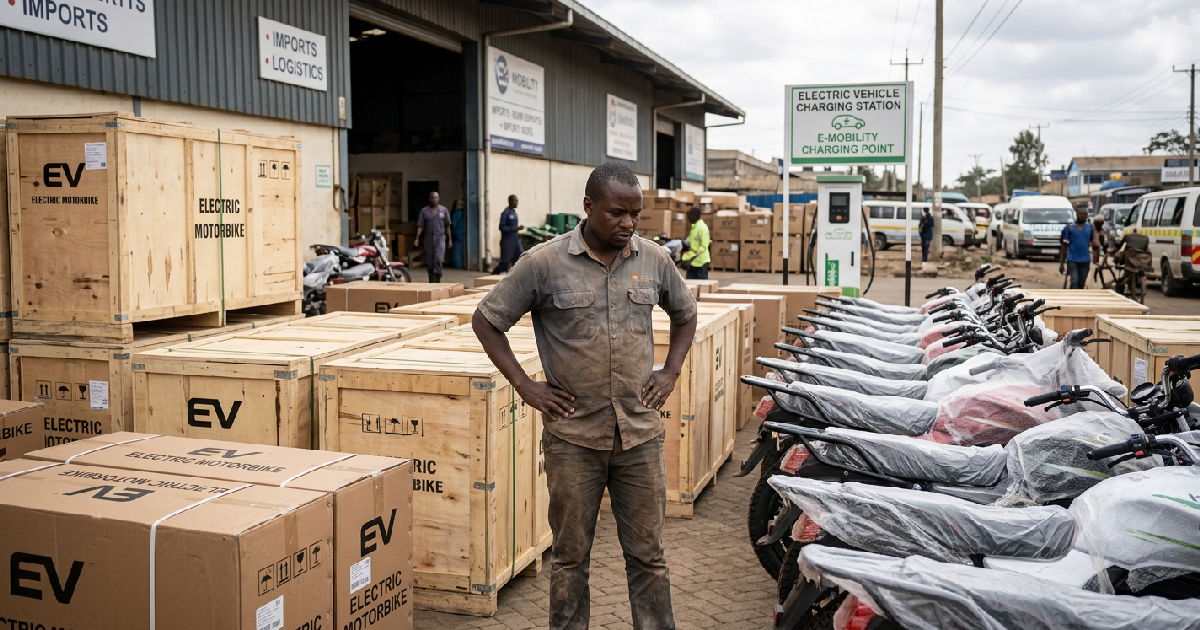
Kenya’s nascent electric vehicle industry is confronting a sudden shift in its fiscal environment following a High Court ruling that has effectively overturned several key tax exemptions previously enjoyed by the sector. The decision, which targets provisions within recent Finance Acts, threatens to increase the landed cost of electric motorcycles and cars, complicating the government’s ambitious plans to transition the national transport network away from fossil fuels.
The ruling comes at a delicate time for local assemblers and importers who had banked on long-term tax stability to scale their operations. Industry players, including major e-motorcycle startups and charging infrastructure providers, now face the prospect of revised excise duties and value-added tax (VAT) applications that could erode the price competitiveness of electric models against traditional internal combustion engine (ICE) vehicles. While the government remains committed to its green energy transition, the legal setback has introduced a layer of financial uncertainty that may deter immediate capital investment.
And while the immediate impact is fiscal, the broader implications touch on the reliability of the nation’s technological infrastructure. Much like how Africa digital payments must shift focus to infrastructure reliability to ensure long-term growth, the e-mobility sector requires a predictable regulatory and fiscal framework to sustain its momentum. Without such stability, the transition to sustainable transport could stall before reaching critical mass.
Assessing the Legal Blow to Green Logistics
The High Court’s decision centered on the procedural validity of specific tax amendments, concluding that certain exemptions were not enacted in strict accordance with constitutional requirements for public participation. For many e-mobility firms in Nairobi and Mombasa, this means the specialized rates for lithium-ion batteries and completely knocked-down (CKD) kits may no longer apply in their current form. The suddenness of the ruling has left logistics companies and delivery fleets scrambling to reassess their procurement budgets for upcoming cycles.
Local assembly plants, which have seen growth in recent years, are particularly vulnerable. These facilities rely on imported components that were previously zero-rated or subject to reduced duties. If these components are now reclassified under standard automotive tax brackets, the retail price of an electric motorbike is expected to rise, according to industry observers. Such an increase would reportedly narrow the cost-saving benefits for riders who switch to electric to save on fuel and maintenance.
Market Sentiments and Private Sector Hesitation
Investors who recently directed capital into Kenyan e-mobility are reportedly reviewing their expansion timelines. The sector has been a primary destination for venture capital, with Kenya often cited as a regional leader in the “battery-as-a-service” model. However, the prospect of fluctuating tax obligations makes it difficult for startups to provide clear projections on returns. The technology is already capital-intensive, requiring heavy expenditure on charging stations and battery swapping hubs across urban centers.
The growth of this sector is often compared to broader technological shifts in the region. For instance, the African IoT sector expands through industrial connectivity, providing the digital backbone for many of these smart vehicles. Linking hardware with software is essential for fleet management, but those software-side gains are easily wiped out if the physical vehicle becomes too expensive for the average rider to lease or own.
Government Response and Potential Revisions
The Kenyan Treasury and the Ministry of Energy are expected to seek a legislative fix to address the court’s concerns while attempting to preserve the incentives. Officials have hinted that a new set of regulations may be introduced to formalize the e-mobility tax regime in a way that satisfies legal scrutiny. For now, however, the Kenya Revenue Authority (KRA) is duty-bound to follow the court’s lead, which could result in a temporary period of higher tax collections from the transport sector.
The government’s “National E-Mobility Policy” had originally targeted a significant portion of all newly registered vehicles to be electric in the long term. Achieving this goal requires more than just tax breaks; it requires a robust power grid. Recent efforts to stabilize the energy supply, such as when the Tinubu administration committed to stable electricity for Nigerians, mirror similar challenges in Kenya where the e-mobility rollout is contingent on a consistent and affordable supply of renewable energy.
Future Outlook for Kenyan EV Startups
Despite the hurdle, many industry leaders remain cautiously optimistic. The high cost of imported petroleum continues to be a strong natural incentive for electrification. Many delivery companies have already moved past the pilot phase and have integrated numerous electric units into their operations. These firms are now looking at ways to optimize battery life and improve domestic component manufacturing to mitigate the impact of import duties.
So, the next few months will likely be a period of intense lobbying. Trade associations representing electric vehicle manufacturers are expected to present a unified front to the parliament, arguing that the e-mobility sector is not just about transport, but about technological sovereignty and carbon credits. If a middle ground is found, Kenya could still maintain its status as a regional hub for green transport, but the margin for error has certainly narrowed.
