


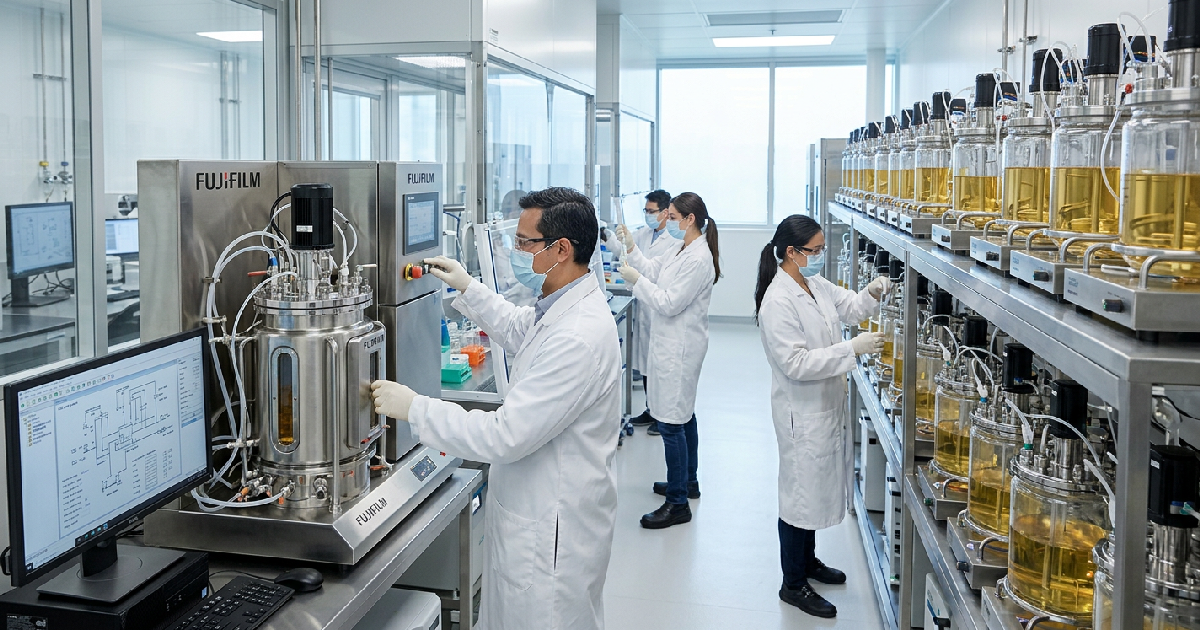
FUJIFILM Cellular Dynamics Inc. (FCDI) opened its new 175,000-square-foot headquarters and manufacturing facility in Madison, Wisconsin, on 19 May 2026, marking a major expansion in the global supply of induced pluripotent stem cells (iPSCs). The facility, located at 8402 Excelsior Drive, represents a massive scale-up from the company’s previous Science Drive site and aims to quadruple production capacity for human cells used in drug discovery and regenerative medicine. This inauguration follows a $200 million strategic investment by Fujifilm Corporation intended to meet surging demand from the pharmaceutical industry and academic researchers.
The Madison campus serves as a sophisticated hub for iPSC development, featuring three dedicated cleanroom suites and specialized laboratories for process development. By quadrupling its manufacturing footprint, FCDI can now produce billions of cells daily, ranging from cardiovascular and neural tissue to liver and intestinal epithelial cells. This expansion is critical for the “iCell” product line, which provides the high-volume, reproducible human cells necessary for toxicity testing and translating stem cell science into clinical applications.
Fujifilm is positioning this facility as a cornerstone of its wider life sciences strategy, which has seen the group invest more than $10 billion in the bio-contract development and manufacturing organisation (CDMO) sector over the past 15 years. Toshihisa Iida, Director and Corporate Vice President of Fujifilm Corporation, stated that the completion of the Madison site comes at a critical time as iPSCs set new industry standards for regenerative therapies. The move reflects a broader trend of industrial and engineering stocks rally as investors pivot towards high-tech manufacturing infrastructure.
Advanced manufacturing capacity for human stem cells
The scale of the Madison facility addresses a persistent bottleneck in the biotechnology sector: the reliable, high-volume production of human cells that behave consistently across different drug trials. Tomoyuki Hasegawa, President and CEO of FUJIFILM Cellular Dynamics, noted that the facility can now take a standard blood draw and develop stem cells into virtually any cell type in the human body. This capability allows researchers to study how new drugs interact with human hearts, brains, or livers without relying solely on animal models.
Beyond internal product lines, the facility significantly bolsters FCDI’s contract manufacturing services. The site handles the entire pipeline from investigational drug manufacturing to full-scale commercial production, providing a “lab-to-market” pathway for external partners. Such infrastructure is becoming increasingly vital as the global stem cells market, valued at $15.10 billion in 2024, is projected to climb to nearly $29 billion by the end of the decade.
Technology and cleanroom infrastructure
Housing more than 200 employees, the campus includes a dedicated center of excellence for gene editing. This allows for the precise modification of iPSC lines to model specific diseases or enhance therapeutic properties. The facility’s design emphasizes modularity, ensuring that as new approach methodologies (NAMs) in drug discovery evolve, the production lines can adapt to new cell types or higher purity standards required by regulators.
This level of precision in biotechnology mirrors the technical rigour seen in other high-stakes infrastructure projects, such as the Nigeria-Niger gas pipeline technical plans, where engineering standards dictate long-term project viability. At the Madison site, the integration of automated monitoring within the cleanrooms ensures that the environmental conditions required for “reproducible” cell growth are maintained 24 hours a day.
Economic impact on the Wisconsin biohealth hub
The opening of the FCDI headquarters cements Madison’s status as a leading cluster for biohealth technology. This growth is supported by broader public-private initiatives, including the Wisconsin Biohealth Tech Hub, which secured around $49 million in federal funding in 2024. Local economic projections suggest that this regional industrial surge will generate over 30,000 direct jobs across the state within the next ten years, with FCDI itself planning to double its workforce to 400 employees by 2030.
Fujifilm’s $200 million injection into this specific site is part of a larger $1 billion global commitment to life science facility growth. By anchoring its iPSC headquarters in Wisconsin, the company maintains its two-decade history in the city while gaining the floor space needed to serve a global clientele. The concentration of talent in Madison—drawn from local research institutions and the existing biotech corridor—provides the human capital necessary to operate such a complex facility.
Future outlook for iPSC drug discovery
As pharmaceutical companies move away from traditional animal testing toward more human-centric models, the demand for iPSC-derived cells is expected to grow. The Madison facility is specifically designed to support this transition by offering “off-the-shelf” human cell models for the gut, immune system, and cardiovascular system. These models allow for earlier identification of potential side effects, potentially saving billions in failed clinical trials.
The industrialisation of stem cell production marks a shift from laboratory-scale science to large-scale bio-manufacturing. While many regions are looking to expand through industrial connectivity and automation, Fujifilm’s investment shows that specialized biological manufacturing is becoming just as essential as traditional electronics or automotive production. FCDI’s ability to produce billions of cells daily ensures that the next generation of regenerative medicines will have the raw materials required for global distribution.
