


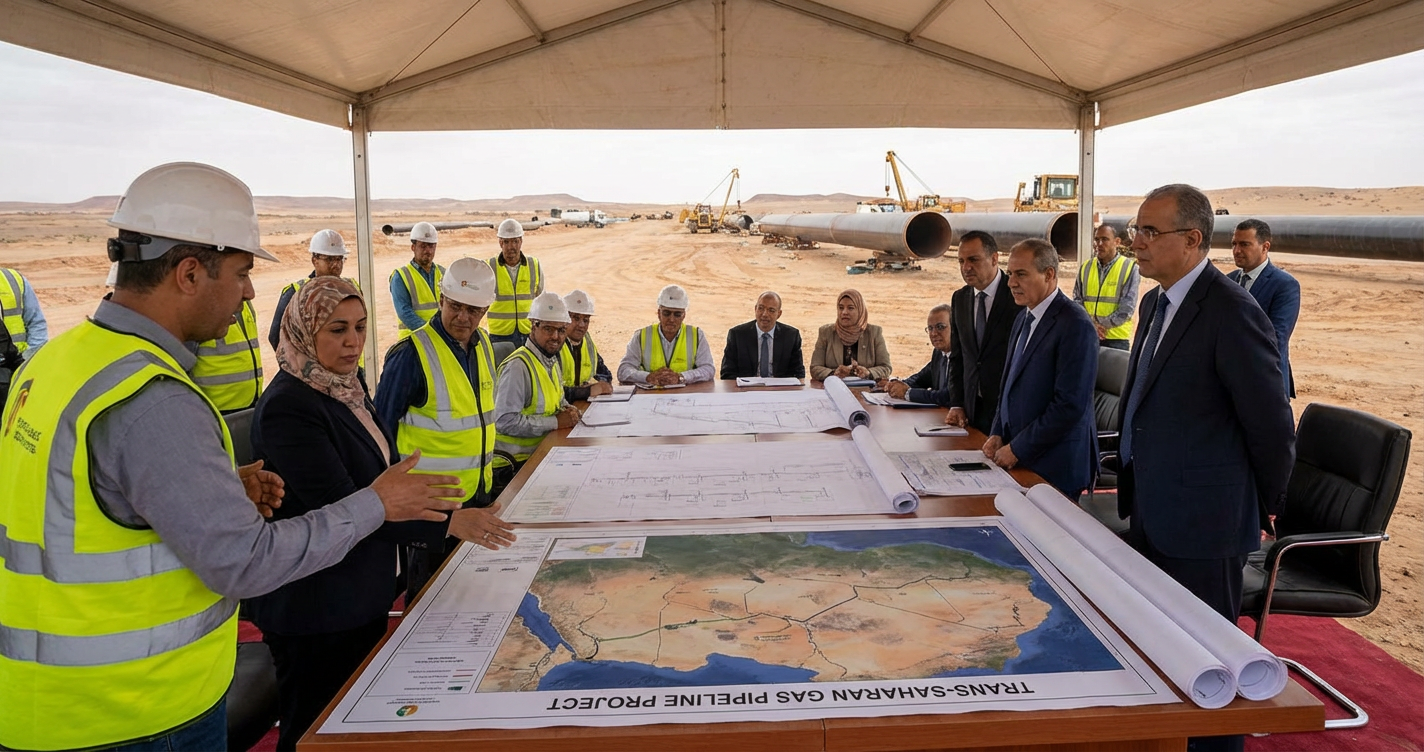
Technical experts and representatives from Libya’s Ministry of Oil and Gas recently held a series of coordination meetings to move forward with the proposed Nigeria-Niger-Libya Gas Pipeline. The sessions focused on the engineering requirements and logistical frameworks necessary to establish a trans-Saharan energy corridor that could connect West African resources with the Mediterranean and, ultimately, European markets.
The meeting marks an effort by Libyan authorities to position the country as a primary transit hub. By engaging in these technical discussions, the committee is addressing the structural demands of a pipeline intended to bridge the distance between West African gas fields and the North African coast. For Libya, the project represents an opportunity to modernize its domestic energy infrastructure and integrate more deeply with regional economic partners through substantial engineering works.
Engineering Challenges and Technical Coordination
The Nigeria-Niger-Libya Gas Pipeline is a massive industrial undertaking. Spanning a vast distance across varied and often difficult terrain, the project requires a high level of cross-border technical synergy. During the recent committee sessions, engineers and ministry officials reportedly reviewed preliminary surveys and environmental assessments necessary for the pipeline’s northern trajectory.
A central focus of these discussions is the reliability of the proposed physical and digital infrastructure. Building a pipeline of this scale requires specialized compression stations and advanced leak detection systems. This emphasis on stability mirrors broader trends in the region where Africa digital payments infrastructure reliability has become a benchmark for how essential services must be hardened against both physical and operational threats.
Integrating Regional Energy Networks
Libya’s involvement is a strategic move to utilize its existing pipeline network that connects its coast to Europe. By linking to these established exit points, project backers hope to control capital expenditure by using existing infrastructure where possible. However, the technical committee must first determine if the current Libyan segments can handle the significant increase in pressure and volume that a tri-national pipeline would introduce.
The engineering teams are also looking at how the project can stimulate local industrial growth. Much like how the African IoT sector expands through industrial connectivity, the construction of a trans-continental gas line provides a foundation for ancillary industries, including localized power generation and chemical processing plants along the route.
Geopolitical and Economic Incentives
The drive behind the project is fueled partly by a regional desire to diversify energy export routes. Nigeria, which is widely recognized as holding among the most substantial gas reserves on the continent, has long sought viable land-based routes to reach northern markets. While other competing proposals exist, such as routes via Algeria, Libyan authorities are making a push to demonstrate that their route offers a competitive technical and logistical alternative.
For the Ministry of Oil and Gas, the committee’s work involves harmonizing regulatory frameworks and technical standards. This coordination is intended to ensure that if and when construction reaches a peak, there are fewer bottlenecks at various border crossings. The focus remains on establishing a reliable reputation for the corridor in the global energy market.
Infrastructure Security and Long-term Management
Beyond the mechanical engineering of the pipes, the committee is tasked with addressing the security of the infrastructure. The Sahara and Sahel regions present logistical and security risks that require sophisticated monitoring technology. Reports from the meetings suggest that a multi-layered protocol, involving remote monitoring systems and ground-based response strategies, is a core part of the planning phase.
This focus on modernized project management reflects a broader shift toward technology-driven solutions in state-led projects. We see similar patterns in other areas; for instance, as Enugu State builds smart schools to overhaul education, it demonstrates a trend of utilizing specialized infrastructure to solve traditional logistical hurdles.
Future Milestones for the Pipeline Project
The next phase for the committee involves moving from conceptual engineering into more granular design work. This will involve detailing the route and specifying the materials required to withstand the harsh environment of the desert. While the timeline for completion is not yet finalized, the frequency of these technical meetings suggests a renewed effort by the Libyan authorities to advance the project amid competition from alternative energy corridors. Proper financial modeling and environmental clearances remain the primary hurdles before major construction can be commissioned.
