


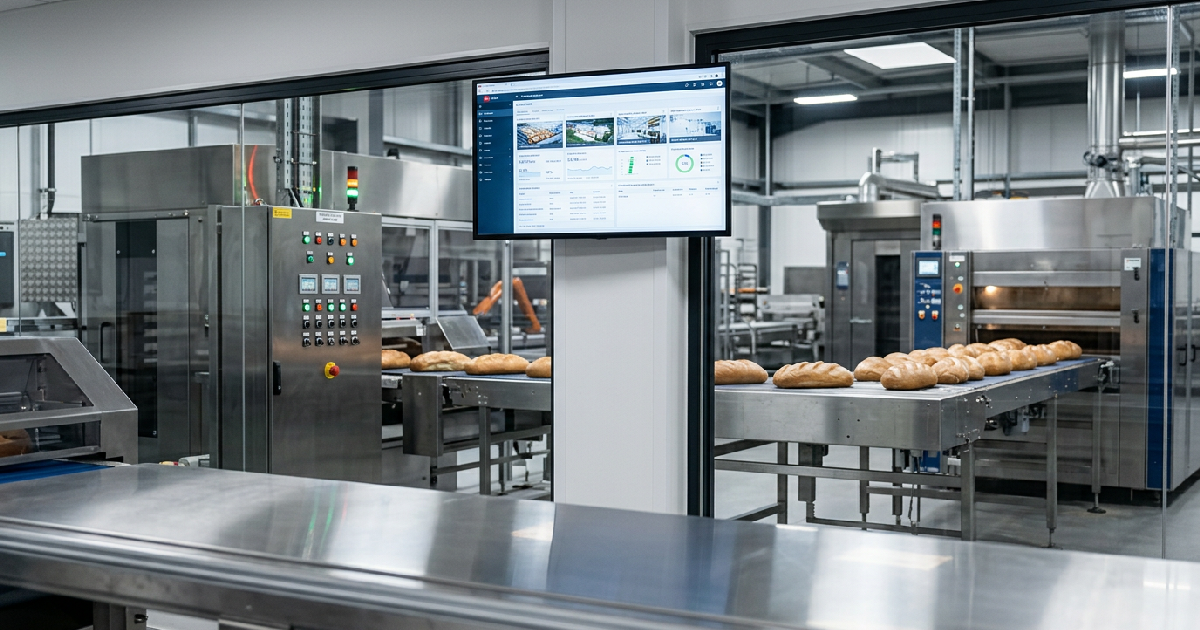
Finsbury Food Group Chief Operating Officer Lucy Wills is overseeing a multi-phase digital transformation across its ten sites to establish a “connected bakery” model. This initiative standardises disparate legacy systems into a unified Infor M3 ERP platform, alongside a strategic shift toward data-driven operational excellence and direct-to-consumer expansion.
The structural overhaul follows the acquisition of the group by asset management firm DBAY Advisors and the subsequent 100% acquisition of Flower & White Ltd on April 30, 2026.
The transformation marks a significant departure from the company\’s origins as a collection of independent specialist bakeries. By centralising data, Lucy Wills aims to synchronise a sprawling supply chain catering to major UK retailers and licensed brands such as Disney and Mars.
The engineering of this “connected” infrastructure is designed to solve siloed information, where different plants previously operated on conflicting performance data or manual spreadsheets.
The transition to a cloud-based environment for the Infor M3 ERP system serves as the technical backbone of the strategy for the 3,500-strong workforce.
Establishing a “high-quality source of data” allows the group to integrate new acquisitions, such as the 70% stake in Lola’s Cupcakes acquired on August 15, 2025, into the corporate framework within a year. Such projects show how manufacturers pivot to Manufacturing Execution Systems to gain plant agility and long-term competitiveness.
Standardising engineering standards through the F1 framework
Central to the operational shift is the internal “F1” excellence programme, which links performance data to four pillars: performance, people, automation, and sustainability. This programme provides the governance and daily routines required to ensure best practices identified at one site scale across the others. It moves the business away from a reliance on individual experience toward a system of shared technical standards.
Engineering teams must ensure these digital systems translate into floor-level efficiency. The F1 framework dictates that automation projects cannot happen in isolation; they must pair with workforce development to ensure operators can manage complex machinery. This integrated approach ensures that technological investment directly supports the people on the factory floor, preventing the underutilisation of new systems.
The F1 programme also integrates sustainability directly into the productivity metrics. Infrastructure investments, including solar deployment and carbon-reduction technology, are tracked using the same performance data as quality and waste. This ensures environmental targets are treated as core engineering requirements for an efficient manufacturing facility, rather than secondary corporate goals.
Upgrading HR and supply chain visibility
The digital transformation extends into the administrative layer through the implementation of the Dayforce HCM platform. This unified system replaced an end-of-life payroll setup, giving employees self-service capabilities and reducing the administrative burden on site managers. The goal was to remove manual processes that often slowed down decision-making at the plant level.
Finsbury Food Group also adopted a scalable planning solution from RELEX Solutions to overhaul supply chain visibility. This move targets inefficiencies in production planning by enabling Integrated Business Planning (IBP). The group can now better predict demand and manage materials across its UK and European sites, including operations in Poland and a sales business in France.
Maintaining specialty craft through industrial precision
A primary engineering challenge for Lucy Wills involves maintaining “specialty bakery” status while increasing industrial output. Unlike large-scale plant bread facilities, Finsbury focuses on complex products like celebration cakes and artisan loaves. Scaling this requires a careful balance between automated precision and the specialist skills traditional baking demands.
The company addresses this through the Finsbury Academy, which focuses on training, including engineering apprenticeships and graduate programmes to preserve specialist knowledge. This ensures the workforce can interpret data from the new ERP and HCM systems, turning digital insights into physical line improvements. This strategy mirrors how the cobot market is expanding as collaborative automation becomes a standard feature on modern shop floors.
Investing in people ensures that technology serves the maker, rather than replacing the expertise required for luxury bakery products. This human-centric approach is vital for cultural integration during acquisitions, as it provides a common technical language for teams across different sites. By building capability, Finsbury ensures its 3,500 employees are active participants in the continuous improvement cycle.
Future outlook for the integrated bakery model
The group is doubling down on its direct-to-consumer (DTC) expansion, supported by the acquisition of Lola’s Cupcakes. With its 45 kiosks and lockers located in London transport hubs, Lola’s provides a template for bypassing traditional retail. This model requires tight integration between online platforms and backend manufacturing systems, as demonstrated by the recent WordPress multisite framework relaunch on June 04, 2025.
Cybersecurity has emerged as a top priority for operational continuity, as highlighted by the group on June 08, 2026. As data becomes the primary driver of the business, protecting it from disruption is now a top-tier engineering concern. The company is integrating digital safety into its culture, treating it with the same rigour as physical health and safety on the production floor.
The appointment of Neil Rockliff as Group Product and Innovation Director on February 18, 2026, signals a push for new ways to apply this infrastructure to product development. With the 20-year Disney licensing collaboration renewed on May 07, 2026, the group has a stable platform for data-led innovation.
The journey from disparate bakeries to a unified digital manufacturer offers a roadmap for other industrial firms managing fragmented legacy systems.
