


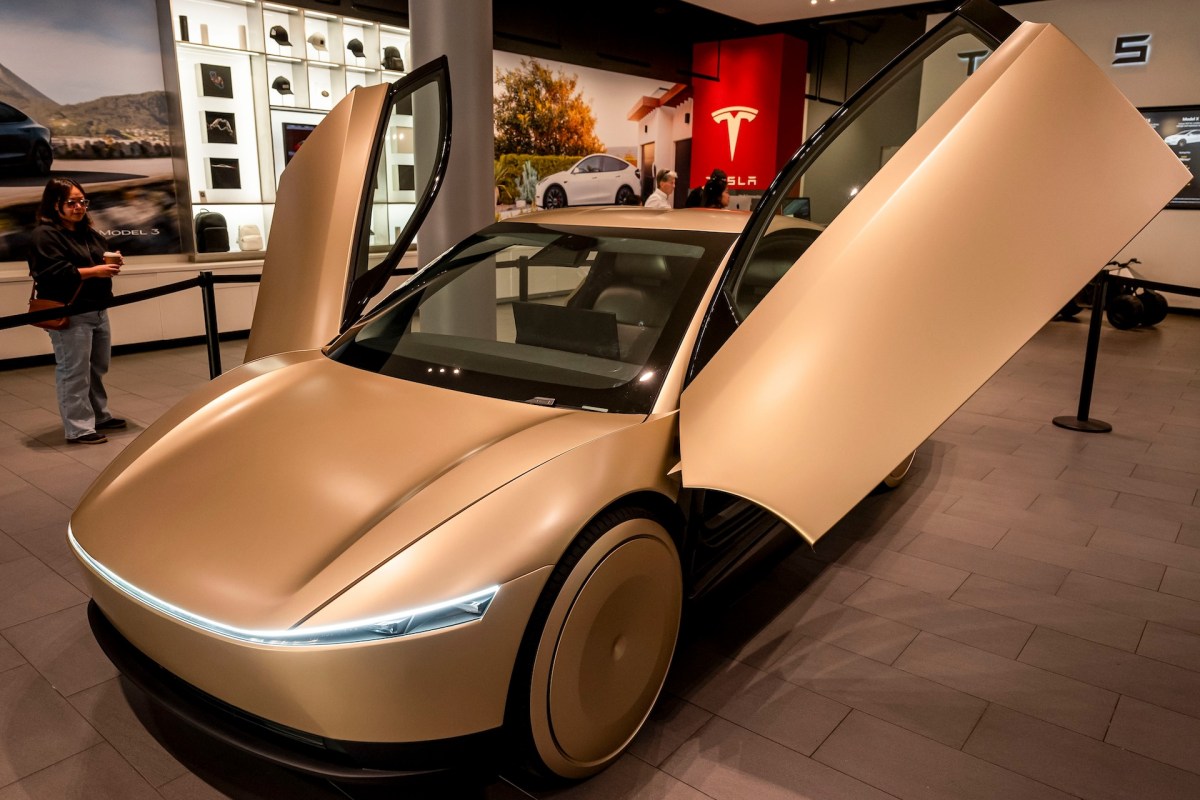
Funding the Cybercab Optimus and other Tesla ventures
Tesla has secured $30 billion in new credit facilities that could support the development and production of the Cybercab, Optimus robot and Semi.
The facilities give Tesla additional borrowing capacity as CEO Elon Musk pursues what he has described as a “physical AI super-grand plan”. The strategy extends Tesla’s activities beyond passenger vehicles to autonomous vehicle services and humanoid robots, areas that require investment in manufacturing capacity and computing infrastructure.
Structuring the $30 Billion Financial Commitment
Tesla’s new $30 billion credit facilities expand its available borrowing capacity as the company increases planned investment in AI, robotics and manufacturing. The facilities replace Tesla’s previous $5 billion revolving credit facility, increasing its total committed credit facilities by $25 billion.
Tesla structured the financing through three distinct agreements. The largest facility is a $20 billion senior unsecured, three-year delayed-draw term loan administered by Citibank. The structure allows Tesla to draw funds when needed, subject to the terms of the agreement.
Wells Fargo is the administrative agent for the remaining $10 billion in revolving facilities. This included an $8 billion five-year revolving credit facility and a separate $2 billion facility with a 364-day term. Revolving facilities can be drawn, repaid and redrawn, providing Tesla with additional liquidity when required.
Tesla said in its 29 September regulatory filing that it does not currently plan to draw on the new facilities in 2026. The company is, however, already projecting over $25 billion in capital expenditures for the current financial year, reflecting the scale of Tesla’s planned investment in manufacturing, AI infrastructure and other expansion projects.
Funding the Industrialisation of AI
The $30 billion commitment comes as Tesla plans significantly higher capital spending across AI, robotics and manufacturing. The company is developing new product lines that require additional manufacturing capacity and production infrastructure.
Musk said during a July earnings call that the company wanted to “invest funds as fast as we can without incurring excessive waste”. The rapid scaling of production for Optimus and the Cybercab is constrained less by intellectual property and more by the ability to create the physical infrastructure needed for mass manufacturing.
The key difference for Optimus and the Semi is the requirement for new dedicated factories, moving away from integration into existing car assembly lines. The approach differs from integrating production into existing vehicle assembly operations and would give the products dedicated manufacturing capacity.
The Optimus Production Challenge
The Optimus humanoid robot represents the most ambitious manufacturing challenge. The goal, previously reported, is to achieve production rates of 20,000 units per week. This volume requires highly automated, precise assembly lines that must be designed from scratch.
Recent reporting has identified the robot’s hands as a production challenge because of their small, precision-dependent components and complex assembly requirements. Scaling up production of complex electromechanical systems like a humanoid robot demands significant upfront investment in specialised industrial machinery and automated processes.
This is where capital expenditure directly translates into engineering capability. Reaching those output targets would require investment in tooling, process control and quality-assurance systems.
Cybercab and the Robotaxi Manufacturing Model
The Cybercab presents a different manufacturing challenge, as Tesla is developing it specifically for autonomous ride-hailing applications. This contrasts sharply with the production model for private consumer vehicles, focusing instead on durability, low maintenance, and high utilisation rates within a managed ride-hailing fleet.
The robotaxi strategy depends in part on the development and regulatory approval of Tesla’s Full Self-Driving (FSD) system. In Europe, the system also faces regulatory scrutiny. The European Transport Safety Council has urged EU member states to reject two speed-related functions in FSD Supervised, including a speed-offset feature that it says can allow speeds above detected limits.
Tesla also received approval to roll out supervised FSD in Croatia on 29 September, making it the eighth European country to recognise the system. Scaling the Cybercab model requires securing the supply chain for components specific to autonomous operation and deploying the new high-speed assembly lines necessary for fleet volume.
Autonomous vehicle companies globally are forging diverse paths, but Tesla’s approach demands vertical integration of both software and hardware production.
Investing in AI Computing Infrastructure
The capital is not solely focused on factory tooling; a substantial portion will fund the AI computing infrastructure used to train and develop FSD and Optimus systems. The ability to iterate quickly on both autonomous driving and general-purpose robotics hinges on having massive, dedicated compute capacity.
For an industrial company, AI is rapidly becoming a core component of production, not just a software layer. The infrastructure investment—covering areas such as data centres, computing hardware and cooling systems—would generally involve capital expenditure rather than being described simply as operational expenditure.
Scaling Production for the Tesla Semi
While the Cybercab and Optimus grab headlines, the Tesla Semi .represents Tesla’s expansion into the heavy-duty commercial vehicle market. The challenge here is the transition from pilot production to true mass scale, a process that demands its own dedicated manufacturing footprint.
Tesla’s experience with the Cybertruck provides a recent parallel for the challenges of industrialising unconventional vehicle designs. The Cybertruck provides a recent example of the challenges Tesla has faced in scaling production of a new vehicle design, with 7,263 Cybertruck sales reported for the first half of 2026, compared with Musk’s earlier projection that annual deliveries could reach 500,000.
Scaling the Semi avoids some of the aesthetic hurdles of the Cybertruck but faces the stringent quality and reliability demands of commercial logistics fleets. The new credit facilities could provide additional financing capacity for dedicated factory space and heavy-duty stamping, assembly, and battery integration lines necessary for the trucking product development cycle.
The Semi’s commercial development will depend on production scale, manufacturing costs, customer demand and the development of supporting service infrastructure. This requires capital expenditure focused on building robust, redundant manufacturing processes—the hallmark of successful industrial scale-up.
Financial Strategy Amid Market Volatility
Tesla secured the financing as its planned capital spending increases and its share price has remained volatile. As of 29 September 2026, the company’s shares had fallen about 19% year-to-date and approximately 7% in the preceding week, despite maintaining a market capitalisation around $1.41 trillion.
Despite holding substantial cash and investments exceeding $40 billion against approximately $9 billion in existing debt, the delayed-draw structure gives Tesla access to additional borrowing capacity without requiring it to draw the funds immediately. the delayed-draw structure gives Tesla access to additional borrowing capacity without requiring it to draw the funds immediately.
The financing provides an additional liquidity backstop for future corporate needs. For industrial projects that take years to complete, certainty of funding is paramount.
Industrial Implications for Global Manufacturing
Tesla’s “physical AI super-grand plan” broadens the range of manufacturing and computing infrastructure the company is pursuing. It is a vertical integration strategy that sees the firm control not just the vehicle or the robot, but the underlying AI that powers it, the dedicated factories that build it, and potentially the fleet that operates it.
The approach could have implications for industrial automation and manufacturing technology, particularly if Tesla scales the model successfully. The combination of automation, high-volume production techniques, and advanced industrial AI is defining the next generation of smart manufacturing.
Tesla’s planned capital spending represents a substantial expansion of investment in AI, manufacturing and related infrastructure. It reflects a broader emphasis on the ability to combine software, automation, computing infrastructure and manufacturing capacity.
For manufacturers in Africa and other emerging markets, Tesla’s approach provides one example of how AI, automation and manufacturing infrastructure can be integrated, although the capital requirements and operating conditions differ substantially by market. Automation and digital controls can support productivity and competitiveness, although their suitability depends on individual manufacturers’ infrastructure, skills and investment capacity.
The key takeaway is that financing is being secured not for marginal improvements, but for entirely new industrial infrastructure that fuses physical production with cutting-edge artificial intelligence. The $30 billion commitment is less about cash flow management and more about supporting Tesla’s planned expansion into AI, robotics and additional manufacturing infrastructure.
Forward Outlook on Production Timelines
The financing provides additional capacity, but Tesla still faces production, regulatory and infrastructure challenges as it scales these programmes. The immediate operational focus remains on deploying the $25 billion projected capital expenditure for 2026 efficiently.
Analysts are closely watching Tesla’s Q3 deliveries, which serve as a near-term indicator of the company’s execution capabilities in the face of fluctuating demand and supply chain pressures. Tesla’s ability to scale Optimus, Cybercab and Semi production will be an important factor in the company’s manufacturing plans over the coming years.
The credit facilities provide additional borrowing capacity that could be used if Tesla requires funding for eligible corporate purposes. It signals that Tesla is financially prepared to sustain a multi-year effort to bring these products to full industrial scale, regardless of short-term market performance.
The $30 billion credit package gives Tesla additional financial capacity as it expands beyond vehicle manufacturing into robotics, autonomous driving, AI computing and related industrial infrastructure.
