


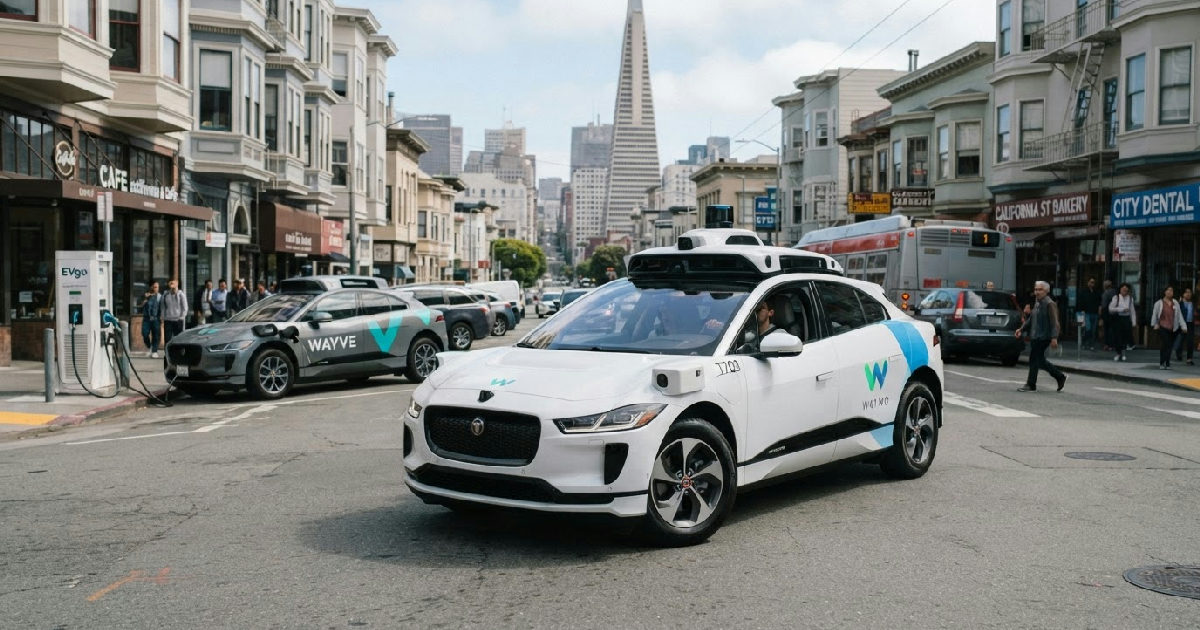
Autonomous vehicle (AV) companies are moving from development towards commercial deployment, with different strategies for expanding their operations. While some, such as Wayve, are using partnerships to expand their commercial reach, others, including Waymo, are concentrating their fleets in selected geographic areas. These expansion efforts come amid ongoing operational and safety challenges, including a recent investigation involving Zoox.
The sector is attracting investment and integrating technologies across passenger transport and freight logistics. Companies face the challenge of combining technological maturity with viable commercial models, impacting everything from urban mobility to long-haul freight.
Autonomous vehicle companies pursue commercialisation
The push to commercialise autonomous vehicle technology has seen leading firms adopt markedly different strategies. These approaches reflect the different challenges involved in commercialising the technology, from integrating advanced driver-assistance systems into existing car models to deploying fully driverless robotaxi fleets.
Commercial deployment will depend on factors including technology performance, regulatory requirements and consumer acceptance. The industry is still in its formative stages, but these strategies are shaping how companies approach commercial deployment.
Strategic Partnerships Support Market Expansion
For some AV developers, partnerships with established automotive manufacturers and mobility providers provide a route to commercial deployment. These partnerships can allow AV developers to integrate their technology into existing vehicle or mobility platforms and reach a wider user base.
One example is London-based AV startup Wayve, which recently announced a commercial partnership with Mercedes-Benz. The agreement is intended to integrate Wayve’s automated-driving technology into at least one Mercedes-Benz model within two years. The system would operate at Level 2, meaning the driver remains responsible for monitoring the vehicle and the driving environment.
Wayve has also cultivated relationships with Nissan and Stellantis for similar initiatives. These partnerships have also supported plans for further deployments, including a planned robotaxi service in Tokyo. This service, a partnership between Wayve, Nissan, and Uber, is set to launch in 2026, with the planned service targeting Level 4 automated driving.
Geographic Expansion and New User Segments
Waymo, which operates commercial autonomous ride-hailing services, is pursuing a strategy of concentrated expansion. Its commercial robotaxi operations have expanded across multiple US markets, alongside growth in ridership, yet data reveals a focused deployment effort in specific regions.
Approximately 80% of Waymo’s roughly 4,000 robotaxis operate within just two US states: California and Texas. Texas, in particular, has seen substantial growth, with Waymo’s fleet expanding by more than 49% in the past three weeks alone. Concentrating operations in selected markets can allow the company to focus its operational resources and regulatory work.
Beyond geographical focus, Waymo is also actively seeking out new demographics for its services. The company has also expanded access to its services to some teenage riders, broadening the groups able to use its robotaxi service. The expansion also brings additional considerations around safety requirements and parental or guardian involvement for younger riders.
Autonomous Trucking Expands in Freight Logistics
The autonomous vehicle landscape extends beyond passenger transport into the crucial sector of freight logistics. Aurora, which is developing self-driving trucks, combines geographic concentration with partnerships across the freight supply chain.
Aurora has concentrated its early operations in Texas, which is a major freight and trucking market. CEO Chris Urmson recently stated that Aurora has “emerged from the building stage.” indicating that the company is moving towards broader commercial operations. The company plans to have more than 200 driverless trucks operating by the end of 2026.
Looking further ahead, Aurora has set an ambitious target of deploying over 30,000 driverless trucks by 2030. Reaching that target would require expanded manufacturing, fleet operations and integration with truck manufacturers and logistics providers. Wider adoption of autonomous trucking could affect freight operations and industrial supply chains.
Safety Scrutiny and Operational Challenges
Despite advances in the technology and growing commercial activity, the autonomous vehicle industry continues to grapple with significant safety and operational challenges. Incidents involving test fleets highlight the need for testing and safety procedures before wider deployment.
A recent case involving Zoox, the Amazon-owned autonomous vehicle company, highlighted these concerns. Workers operating its test fleet in Atlanta reported symptoms consistent with gas exposure inside Toyota Highlander SUVs equipped with Zoox’s self-driving system. Following these reports, Zoox grounded its entire Atlanta test fleet.
An inquiry by the Occupational Safety and Health Administration (OSHA) was launched after one worker filed a complaint. Zoox’s internal investigation confirmed the presence of carbon dioxide (CO₂) in the vehicles, though initial suspicions also included carbon monoxide and hydrogen sulphide. The incident illustrates that safety considerations for autonomous fleets can extend beyond the automated-driving system itself to vehicle operation and working conditions.
Mobility Investment Extends Beyond Autonomous Vehicles
Investment activity across the mobility sector remains dynamic, extending beyond core autonomous driving into related areas like electric vehicles, used car marketplaces, and renewable fuels. The funding activity spans several parts of the wider mobility and transport ecosystem.
Several companies are pursuing initial public offerings (IPOs) globally. Carro, a SoftBank-backed used car marketplace, is reportedly considering a dual listing on the Nasdaq and the Singapore Exchange. India is also seeing significant IPO activity, with used car marketplace Spinny and electric bus manufacturer PMI Electro Mobility Solutions both filing confidentially.
Hong Kong-based EcoCeres, a producer of renewable fuels, aims to raise approximately $1 billion through an IPO. In the US, autonomous vehicle company May Mobility announced plans to go public via a merger with a blank-check company, valuing the deal at $1.4 billion. The transactions illustrate the range of companies currently seeking capital across the mobility sector.
Further demonstrating global interest, Ultraviolette, an Indian electric motorcycle manufacturer, recently raised $85 million. The appointment also illustrates the growing overlap between technology expertise and automotive businesses. This flow of capital supports both software-driven innovation and tangible product development across diverse geographies.
Other Developments in Advanced Mobility
The wider technological ecosystem supporting advanced mobility continues to evolve, bringing both innovation and new challenges. From driver-assistance systems to subterranean transport, companies are pushing boundaries, often with direct industrial implications.
Comma, the startup founded by George Hotz, is facing a federal investigation following five reported crashes involving its aftermarket hands-off driver-assistance technology. Two of these incidents resulted in three fatalities, prompting further scrutiny of the safety of such systems.
In another development, Swedish autonomous and electric trucking company Einride plans to use Nvidia’s Hyperion platform to develop its next-generation self-driving system. The collaboration illustrates the role of high-performance computing platforms in developing autonomous systems for commercial fleets.
Innovation extends to the operational aspects of vehicle maintenance, too. San Francisco-based PitPro Automation has deployed a robot capable of changing tires at a Canadian shop. The deployment illustrates a potential application for robotics in automotive servicing and other industrial environments.
Meanwhile, Elon Musk’s The Boring Company has proposed a “simple precursor Hyperloop” between Austin and San Antonio. The company says the system could reduce travel time between the cities to less than 30 minutes.
Tesla has also begun delivering its all-electric Semi, nearly a decade after the vehicle was first unveiled, although charging infrastructure remains a consideration for wider deployment.
Discussions around the ethical and regulatory aspects of artificial intelligence in mobility are also gaining traction. MIT researcher Bryan Reimer has weighed in on whether AI requires a “learner’s permit,” suggesting a need for careful consideration of how these intelligent systems are introduced and managed in real-world scenarios. The discussion reflects broader questions about how AI-enabled mobility systems should be tested, regulated and introduced into public use.
Industrial Mobility and Potential Opportunities in Africa
Developments in autonomous and electric mobility could affect manufacturing, freight logistics and infrastructure requirements. As companies refine their strategies and overcome technological hurdles, the implications for manufacturing, logistics, and infrastructure development are substantial.
For African economies, these developments present potential opportunities as well as infrastructure, investment and regulatory challenges. While direct investment in autonomous vehicle fleets may initially concentrate in developed markets, the foundational technologies, such as advanced manufacturing for electric components and AI-driven logistics platforms, could have applications in these areas.
Localising production of electric-vehicle components and developing AI systems suited to local road and operating conditions could create opportunities for manufacturing and technology firms. Such development would require investment in technical skills, manufacturing capacity, charging infrastructure and appropriate regulatory frameworks. For example, energy system advancements are crucial to support electric vehicle infrastructure rollout.
