


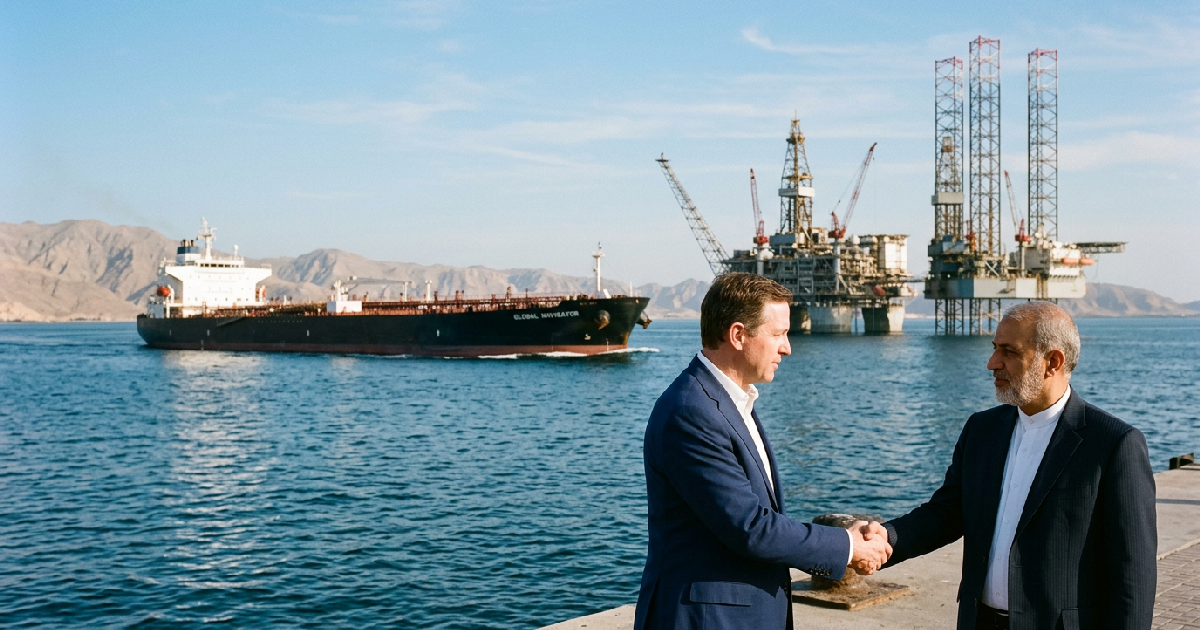
U.S. and Iranian leaders signed a 14-point Memorandum of Understanding (MOU) on Friday, June 19, 2026, in Geneva, Switzerland, to end recent hostilities and reopen the Strait of Hormuz. The framework agreement, first announced on June 15, establishes a 30-day timeline for lifting the naval blockade that has choked global energy markets and manufacturing supply chains. While the signing marks a de-escalation of the conflict, industrial operators face a complex transition period as technical hurdles and conditional diplomatic clauses remain unresolved.
The blockade’s removal targets the restoration of traffic through the world’s most critical maritime artery for oil. For months, manufacturers globally have contended with escalating energy costs and severe logistics bottlenecks caused by the closure. This MOU serves as a temporary peace deal, triggering a 60-day window for intensive negotiations on the most consequential elements of the conflict. These include the suspension of sanctions on Iranian oil sales, the release of roughly $24 billion in frozen Iranian assets, and progress toward a broader nuclear agreement.
Engineering and logistics teams should view this development as a window of opportunity rather than a final resolution. Tammy Kulesa, Senior Director of Supply Chain Execution at Blue Yonder, noted that uncertainty persists and risk models must now account for future disruptions. com/manufacturing-execution-system-strategic-lever-engineering-shift/”>manufacturing execution system for plant agility, the focus shifts to managing an irregular recovery.
While crude oil prices fell following the announcement, the return to pre-crisis fluidity will likely be slow.
Engineering challenges in clearing the maritime corridor
The formal reopening of the water via diplomatic channels does not immediately translate to safe passage for heavy industrial shipping. Global shipping industry representatives have urged caution, specifically regarding the technical reality of the waterway. Japanese operators warned that mine-clearing details must be resolved before vessels can transit the strait in earnest.
De-mining the channel requires specialized naval engineering assets and international coordination to verify the safety of the route. Until these operations are concluded, marine insurers are expected to maintain high-risk premiums. This means that even if crude prices stabilise, the landed cost of materials for manufacturing may remain elevated due to persistent transport and insurance surcharges.
Backlogs at refineries and freight hubs will further complicate the industrial recovery. Facilities that rely on steady petrochemical inputs cannot instantly resume peak production after months of curtailed volumes. It will likely take several quarters for the ripple effects of these refinery disruptions to dissipate. During this period, the African industrial sector continues to expand its internal connectivity, though it remains tethered to these global energy price fluctuations.
Conditional clauses and the 60-day negotiation window
The Geneva agreement is heavily conditional, resting on a chain of events that have yet to unfold. Beyond the oil-related sanctions and asset releases, the deal involves commitments linked to halting Israeli military activity in Lebanon. Conflicting accounts from the U.S. and Iran regarding the sequence of implementation suggest a fragile diplomatic balance.
A nominal reopening that operates alongside renewed regional friction would offer little reassurance to shipowners or traders. Karin Strom, VP at Proxima, explained that much of the agreement remains defined by what hasn’t happened yet. The full text of the memorandum has not been released, and the political environment in the region continues to shift in real time. For long-term industrial planning, the sustainability of the corridor is as important as the immediate lifting of the blockade.
For procurement and plant managers, the lower oil prices spurred by the news could eventually reduce the cost of energy-intensive materials like plastics and chemicals. However, freight rates may stay high as carriers reposition vessels diverted during the conflict. To combat these variabilities, some firms have pivoted to more efficient technology, such as how the Peopoly Giga 800 printer reduces costs by utilizing raw pellets.
Future implications for global supply chain stability
The next two months will determine if this 14-point MOU leads to a durable peace or merely a temporary pause in hostilities. Restoring the Strait of Hormuz is essential for the global economy, as it carries a significant share of the world’s oil. However, the requirement for technical mine-clearing and the conditional nature of the $24 billion asset release create a precarious timeline.
Industrial planners must navigate a period where input costs may ease, but transport risks remain high. The success of the Geneva framework rests on technical de-mining and diplomatic progress that extends well beyond the narrow waters of the strait itself. For now, the manufacturing world remains in a state of watchful waiting as the first vessels prepare to test the newly cleared lanes.
