


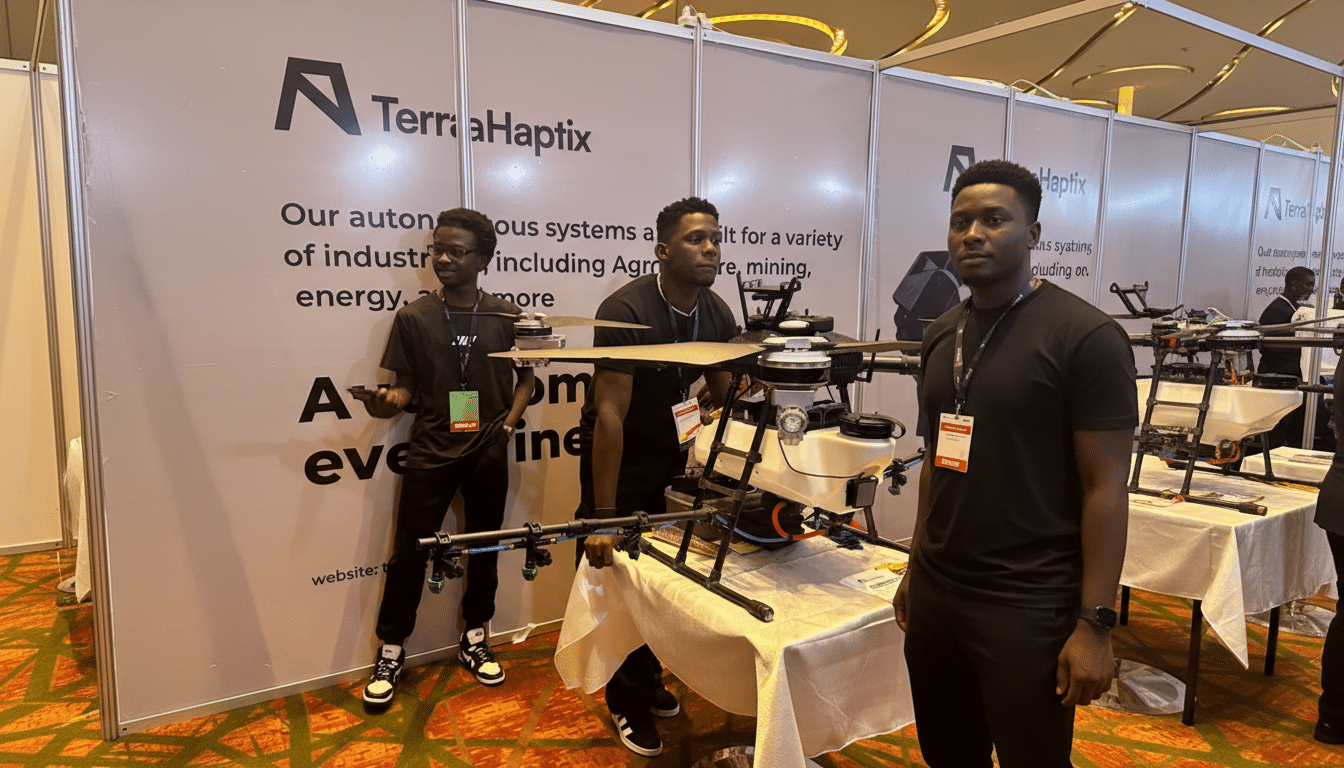
Terra, an African military technology firm, has raised $22 million in a quick follow-on investment round that was completed in less than two weeks, only a month after raising $11.8 million.
The additional financing boosts the company’s overall funding to $34 million and raises its valuation to $100 million, a rare success for a hardware-focused African firm started in 2024.
Lux Capital led the investment, with participation from 8VC, Nova Global, Silent Ventures, and new investors such as Belief Capital, Tofino Capital, and Resilience17 Capital, which was created by Flutterwave CEO Olugbenga Agboola.
Africa accounts for over 30% of the world’s important mineral deposits and invests approximately $100 billion every year in infrastructure.
See here: Terra Industries: A look into the $11 billion gamble to shield Africa
However, many of these projects are located in isolated or high-risk areas, making them vulnerable to sabotage, theft, and terrorist attacks.
Governments have traditionally depended on imported defensive systems from Russia, China, Europe, or the United States, which may be expensive, difficult to maintain, and vulnerable to geopolitical disturbances.
Terra presents itself as a vertically integrated local alternative.
Its 15,000-square-foot production plant in Abuja was completed and operated in less than eleven months.
The factory combines design, electronics, software engineering, manufacturing, and testing under one roof, allowing the firm to move swiftly and lessen its dependency on external suppliers.
The facility can produce up to 20 drone units per day, with roughly 80% of Iroko’s components sourced locally.
To accommodate increased demand, Terra plans to expand its manufacturing facilities in Abuja and Saudi Arabia.
The firm also plans to increase production capacity to 10,000 units per year if demand grows.
Terra’s combination of hardware and software is a crucial distinction. Instead of considering drones, towers, and cars as distinct tools, ArtemisOS integrates everything into a single ecosystem.
Operators may handle aerial, ground, and stationary devices via a unified interface, which reduces complexity and reaction time.
The Kallon Sentry Tower, for example, employs solar power and computer vision to identify dangers up to three kilometers away and only sends alarms when required.
Terra Industries

Terra, founded by 22-year-old CEO Nathan Nwachuku and 24-year-old Maxwell Maduka, develops autonomous security systems to defend important infrastructure on land, at sea, and in the air.
Its main products include the Iroko unmanned aerial vehicle, the Archer vertical takeoff and landing aircraft, the Duma unmanned ground vehicle, and the Kallon Sentry Tower.
See also: AeriusPro: Ghana’s domestically manufactured UAV is set to transform security operations
These technologies are linked together using ArtemisOS, the company’s proprietary software platform that provides real-time monitoring, coordinated response, and AI-powered threat identification.
Terra’s solution has already been deployed in many African nations, safeguarding infrastructure assets worth around $11 billion.
The company has negotiated contracts for tens of millions of dollars and earned more than $2.5 million in commercial income. Its quick growth has attracted attention in a market long dominated by foreign vendors.
