


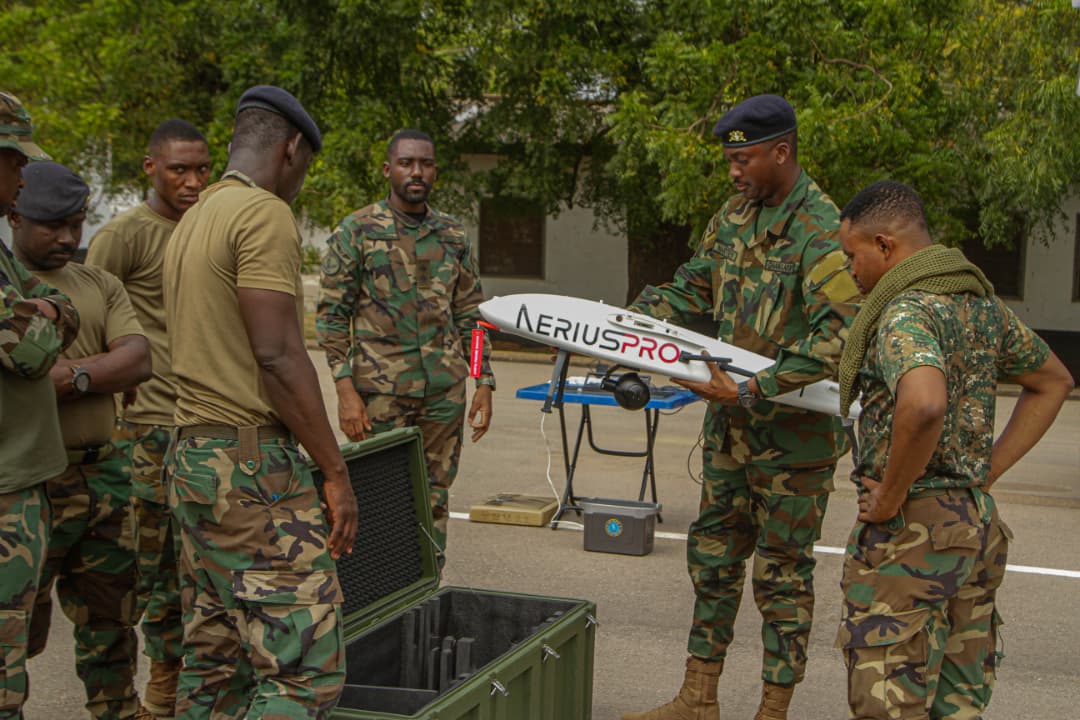
Ghana has achieved a new milestone in its defense capabilities by successfully developing its own Unmanned Aerial Vehicle (UAV), the AeriusPro.
This locally manufactured drone represents a significant advancement in Ghana’s efforts to modernize its military technology.
The AeriusPro is now deployed in northern Ghana, notably in the Bawku and Binduri regions, where security concerns have historically been serious threats.
Its design combines vertical takeoff and landing (VTOL) capabilities with a fixed-wing structure, allowing operations in rough terrain without the need for regular runways.
This groundbreaking development enables Ghana’s military to keep continuous surveillance of vital places, monitor border crossings, and detect illicit activity in remote areas.
Ghana’s 93 Signal Regiment was put in charge of operating the system in coordination with the Northern Command and the Army Special Brigade to ensure consistent technical and operational oversight.
Ghana’s UAV: The AeriusPro VTOL
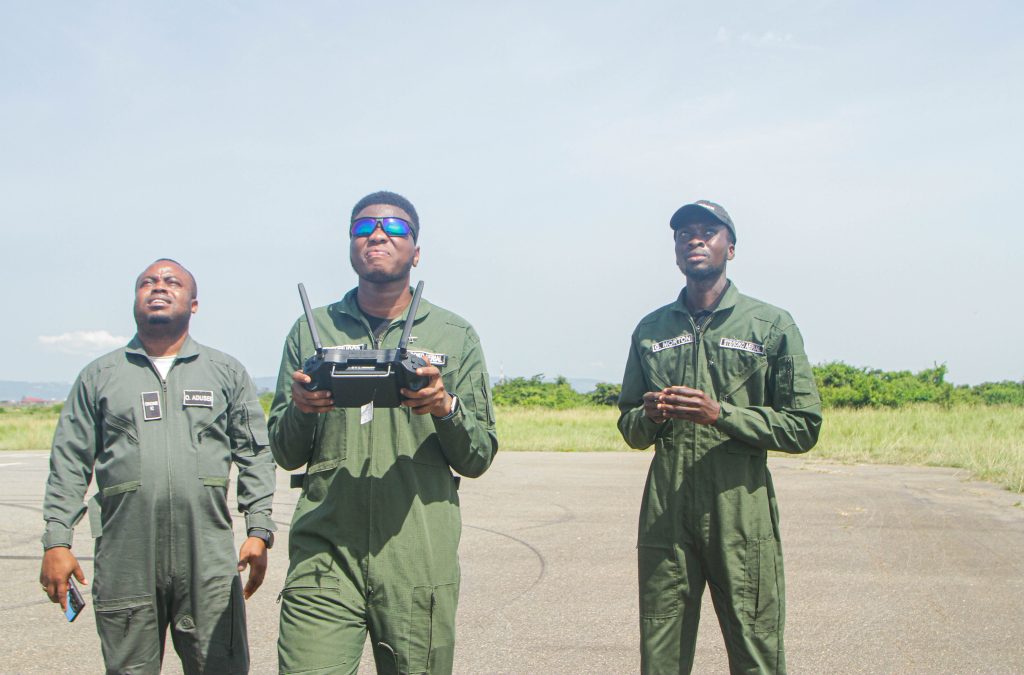
The AeriusPro’s VTOL architecture enables it to gain altitude using vertical lift motors before transitioning to forward flight with a horizontal propeller.
See here: China and Egypt launch domestic UAV manufacturing initiative
This combination outperforms traditional multi-rotor drones in terms of endurance and cruising speed.
Ghana’s indigenous UAV is equipped with the Sigtrack situational awareness technology, which integrates real-time video and intelligence data into a full digital map.
The technology allows the integration of a single operating picture (COP) for both field operators and headquarters, allowing for speedier decision-making during security crises.
In addition to mitigating security issues, the drone can monitor isolated mining locations that are prone to unlawful activity.
High-definition and infrared photography enable Ghanaian authorities to identify and combat illegal activity that is difficult to notice from the ground.
Ghana’s use of the AeriusPro strengthens border surveillance, improves threat detection, and indicates rising self-reliance in military technology, a critical step toward regional national security.
