


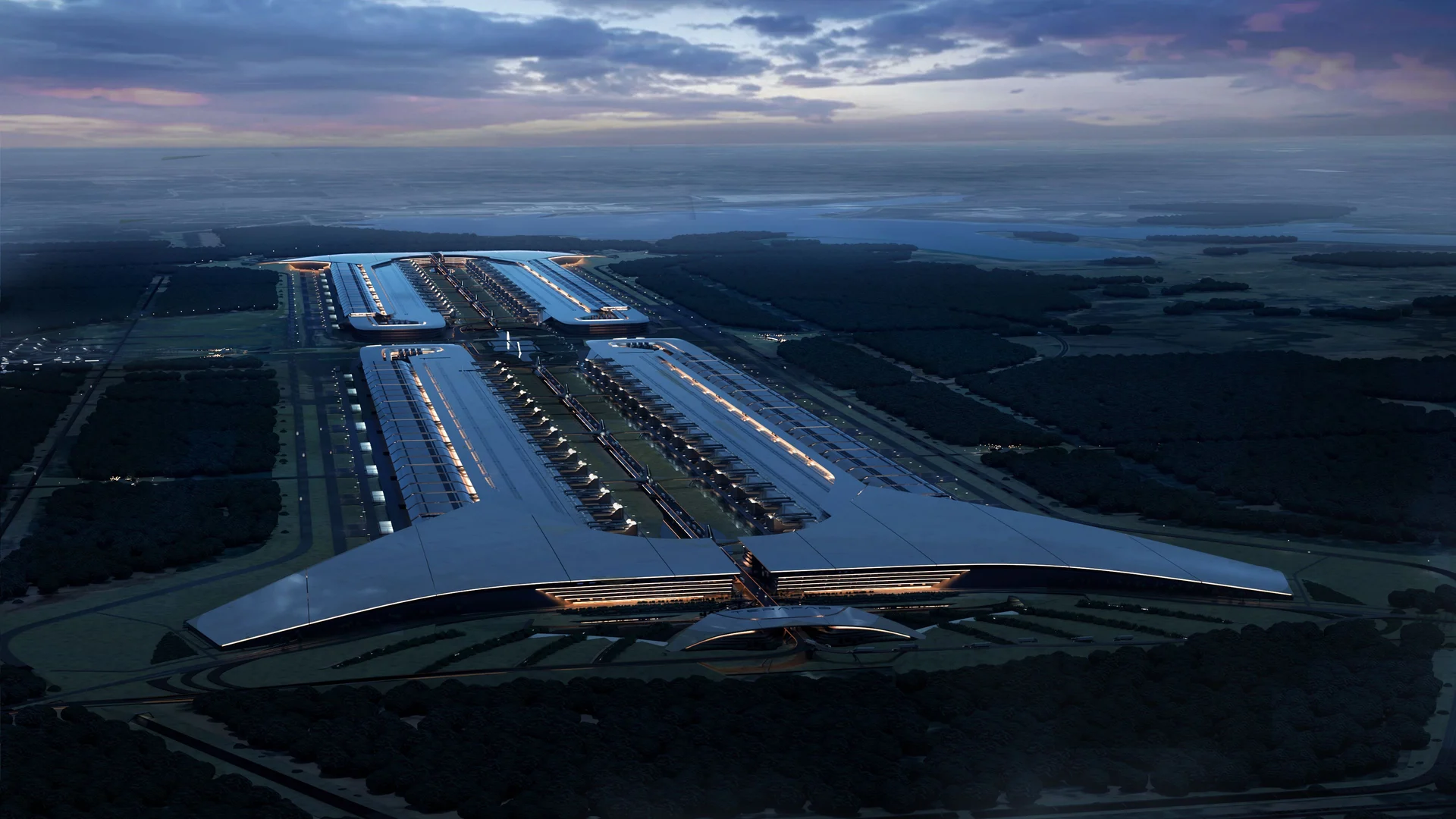
Tesla will invest an initial $16.8 billion to build the advanced “Terafab” semiconductor megafactory in Grimes County, Texas. 8 billion to begin constructing “Terafab”, an advanced semiconductor megafactory, in Grimes County, Texas.
Elon Musk, CEO of both Tesla and SpaceX, described Terafab as an “epic chip-building effort” and a facility poised to become the “largest and most valuable building on Earth by far”. This substantial investment underscores a strategic move towards vertical integration, aiming to bridge the widening gap between global chip supply and the projected compute needs of their ambitious future ventures.
Musk’s vision driving Terafab’s unprecedented scale
The imperative behind the Terafab chip factory stems directly from Elon Musk’s expansive vision. His plans for a future where millions of robots perform human jobs, autonomous robotaxis handle transportation, and satellites function as AI data centres all require an immense increase in computing power.
Current global semiconductor production simply cannot keep pace with this anticipated demand. Building Terafab in-house allows Tesla and SpaceX to control their silicon supply, ensuring the necessary chips are available for projects like Tesla’s Optimus robots and self-driving Cybercabs, as well as high-power chips for SpaceX’s space-based data centres.
Integrating logic, memory, and packaging in one facility
Terafab is designed as a vertically integrated semiconductor fab, combining several critical manufacturing processes under one roof. This includes logic chip fabrication, memory production, advanced packaging, and rigorous testing.
This comprehensive approach in Grimes County, located roughly an hour northwest of Houston, aims to streamline production and accelerate improvements. SpaceX has stated that this consolidation will allow for faster, recursive enhancements, pushing new compute deployments more rapidly than current models.
Intel, a major player in the semiconductor industry, has also committed to contributing to the Terafab project. While the exact nature of its involvement remains under wraps, Intel will bring its advanced 14A process node technology to the facility.
Industrial scale and local impact of the Terafab chip factory
The sheer scale of the Terafab chip factory is difficult to overstate. SpaceX plans for the facility to encompass more than 100 million square feet of manufacturing space, making it one of the largest industrial undertakings globally.
This enormous footprint will house the advanced machinery required for producing chips optimised for edge computing and inference. These components are vital for enabling real-time decision-making in autonomous systems and complex AI models.
Job creation and community benefits in Grimes County
The project expects to generate at least 3,000 new jobs, primarily targeting residents from Grimes County and nearby Brazos County. This influx of employment opportunities stands to significantly boost the local economy, which traditionally relies on agribusiness and smaller manufacturing concerns.
Grimes County Judge Joe Fauth III noted the transformative potential, calling it a “generational change for Grimes County”. The average household income in Grimes County was $68,931 in 2024, and the unemployment rate was 3.7%, suggesting the new roles could elevate economic prospects for many residents.
Addressing environmental and community concerns
The Terafab site is strategically located on the Gibbons Creek Reservoir, an area that previously cooled a coal-fired power plant. To mitigate potential environmental impact, SpaceX has committed to drawing water from this reservoir rather than utilising local groundwater supplies.
However, the announcement did not come without local scrutiny. A heavily attended county meeting saw residents raising concerns about the multi-million-dollar tax breaks awarded to the project and a perceived lack of transparency.
Dr. Sarah Borowicz, Superintendent of the Anderson-Shiro Consolidated Independent School District, issued a statement acknowledging these “defining moments”. She pledged that opportunities created by the agreement would be managed “wisely, transparently, and always with students at the centre of every decision”.
Broader context: US chip manufacturing and supply chain resilience
The construction of the Terafab chip factory in Texas fits into a larger national strategy to bolster domestic semiconductor manufacturing. The US CHIPS and Science Act, enacted in August 2022, provides significant funding and incentives to companies building chip facilities on US soil.
This legislation aims to enhance American supply chain resilience, particularly after the global chip shortage between 2020 and 2023 exposed vulnerabilities. That shortage severely impacted over 169 industries, causing production delays and significant revenue losses, particularly in the automotive sector.
Texas as a growing hub for industrial technology
Texas has actively cultivated a business-friendly environment, attracting substantial investments in technology and manufacturing. The state already hosts Samsung’s chip plant in Taylor and Tesla’s Giga Texas in Austin.
SpaceX also maintains a considerable presence, with its Starbase launch facility near Brownsville and operations in Bastrop and McGregor. This established infrastructure and supportive policy framework make Texas a natural fit for such a large-scale industrial project. Other major players have also committed significant investments to US chip production.
The path ahead for Tesla, SpaceX, and chip production
While the initial investment for Terafab stands at $16.8 billion, filings from SpaceX suggest that the total expenditure could reach as much as $119 billion across multiple construction phases. This indicates a long-term commitment to in-house chip production as a cornerstone of their future growth.
Tesla, for its part, has guided for over $25 billion in capital spending for 2026, while SpaceX is on track for even higher outlays, having already spent $18.4 billion in Q2 2026. These figures highlight the immense capital requirements for scaling such technologically advanced manufacturing operations.
Terafab’s impact on industrial capacity and AI compute
The ultimate goal for Terafab is to produce over 1 terawatt of AI compute capacity annually. This ambitious target underscores the critical role these custom chips will play in powering the next generation of AI-driven applications and autonomous systems developed by Tesla and SpaceX.
Bringing logic, memory, packaging, and testing into a single, vertically integrated factory represents a significant engineering challenge and a bold statement on the future of industrial manufacturing. This strategy allows for tighter control over quality, intellectual property, and faster iteration cycles, all crucial in rapidly evolving fields like AI and advanced robotics.
This move is indicative of a broader trend among technology giants to design and produce their own silicon. Companies are seeking to tailor hardware precisely to software needs, reducing reliance on external suppliers and gaining a competitive edge. Investments in automotive chip development also reflect the growing demand for specialised semiconductors across various industrial applications.
Future phases and the potential for Africa
Civil work on the Terafab site is expected to begin almost immediately, with full-scale construction slated for the coming months. The multi-phase approach allows for gradual expansion, adapting to technological advancements and evolving market demands.
While Terafab is firmly rooted in Texas, the drive for enhanced industrial capacity and technological self-sufficiency has global implications. As advanced manufacturing processes become more efficient, the potential for similar large-scale investments in regions like Africa, which are actively seeking to boost their own industrial bases and technological capabilities, could increase over time.
The demand for advanced compute capacity is not confined to North America. As African economies expand and invest in digital transformation, robotics, and smart infrastructure, the need for robust, localised semiconductor solutions will become increasingly pronounced. SpaceX itself is expanding its reach with terrestrial mobile networks, indicating a broader global focus that could eventually necessitate decentralised production or robust supply chains to new markets.
