


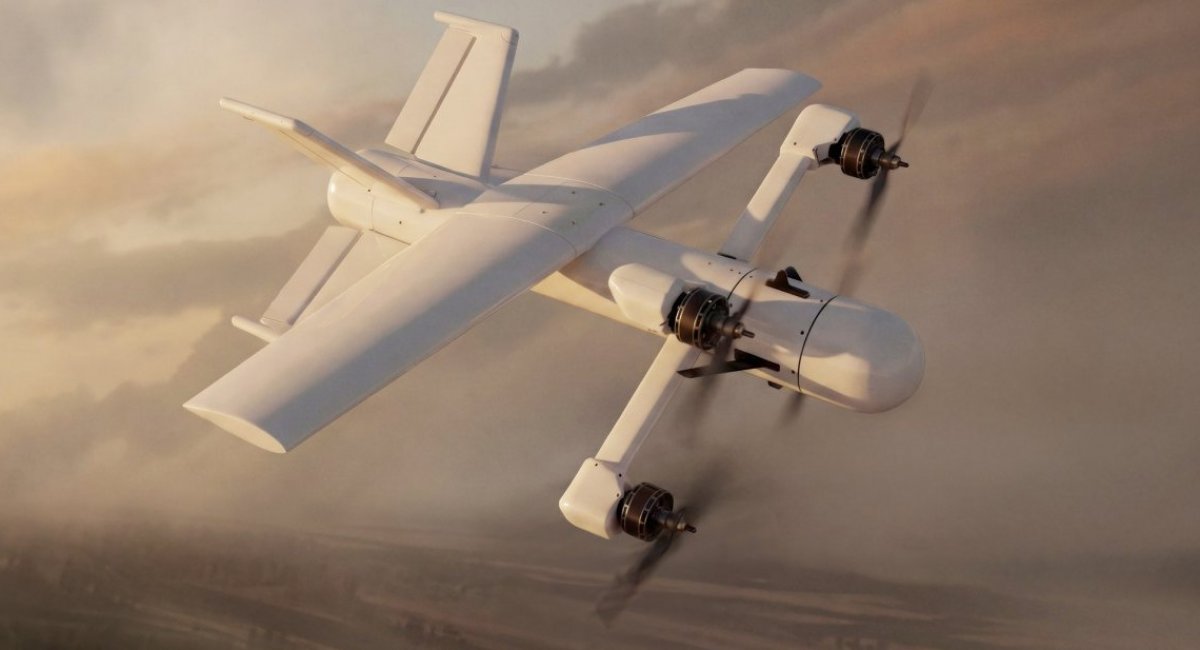
Lockheed Martin officially unveiled its MORFIUS X-Rotor system, a ground-launched, field-reusable airborne high-power microwave (HPM) counter-drone system, at the Farnborough Airshow in London, England, on 20 July 2026. This new technology is specifically designed to neutralise more than 50 hostile drones in a single flight, addressing the growing challenge of commercial drone swarms in military environments.
The “one-to-many” defence capability represents a significant step in countering the proliferation of unmanned aerial systems (UAS). It aims to offer an affordable solution for American and allied forces facing increasingly sophisticated aerial threats.
Tackling the evolving threat of drone swarms
The battlefield is changing, with commercial drone swarms posing a major, complex threat to ground forces and critical infrastructure. These low-cost, high-volume aerial assaults are difficult to defend against using traditional kinetic interceptors.
Lockheed Martin’s latest release directly supports the U.S. Department of War’s 2025-2028 Rapid Response Counter-UAS Roadmap, highlighting the urgent need for such capabilities. The strategy focuses on developing and deploying counter-UAS technology to protect deployed forces effectively.
The rise of autonomous aerial threats
The ubiquity of commercial drones, combined with advancements in autonomous navigation and swarm intelligence, has created a new class of aerial threat. These systems can overwhelm conventional defences through sheer numbers, making targeted interception impractical and costly.
Traditional anti-aircraft systems and missile defences are simply not built to handle dozens of small, fast-moving targets simultaneously. This shift necessitates a paradigm change in how militaries approach aerial defence, moving towards energy-based solutions.
Strategic imperative for counter-UAS
Developing effective counter-UAS technology isn’t just about tactical advantage; it’s a strategic imperative. The ability to defend against drone swarms can significantly influence operational success and troop safety in modern conflicts.
Randy Crites, Vice President and General Manager of Lockheed Martin Missiles and Fire Control Advanced Programs, emphasised this point. He stated, “MORFIUS sets a new benchmark for counter-drone capability – delivering a high kill rate while keeping the cost per kill low.”
This focus on cost per kill is critical, as previous counter-drone methods could often cost more than the drones they were designed to intercept. The economics of defence have become as important as the efficacy.
Technical prowess of the MORFIUS X-Rotor system
The MORFIUS X-Rotor is not just another counter-drone system; it brings several distinctive technical features to the forefront of defence technology. Its airborne HPM payload is central to its ability to disable multiple targets simultaneously.
The system is ground-launched, allowing for rapid deployment and redeployment as operational needs dictate. Its design also prioritises field recovery and reuse, which directly contributes to its touted low cost per engagement.
High-power microwave efficacy
At the core of MORFIUS is its high-power microwave (HPM) effector. This technology uses electromagnetic energy to disrupt and neutralise electronic systems within hostile drones, effectively taking them out of the sky without requiring a physical impact.
Lockheed Martin confirms that this family of HPM effectors has already demonstrated its ability to defeat hard targets. Crucially, it does so while limiting collateral damage, making it a more precise and less destructive option than traditional explosives.
Command-and-control versatility
A significant design advantage of the MORFIUS X-Rotor system is its sensor and command-and-control agnostic nature. This means it can integrate seamlessly with various existing military command systems.
It doesn’t require dedicated sensors or fire-control radars to guide engagements, simplifying its operational footprint and increasing its adaptability on the battlefield. This versatility is a key enabler for rapid deployment in diverse environments.
Rigorous development and testing pathway
The MORFIUS X-Rotor system isn’t a completely new concept; it builds on years of development and testing. Earlier variants of the MORFIUS platform have been flying since 2017, providing a solid foundation of real-world data and refinement.
This iterative development process has allowed Lockheed Martin to mature the technology systematically. The company is now accelerating prototype production to meet anticipated demand.
Extensive flight test campaigns
Previous flight tests, intercept tests, and evaluations of lethality conditions took place in multiple US locations, including Arizona, California, and Oklahoma. These trials were essential in validating the system’s performance against various drone threats.
The successful outcomes of these tests have paved the way for the current acceleration of prototype production. Lockheed Martin is already planning additional flight tests to further refine and validate the MORFIUS X-Rotor’s capabilities.
Manufacturing for rapid deployment
Accelerating prototype production of both the MORFIUS X-Rotor and its HPM payload signals Lockheed Martin’s intent to move quickly towards broader deployment. This manufacturing ramp-up will be keenly watched by defence contractors globally.
The company’s ability to “field innovative, affordable technologies at the speed our American and allied troops need” is a direct challenge to the industrial base. It suggests a move away from protracted development cycles towards more agile production.
Broader implications for defence technology
The introduction of the MORFIUS X-Rotor system carries significant implications beyond immediate battlefield applications. It underscores a strategic shift towards directed energy weapons and reusable, cost-effective defence solutions.
This move impacts everything from defence budgets to the doctrine of engagement, potentially redefining the balance of power in aerial combat. The system’s focus on a low cost per kill could democratise high-tech defence, making it accessible to more nations.
Shifting the aerial defence paradigm
The ability to neutralise drone swarms with a single, reusable system fundamentally changes the calculus for aerial defence. It moves away from the expensive, one-to-one engagement model of missiles and interceptors.
This could free up resources and allow defence forces to address other threats more effectively. It represents a significant technological leap in protecting both personnel and high-value assets from persistent aerial surveillance and attack.
For instance, AI systems designed with scarcity in mind could find parallels here, as efficiency and resource management become paramount in defence solutions.
Potential for global adoption
While initially aimed at U.S. and allied forces, the design principles of the MORFIUS X-Rotor system, particularly its reusability and cost-effectiveness, make it highly attractive for broader international adoption. Nations across Africa, for example, face increasing security challenges, including those posed by unmanned aerial vehicles.
Deploying a system capable of neutralising multiple threats per flight at a lower operational cost offers considerable advantages. It could provide robust aerial defence without overburdening national defence budgets, thereby enhancing regional security postures against evolving threats.
