


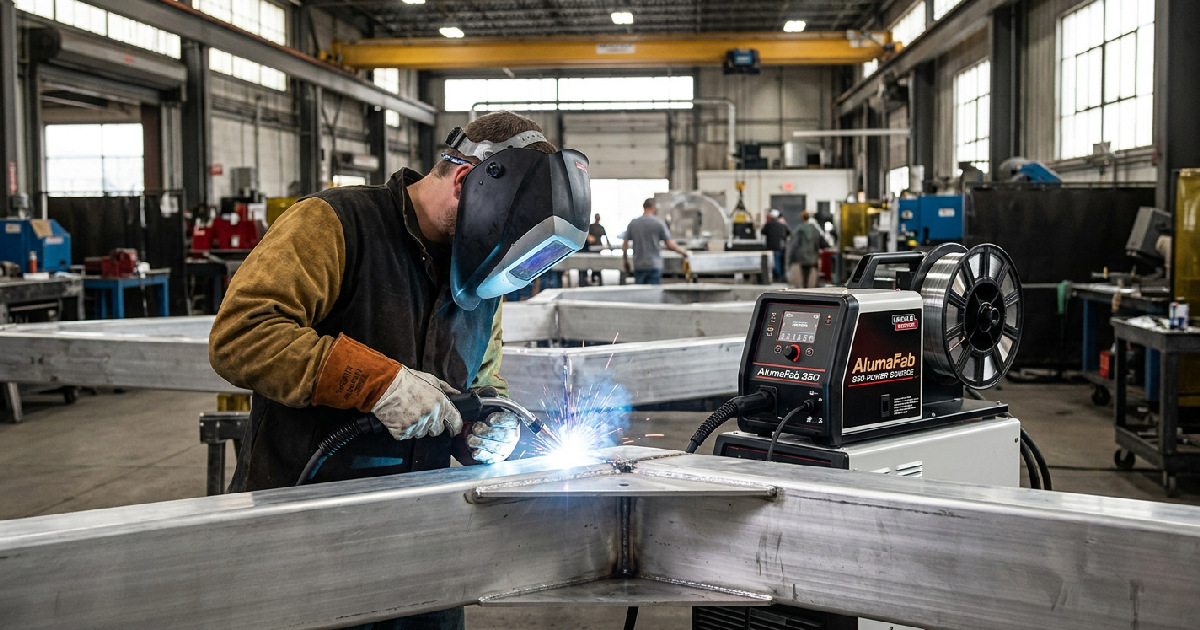
Lincoln Electric introduced the AlumaFab aluminum MIG welding system on 13 May 2026, a high-volume fabrication solution developed in partnership with MK Products. The system integrates Lincoln Electric’s power source and waveform technology with specialised wire feeding mechanisms to address the technical difficulties of working with aluminum. By providing a stable, forgiving arc, the equipment allows operators of varying skill levels to perform MIG and Pulsed MIG processes with consistent results.
The system targets sectors such as general fabrication, automotive manufacturing, and shipbuilding, where aluminum’s softness frequently leads to production delays. Kristina Yamaguchi, Product Manager for Industrial Equipment at Lincoln Electric, described the system as the next step in simplifying high-volume applications. She noted that combining MK Products’ wire feeding expertise with Lincoln’s power technology delivers unmatched reliability for industrial shops.
For operations looking to modernise their floor, the AlumaFab arrives as industrial trends shift toward efficiency. While the industrial and engineering stocks rally shows market interest in manufacturing growth, the practical challenge remains the skill gap in specialised welding. This system simplifies the process by removing the need for gun calibration and using universal drive rolls to handle standard aluminum wire diameters.
Detailed component breakdown for AlumaFab packages
Lincoln Electric offers the AlumaFab in two primary configurations: air-cooled and water-cooled. Each package is built around a comprehensive set of core components designed for immediate setup in shop environments. Both the air-cooled (MSRP $12,046.84) and water-cooled (MSRP $14,509.61) packages include the AlumaFab Wire Feeder, the AlumaFab 350 Power Source, and the AlumaFab Controller.
Beyond the primary electronics, each standard package features a 15-foot Work Lead (2/0, Tweco to GC500), a dedicated cart for the inverter and wire feeder, and a Model 355-2Ar-58010 flowmeter regulator shielding gas kit. To ensure the hardware remains secure, Lincoln also includes a Flextec 350X locking foot kit in every setup. The water-cooled package contains one additional critical component: the Cool Arc 55 cooling unit.
Managing high-volume output requires consistent power, much like how the commitment to stable electricity is vital for broader industrial activity. The AlumaFab 350 power source relies on this stability to maintain its arc control. For the physical welding interface, users must separately purchase one of four compatible MK Products Python MIG guns, available in 15-foot or 25-foot lengths for either cooling configuration.
Solving wire feeding and shop durability issues
Reliable wire delivery is the primary hurdle in aluminum welding because the metal easily shaves, birdnests, or suffers from burnback. The AlumaFab system’s feeder is engineered to provide smooth delivery even when using longer cables, which gives fabricators more movement across the workshop. This focus on “hassle-free” feeding reduces downtime spent clearing tangles or repairing damaged wire midway through a seam.
Durability remains a priority for equipment meant for the shipyard or automotive plant. Lincoln Electric has built the AlumaFab with only the essentials, focusing on rock-solid reliability rather than non-industrial filler features. This minimalist approach ensures the machines can withstand the vibrations and dust of a heavy-duty production environment while maintaining the precision required for high-quality bead appearance.
Strategic implications for manufacturing productivity
The introduction of the AlumaFab system reflects a shift toward automated arc control and user-friendly interfaces in the fabrication sector. By making Pulsed MIG welding more accessible, manufacturers can achieve better penetration and reduced spatter without requiring decades of manual experience from every staff member. This shift is essential as global manufacturing hubs look to increase throughput while managing a changing workforce.
In regions where industrial connectivity and technology are expanding, adopting such specialised hardware provides a path to higher-value exports. For African fabricators entering the automotive or marine supply chains, tools that guarantee repeatability are a competitive necessity. Lincoln Electric currently lists a lead time of three to four weeks for the system, positioning it for rapid integration into existing production lines.
