


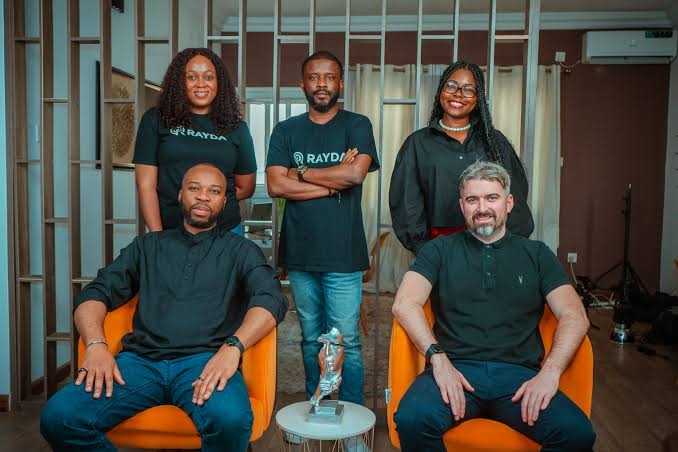
IT operations platform Rayda has scaled its device lifecycle management business to support operations in over 170 countries, reaching profitability within 1,000 days of its public launch.
The journey from a spreadsheet replacement to a global infrastructure provider demonstrates the shifting demands of the modern industrial and engineering workforce. Originally launched in January 2023, Rayda was built specifically to solve the “structural blind spot” regarding physical assets that Francis Osifo observed while serving as Chief Technology Officer at 54gene.
Engineering a solution for the global device lifecycle
After a single laptop destined for a Kenyan employee was held in customs for two months at a significant cost, Osifo realised that even well-funded startups lacked visibility into the location and condition of their hardware.
This gap in operational oversight is a common hurdle for firms undergoing a manufacturing execution system strategic lever shift, where the transition from manual tracking to automated data becomes essential for survival. For Rayda, the transition was born of necessity.
What began as a small funding round of $300,000—deliberately kept lean by Osifo to maintain focus on problem-solving rather than spending—eventually evolved into a sophisticated platform that manages the entire journey from hire to departure.
The technical foundation of Rayda was initially designed to displace the ubiquitous Excel sheet. In the early days, Francis Osifo found that many small and medium-sized businesses lacked even a basic asset register. This forced the Rayda team to move beyond software provision and engage in physical audits.
Technicians would visit client offices to identify and tag hardware before onboarding them onto the digital platform, highlighting a massive disconnect between modern workforce trends and traditional administrative processes.
As the platform grew, the engineering of the product suite expanded to include Rayda Core for asset management, Bidda for auctioning unwanted equipment, and Rayda Remote for procurement. This multi-pronged approach was intended to cover every possible angle of fixed-asset management.
However, the complexity of managing such a diverse product range proved challenging until macroeconomic shifts in the Nigerian market dictated a narrower, more efficient focus.
The technical impact of economic volatility
In 2024, the Nigerian naira depreciated by over 129%, closing the year at approximately ₦1,478.97 to the US dollar. This economic pressure changed the way companies approached capital expenditure. Businesses became more cautious, and for Rayda, this meant the original plan of dominating the African market before expanding globally had to be scrapped.
The team had to find a growth lever that could withstand local currency fluctuations.
The solution came through “Rayda Remote,” a specific module that addressed the exact problem Francis Osifo faced at 54gene. A UK-based firm struggled to equip its Nigerian remote team. Rayda stepped in to solve the logistics and procurement bottleneck.
This single customer generated more volume in three months than the entire business had recorded in 2023, prompting the founders to pause development on other features and rebuild the platform as a cross-border IT infrastructure hub.
Scaling infrastructure across 170 countries
Unlike traditional logistics companies that rely on heavy physical footprints, the Rayda model under Francis Osifo and Dan Duggan utilizes a network of authorised partners. This asset-light approach has allowed the startup to support IT device procurement and lifecycle management in more than 170 countries.
By building this operational capability, the firm has effectively bridged the gap between Western corporate standards and the complex logistics of emerging markets.
This growth reflects a broader trend in the African IoT sector and industrial connectivity, where software layers are increasingly used to manage physical hardware across vast distances. For engineering and operations managers, this means the risk of hardware downtime or “lost” assets is mitigated by data-led tracking.
The command centre approach allows an IT manager in London to see a real-time list of laptops in Nairobi, including their depreciation value and repair history.
Automating the employee lifecycle through AI
By 2025, Rayda had reached technical maturity, or what Francis Osifo calls the perfection of the business’s core layer. The company has now shifted its focus toward integrating artificial intelligence to further automate the daily tasks of IT teams.
In a distributed workforce, manually tracking the “wear and tear” of a thousand devices is nearly impossible for a small team. AI-driven predictive maintenance and automated recovery schedules are the next frontiers for the platform.
This transition toward automation matches developments in other fields, such as how collaborative automation goes mainstream via the cobot market. Just as robots are taking over precision tasks on the factory floor, Rayda’s software is taking over the precision task of device management.
The goal is to ensure that no part of the employee lifecycle—from the moment a hire is signed to the day they return their equipment—is left to chance or manual entry.
Lessons in capital efficiency and market validation
One of the most striking aspects of Rayda’s first 1,000 days is the philosophy behind its funding. While many tech startups seek the largest possible valuation early on, Francis Osifo deliberately targeted a modest $250,000 for the first raise, eventually settling at just over $300,000.
He argues that raising too much capital early on can blind a founder to the real problems, making them appear like issues that can be solved by simply spending money.
This lean approach forced the team to validate their business model through direct conversations with other founders and practitioners. It ensured that when 2024’s currency crisis hit, Rayda was agile enough to pivot its entire website and messaging to support global hiring.
This resilience is a case study for African industrial startups facing volatile local markets: the ability to export a technical service to global clients provides a hedge against domestic economic downturns.
Building for the future of distributed engineering
As the workforce continues to decentralise, the demand for “IT command centres” like Rayda will only increase. Large-scale engineering projects and industrial operations now frequently involve experts from multiple continents working on the same digital twin or CAD model.
Managing the high-spec hardware required for such work is no longer a task for a simple courier; it requires a specialized lifecycle management platform that understands customs, depreciation, and remote security.
The company currently employs a team of 25 people and has achieved profitability, a milestone that underscores the viability of its pivot. By shifting from a software-as-a-service tool to an infrastructure provider, Rayda has positioned itself as a critical enabler for the global digital economy.
The startup’s evolution from tracking a single stuck laptop to managing assets in 170 countries suggests that the most successful industrial ideas often come from solving a specific, personal frustration and then building the engineering framework to scale that solution globally.
Looking ahead, the focus remains on robust execution. For developers and operations professionals, the story of Rayda serves as a reminder that the “shiny” parts of technology—the apps and the AI—only work when the underlying physical infrastructure and lifecycle management are sound.
As they move into their next phase, Francis Osifo and Dan Duggan are proving that the boring parts of business, like asset registers and logistics, are often where the most significant industrial value is built.
