


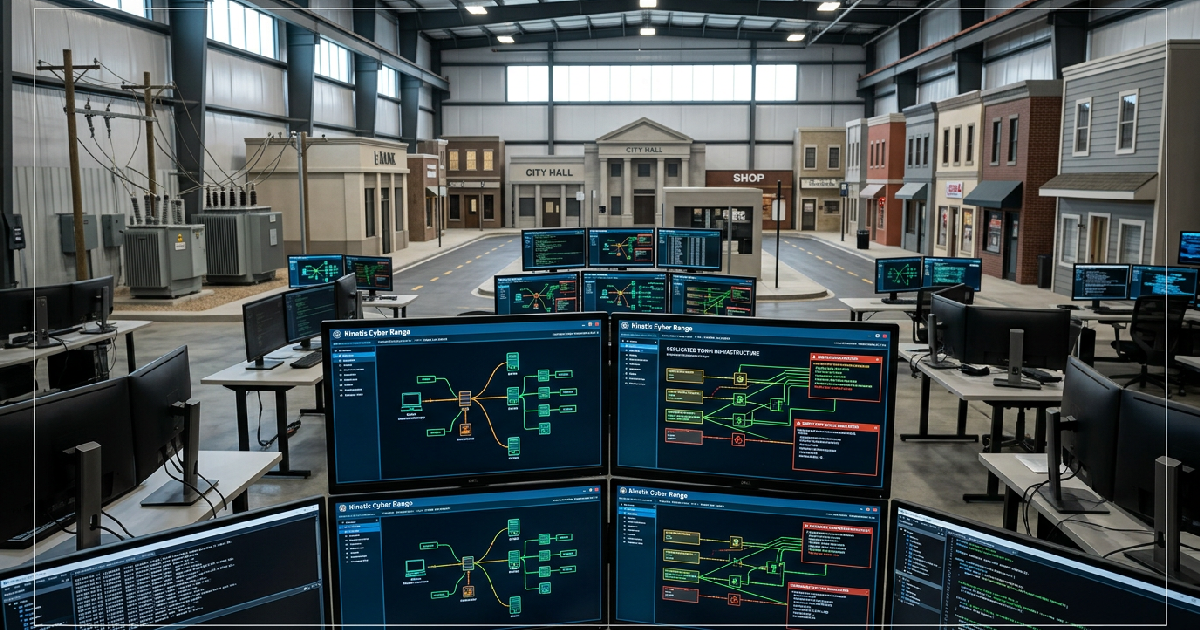
The Federal Bureau of Investigation (FBI) has opened a 22,000-square-foot replica small town on its Huntsville, Alabama campus to train law enforcement in simulating and investigating real-world cyberattacks. Known as the Kinetic Cyber Range, the facility allows investigators to get hands-on experience with modern consumer and enterprise technologies that malicious hackers frequently target.
The purpose-built site, which opened in February 2025, provides a secure environment for agents to practice their response to digital threats without risk to public networks.
Operational readiness at the site addresses a steep climb in domestic digital crime. The FBI’s 2025 Internet Crime Report, which analyzed more than one million complaints, recorded $20.9 billion in U.S. cybercrime losses, representing a 26% jump over the prior year.
Ransomware remains the top ongoing threat to critical infrastructure, according to the report. By training at the Huntsville facility on the Redstone Arsenal, agents can make critical mistakes in a controlled setting before facing live emergencies.
Every building in this technical community features functioning devices and systems that behave exactly as they would in a standard U.S. town. The isolation of these networks ensures that simulated malware or investigative techniques cannot escape the facility. This environment is essential for testing defensive tools and understanding how a digital breach might cause cascading physical effects across a municipality.
Infrastructure of the Kinetic Cyber Range
The facility is designed to mimic a real community, featuring fully furnished houses, a hotel, a grocery mart, and a gas station. It also includes civic and utility infrastructure critical to national security, such as a courthouse, a hospital, and a simulated power company.
Active roads and traffic lights are integrated into the town, allowing trainees to see how cyber interference impacts public safety and logistics.
At the heart of the range sits a data center equipped with more than 200 physical servers. These machines run a combination of Windows and Linux operating systems to reflect the corporate environments investigators typically encounter when executing search warrants or responding to breaches.
Dave Beachboard, program manager for the Kinetic Cyber Range, noted the environment is designed to be “cold, cramped, noisy, dark, and miserable” to match real-world server rooms.
This attention to detail reflects a broader trend where industrial connectivity is exposing critical systems to new vulnerabilities. Agents at the range practice responding to ransomware attacks on hospital networks, where systems go dark and personnel must make high-pressure decisions regarding patient safety. These simulations allow forensic specialists to determine which connected devices to seize during an investigation.
Forensics and inter-agency training operations
The range also serves as a hub for advanced digital forensics training. Investigators use the facility to practice cracking the cybersecurity defences of encrypted modern devices to extract data for criminal cases. These tools often work by exploiting vulnerabilities that are never disclosed to the device makers, such as Apple or Google.
While the use of such tools is controversial, the FBI considers them necessary for building successful investigations in an era of high-level encryption.
Since its opening in early 2025, the facility has trained more than 1,400 students. This cohort includes FBI personnel and partners from other federal and local agencies, including NASA and the U.S. Army.
Stephanie Cassioppi, who leads the Cyber Training Unit in Huntsville, oversees the curriculum that prepares these agents for investigations that rely heavily on digital evidence. As manufacturers pivot to Manufacturing Execution Systems for plant agility, the cross-sector training offered here becomes more relevant for protecting integrated industrial supply chains.
The development of “Cyber Town” coincides with a period where adversaries are increasingly using AI to accelerate vulnerability discovery. The FBI views the range as a laboratory for proactive defence rather than just reactive investigation.
By understanding how a breach at a power utility might simultaneously disable traffic lights and hospital operations, the bureau aims to standardise the response across different levels of government. The ultimate goal is to ensure national security infrastructure remains resilient as cyber threats evolve in complexity and cost.
