


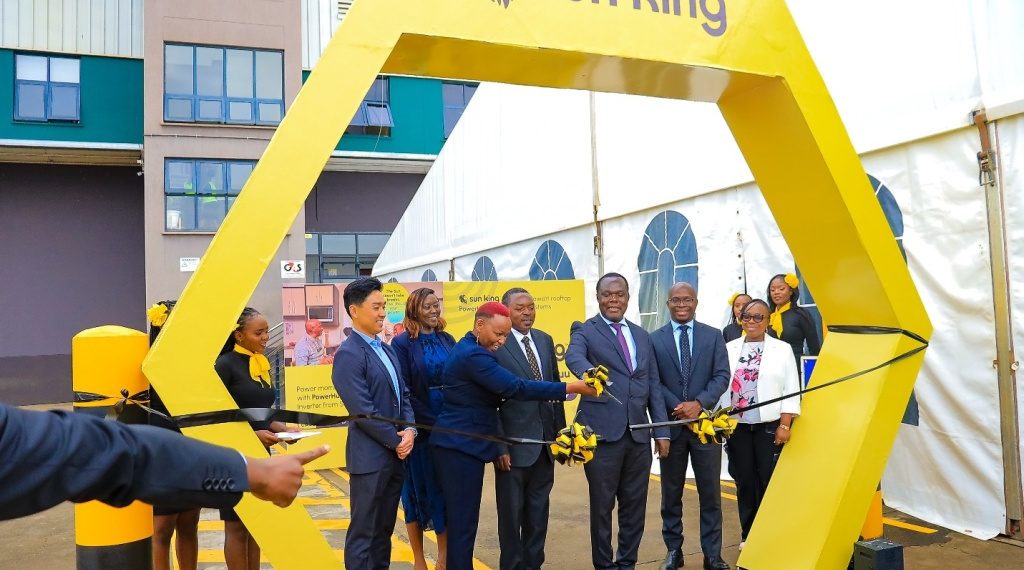
In a continent where manufacturing accounts for barely 2% of global value added, Sun King’s announcement of its twin manufacturing facilities in Kenya and Nigeria represents a potential turning point for African industrial development.
With a focus on local production and manufacturing, SunKing is set to uplift Africa’s renewable energy sector.
Breaking the import dependency cycle
For years, Nigeria’s manufacturing sector has faced a persistent challenge; heavy reliance on importation. The sector alone spent ₦3.53 trillion on imported materials in the first half of 2025, with over 70% of materials still sourced from abroad.
Against this news, Sunking which currently imports all its products from China for distribution across 11 African countries, is now pivoting toward localized manufacturing.
“At Sun King, we’re driven by a simple commitment to deliver the best-quality products at prices that families and businesses can afford. These facilities allow us to harness Africa’s talent and ingenuity to keep delivering on that promise,” said T. Patrick Walsh, CEO and Co-Founder of Sun King.
Manufacturing capacity
The Kenyan facility, already operational in Nairobi’s Tatu City industrial zone, offers a glimpse of what Nigeria can expect.
The 7,600-square-meter plant has an initial production capacity of 700,000 units annually, with room for expansion. It currently manufactures solar-powered televisions and smartphones designed to run efficiently on Sun King’s off-grid solar systems.
For Nigeria, the planned facility will focus on domestic assembly of high-value solar energy products and energy-efficient appliances, including solar panels, home systems, freezers, and televisions.
This product mix targets both the energy access gap and the consumer electronics market, two sectors with massive untapped demand in Nigeria.
The manufacturing approach will initially focus on assembly operations, which typically require less capital investment and technical complexity than full-scale production from raw materials.
However, Sun King has indicated it is “actively investigating how to expand into additional product lines and explore manufacturing pathways” that could deepen local value addition over time.
Strategic alignment with Nigeria first policy
The timing of Sun King’s manufacturing announcement aligns perfectly with Nigeria’s “Nigeria First” policy, introduced by the government in May 2025 to underpin the country’s economic strategy through industrialization and import substitution.
During the Nigeria Renewable Energy Innovation Forum in Abuja, Sun King formalized a Memorandum of Understanding with Nigeria’s Rural Electrification Agency (REA), witnessed by Vice President Kashim Shettima.
The partnership centers on three pillars: local manufacturing and value addition, technical cooperation and data sharing, and joint advocacy for off-grid solar solutions.
Perhaps the most significant aspect of Sun King’s manufacturing initiative is its potential as a replicable model. The company’s approach demonstrates how to align private sector capabilities with government industrial policy goals, particularly in the renewable energy sector.
REA Managing Director Abba Abubakar Aliyu described the partnership as a convergence of “energy access, industrial growth, and supportive policy into one unified push for Nigeria’s clean-energy future.”
The local production advantage
By manufacturing locally, Sun King aims to capture several economic advantages that directly address Nigeria’s manufacturing sector pain points:
Reduced Logistics Costs: Shipping finished goods from China to Nigeria involves substantial freight costs, insurance, and time delays. Local assembly cuts these expenses significantly.
Foreign Exchange Savings: Every unit manufactured locally rather than imported saves foreign exchange, which is critical for a country experiencing foreign exchange drain.
Shortened Supply Chains: The COVID-19 pandemic exposed the fragility of long, complex global supply chains. Regional manufacturing provides resilience against global disruptions.
Faster Innovation Cycles: Proximity to customers enables quicker product adaptation based on local feedback. Chief Operating Officer Kota Kojima noted that local manufacturing gives Sun King “the scale to deliver more efficiently, the flexibility to innovate faster, and the foundation to grow a resilient manufacturing ecosystem here in Africa.”
Challenges ahead: The reality check
While the prospects are promising, Sun King’s manufacturing venture will confront the same challenges that have affected Nigeria’s industrial sector:
Infrastructure Deficits: Unreliable power supply, poor road networks, and inadequate ports increase operational costs. Ironically, a solar company will still need grid power for certain manufacturing processes.
Skills Gaps: Despite Nigeria’s large labor force, specific technical skills for electronics manufacturing may be scarce, necessitating significant training investment.
Policy Consistency: Nigeria’s business environment has been marked by frequent policy changes and regulatory unpredictability. Long-term manufacturing investments require stable policy frameworks.
While the $150 million import substitution target is significant, the true measure of success will be whether Sun King’s facilities catalyze a broader manufacturing ecosystem.
Can the company develop local component suppliers? Will skilled workers trained at Sun King’s facility seed other industrial ventures? Can the operational model be adapted to other product categories?
These questions will determine whether this initiative represents merely a shift in assembly location or the beginning of genuine industrial deepening in Nigeria’s manufacturing sector.
