


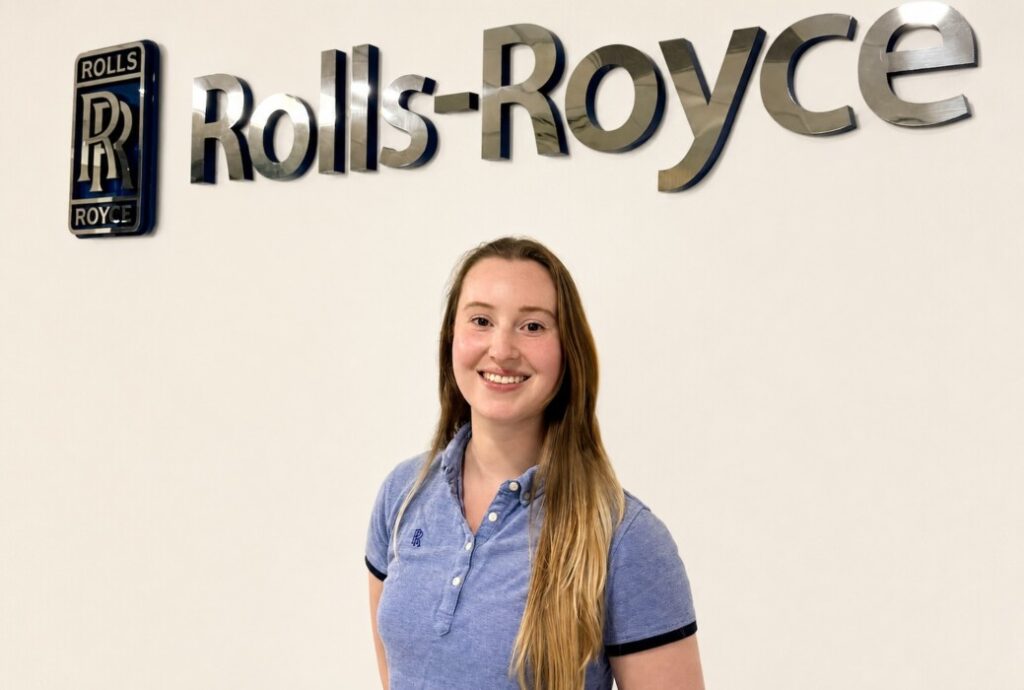
Alexia Williams, a Through Life Technical Lead at Rolls-Royce Plc, has received an MBE in the King’s Birthday Honours List for her contributions to education and skills.
Her progression exemplifies the profound impact of vocational pathways in highly technical fields like aerospace engineering. Williams, who joined Rolls-Royce in 2018 as an Engineering Degree Apprentice, became a Chartered Engineer by the age of 25. This achievement was particularly notable as she was one of only 12 women to reach this status at such a young age, showcasing her rapid professional development and commitment.
Alexia Williams Rolls-Royce Engineer Journey
Williams’ journey into engineering began in Year 9 following a visit to a careers fair. A pivotal conversation with a GKN Aerospace graduate revealed the significant advantages of an apprenticeship. This route offered an earlier career start and, crucially, helped avoid student debt, aligning perfectly with her passion for maths, science, and design technology.
She actively sought a degree apprenticeship after her A-levels, preferring practical engagement over traditional classroom settings. “As someone who didn’t really enjoy sitting in a classroom, committing to another three years of that at university didn’t seem like the route for me,” Williams stated.
This pragmatic decision laid the groundwork for her swift professional ascent, providing a solid academic foundation alongside hands-on experience. This contrasts with traditional routes into industrial production.
Her four-year aerospace engineering apprenticeship at Rolls-Royce, completed through UWE Bristol, provided invaluable industry exposure. This direct immersion allowed her to gain practical skills and apply theoretical knowledge to real-world challenges from the outset. It proved an effective launchpad for a dynamic career in a demanding sector.
Choosing a Vocational Route
The choice to pursue an apprenticeship highlights a growing appreciation for vocational training in the UK. This model integrates rigorous academic study with direct workplace application, equipping engineers with immediately relevant skills. It serves as a potent alternative to purely academic paths, ensuring a steady supply of industry-ready talent.
Pioneering Advanced Vocational Qualifications
After finishing her degree apprenticeship, Williams transitioned into a full-time role as a Deployed Life Cycle Engineer at Rolls-Royce. Her ambition for further learning led her to explore a master’s degree. She identified a unique opportunity for a Master’s Degree Apprenticeship in Through-Life System Sustainment at Cranfield University.
Williams successfully proposed this innovative approach to Rolls-Royce, becoming the first person in the company to undertake such a master’s engineering apprenticeship. The company supported her by funding study time and accommodation, demonstrating a forward-thinking approach to flexible learning. Her pioneering effort has since opened doors for others within Rolls-Royce to follow advanced vocational routes.
This commitment to continuous learning culminated in another significant achievement: becoming a Chartered Engineer. She attained this status at just 25 years old, joining a select group of only 12 women to achieve chartership by that age. This milestone underscores her exceptional capability and accelerated professional growth within engineering.
Master’s Apprenticeship Innovation
The Master’s Degree Apprenticeship offers a structured pathway for experienced engineers to deepen their expertise. It ensures that advanced theoretical knowledge translates directly into solutions for complex industrial challenges. This approach provides significant benefits for both individual career progression and a company’s intellectual capital, fostering UK manufacturing growth.
Driving Industrial Innovation at Rolls-Royce
In her current position as a Technical Lead at Rolls-Royce, Williams focuses on long-life assets and collaborates extensively with partner companies and the Ministry of Defence. Her work centres on critical improvements, feasibility studies, and various projects designed to enhance product longevity and operational performance. This directly benefits customers by ensuring higher availability.
A notable project from her previous roles involved leading an initiative to reduce turnaround times for military engine repairs. This required close collaboration with suppliers and the exploration of new manufacturing technologies. Her direct experience on the shop floor proved essential for identifying efficiencies and practical solutions to complex problems.
One specific example included integrating robotic arms with cameras for inspection purposes. This necessitated the development of new tooling, which Williams addressed creatively. She scanned existing products and then 3D printed identical parts, enabling rigorous testing of tooling, inspection protocols, and instructions without risking high-value components.
Utilising Advanced Manufacturing Techniques
This application of modern manufacturing technology significantly streamlined the development process. It dramatically accelerated cycle times while mitigating substantial financial risk. Williams noted, “Also, we didn’t have to worry about accidentally damaging a £600,000 part,” highlighting the safety and cost-effectiveness of her digital-physical approach. Other companies are also finding benefits from innovative design and production methods.
Advocacy and Mentorship Shape Future Engineers
Beyond her technical contributions, Williams passionately champions STEM careers and apprenticeships, having dedicated over 200 hours to outreach activities in the past year alone. Her commitment extends to significant leadership roles, including Non-Executive Director at EAL and Trustee on the Board of Enginuity. She also chairs the IfATE Apprentice Panel and serves as an Apprentice Representative for the UCAS Apprenticeship Stakeholder Group.
Williams credits strong mentorship for much of her success throughout her career. Both internal and external mentors played pivotal roles in guiding her through various professional stages. A senior woman in engineering at Rolls-Royce provided invaluable internal support, offering perspectives on navigating career progression within the company’s specific context.
Moreover, a manager acted as a “silent champion,” advocating for her when suitable positions arose. However, a particularly impactful relationship blossomed through the UWE Women Like Me Mentoring Scheme. This program paired her with a more senior engineer from a different company, providing a crucial external perspective and sustained guidance.
The Power of Diverse Mentorship
Mentorship, whether internal or external, remains vital for navigating the complexities of an engineering career. These relationships provide critical advice, open professional doors, and build confidence. Williams’ experience underscores how diverse perspectives strengthen an engineer’s development and contribute to broader industry talent pipelines.
Industry Recognition and Wider Impact
The MBE in June 2026, alongside more than 25 career awards, firmly establishes Williams as a leading figure in UK engineering. Her Young Manufacturer of the Year award at The Manufacturer MX Awards in November 2025 further solidified this reputation. These honours recognise her technical prowess and her broader influence as an advocate for the industry.
Taahir Patel, Process Development Manager at LISI Aerospace and a judge for the TMMX Awards, praised Williams’ exceptional presentation. He highlighted her effective use of analytics to demonstrate the tangible impact of her STEM activities. Patel specifically noted “the scale of her outreach and the measurable difference she is making,” which distinguished her in a highly competitive field.
Williams also made significant contributions to sustainability within her previous roles at Rolls-Royce. She transitioned shop floor processes from paper to digital, a detail that greatly impressed the TMMX judges. This seemingly minor change had a “huge impact,” showcasing her ability to drive positive change beyond core engineering tasks.
IET Young Woman Engineer of the Year 2024 Winners
Alexia Williams was a notable recipient at the IET Young Woman Engineer of the Year 2024 awards. The full list of winners, per theiet.org, includes:
- Young Woman Engineer of the Year: Marisa Kurimbokus
- Womens Engineering Society Prize Winner: Natalie Parker
- Mary George Memorial Prize for Apprentices Winner: Alexia Williams
- Gender diversity ambassador award winner: Brigid Smith
- Highly commended for Mary George Memorial Prize: Erin Lowe
- Finalist: Salma Al Arefi
Her achievements demonstrate the tangible benefits of apprenticeships for individuals and the broader industry. Williams serves as a compelling example for aspiring engineers, particularly women, illustrating how vocational routes can lead to chartered status and national recognition. She plans to further explore the business and financial aspects of engineering at Rolls-Royce, signalling continued growth.
