


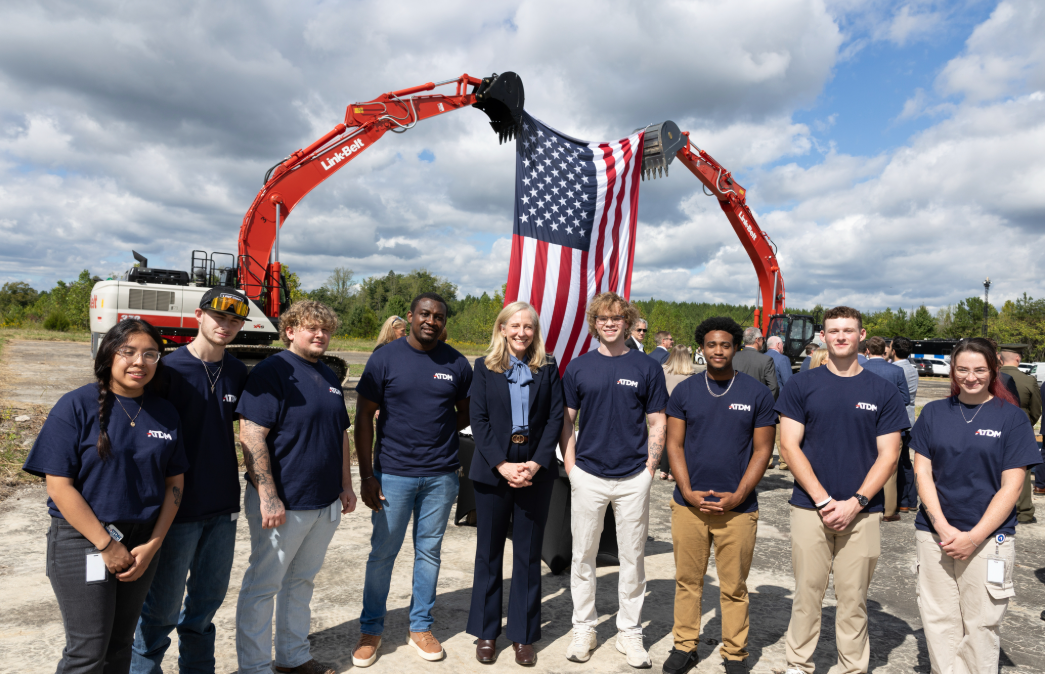
Avio USA Inc. broke ground on its first US solid rocket motor (SRM) manufacturing facility in Hurt, Virginia, on 29 September 2026.
The project comes as the US seeks to expand domestic solid rocket motor production capacity and strengthen the defence industrial base. Avio USA, headquartered in Arlington, Virginia, has agreements with Lockheed Martin and RTX’s Raytheon business relating to the future facility. The company intends to operate as a merchant supplier serving multiple defence customers.
Virginia facility spearheads solid rocket motor manufacturing
The new manufacturing complex represents an investment of more than $500 million in US solid rocket motor production capacity. The approximately 900,000-square-foot facility is expected to produce thousands of solid rocket motors annually for US tactical missile programmes. The project is intended to add another domestic source of solid rocket motors and strengthen supply-chain resilience.
Virginia Governor Abigail Spanberger has committed significant state support to the project. Under Virginia’s Solid Rocket Motor Manufacturing Grant Fund, Avio can receive grants of up to $6 million per fiscal year from July 2027 through July 2046, subject to the programme’s conditions. The programme requires a qualified company to create and maintain at least 1,546 new full-time jobs, among other conditions.
Construction is expected to be completed by late 2028, with solid rocket motor production anticipated to begin in early 2029. This aggressive timeline reflects the urgent demand within the U.S. defence sector for increased munition volumes and faster delivery capabilities.
Strategic investment in U.S. defence industrial capabilities
Avio’s investment of more than $500 million will add new domestic solid rocket motor production capacity in the United States.
James Syring, CEO of Avio USA, articulated this ambition, stating, “Our goal is to be an independent, open-source merchant supplier, able to support multiple customers and programmes and provide major defence primes with an additional source for this critical capability.”
The company says the merchant-supplier model will provide additional capacity and competition in the US rocket motor supply chain. The direct investment in new production lines reinforces the capacity for defence applications on home soil.
Addressing supply chain fragility and growing demand
The urgency behind Avio USA’s expansion stems from a significant increase in demand for solid rocket motors, exacerbated by global conflicts and the need to replenish national stockpiles. The US solid rocket motor industrial base has become highly concentrated, raising concerns about supplier capacity and resilience.
This consolidation has prompted concerns regarding both supply chain resilience and manufacturing competition. Solid rocket motors are used in a wide range of missile and defence systems, including tactical missiles and air-defence interceptors. The US government has identified diversified domestic SRM production as an important element of defence-industrial resilience.
Tim Cahill, President of Lockheed Martin Missiles and Fire Control, underscored this point when discussing the strategic cooperation agreement with Avio. “A reliable and diverse supply chain for solid rocket motors is fundamental to our strategy for a stronger defense industrial base,” he stated. He added that the agreement enables a quicker production of essential capabilities, helping customers maintain a competitive edge against emerging threats.
Partnerships driving accelerated production
Avio USA has strategically aligned with leading defence contractors to integrate its new capabilities directly into existing supply chains. The October 2026 announcement of a strategic cooperation agreement with Lockheed Martin, made at the AUSA Annual Meeting in Washington, formalises a non-binding term sheet signed in November 2025.
Following qualification, the initial Lockheed Martin work will focus on solid rocket motors for the Extended Range Guided Multiple Launch Rocket System (ER GMLRS) and Precision Strike Missile (PrSM).
Giulio Ranzo, Chief Executive Officer of Avio S.p.A., highlighted the company’s broader intent. He noted that Avio has initiated an investment exceeding $500 million to establish new SRM production capacity in the United States, with the explicit aim of becoming a merchant supplier to various defense customers.
The agreement is intended to give Lockheed Martin access to additional SRM capacity once the motors are qualified.
Beyond Lockheed Martin, Avio also signed a memorandum of understanding with an RTX subsidiary, Raytheon, in November 2025. The agreements with Raytheon and Lockheed Martin support Avio’s plan to operate the facility as a merchant supplier serving multiple defence customers. Such collaborations are vital for supporting the Virginia facility and stabilising the supply chain for critical missile components.
Avio’s extensive propulsion heritage
The Italian parent company, Avio S.p.A., brings over 50 years of experience in solid propulsion to its U.S. expansion. Founded in 1912, the international group has been a prime contractor for the European Vega launcher programme and a significant subcontractor for the Ariane programme. Avio S.p.A. brings more than 50 years of experience in solid propulsion and participates in European launch-vehicle programmes including Vega and Ariane.
Avio USA operates under a U.S.-led board of directors and adheres to stringent U.S. security and export-control regulations. This structure ensures its operations are fully integrated within the American defence framework. Avio USA is led by retired US Navy Vice Admiral James Syring, who previously served as director of the US Missile Defense Agency from 2012 to 2017.
Syring’s background, which includes overseeing critical missile defence programmes and a 32-year career in naval engineering, provides Avio USA with strong leadership rooted in U.S. defence needs. His previous roles, such as Program Executive Officer for Integrated Warfare Systems, equipped him with a deep understanding of developing and sustaining integrated weapons systems for the U.S. military.
Broader national efforts in advanced manufacturing capacity
In January 2026, the Department of War and L3Harris announced proposed terms for a $1 billion convertible preferred equity investment in L3Harris’ Missile Solutions business. The investment is intended to expand production capacity and modernise facilities supporting solid rocket motor supply.
L3Harris subsequently announced a further investment of more than $1 billion in its Orange County, Virginia, operations. The Virginia Advanced Propulsion Facilities project is expected to more than double manufacturing space and create more than 350 jobs over five years.
These projects reflect a wider effort to increase domestic production capacity and diversify the US solid rocket motor supply base.
Outlook for propulsion system innovation
Avio expects the Hurt facility to be completed by late 2028 and begin production in early 2029. The company says the plant will produce thousands of solid rocket motors annually, while agreements with Raytheon and Lockheed Martin provide potential demand from multiple defence customers.
The project therefore represents a new entrant into the US solid rocket motor manufacturing base, with its future output expected to support missile programmes and other propulsion requirements as Avio builds towards full production.
