


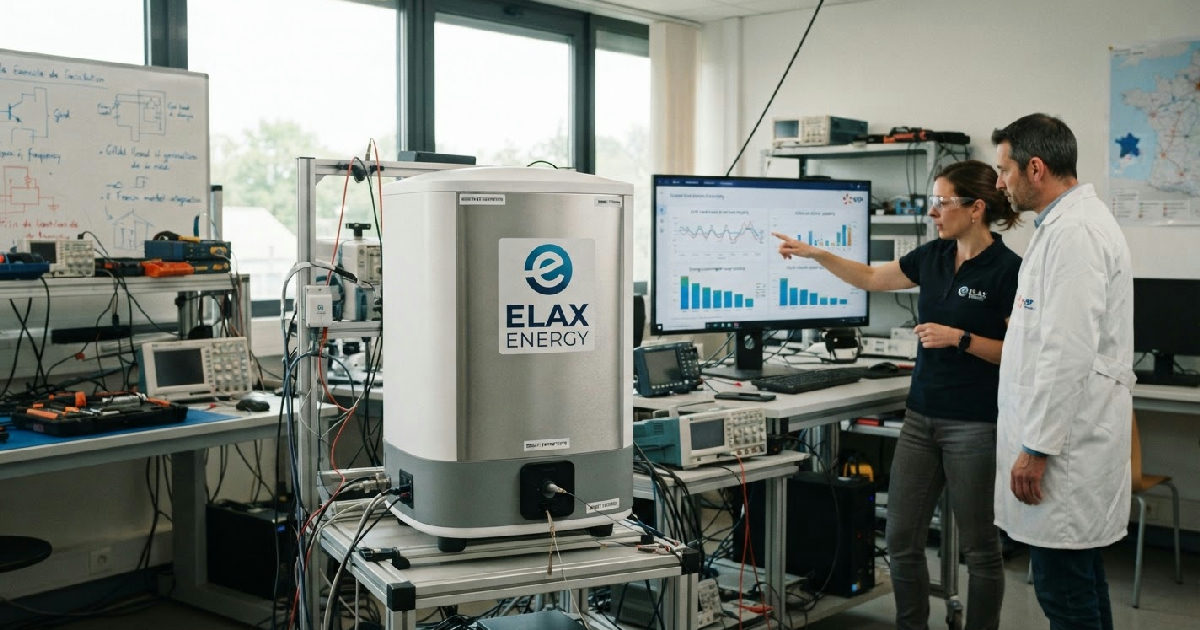
Elax Energy has raised €30 million to expand its smart water-heating technology.
The funding will help Elax Energy scale up its technology, which shifts water heating to periods when electricity is cheaper and less carbon-intensive. The technology could support France’s energy transition by helping balance electricity supply and demand as renewable generation increases.
Reimagining Water Heaters for Grid Stability with Elax Energy
Elax Energy’s technology focuses on a familiar household appliance: the electric water heater. Electric water heaters are traditionally treated as inflexible electricity loads. With smart controls, however, their heating cycles can be adjusted to provide demand flexibility by storing energy as heat. Hot-water tanks can store thermal energy, allowing water to be heated when electricity is plentiful and used later when demand or electricity prices are higher.
The system uses a connected thermostat installed on an existing electric water heater, with installation reportedly taking about 20 minutes per unit. The device uses its own mobile connection, so it does not need to connect to the household’s Wi-Fi network. This approach allows the device to communicate with Elax Energy’s control system without relying on household Wi-Fi.
Precision Engineering for Energy Efficiency
Once installed, the thermostat adapts its heating schedule to the household’s hot-water consumption patterns. It then schedules heating cycles for periods when electricity prices are lower and, where possible, carbon intensity is lower, such as when renewable generation is abundant. The scheduling system is designed to avoid unnecessary heating and improve energy use while meeting household hot-water needs.
The company reports that this scheduling approach reduces household water-heating energy consumption. According to an assessment by environmental consultancy Carbone 4, Elax Energy’s technology can reduce the energy used for water heating by 20% to 25%. These savings could reduce household energy consumption while helping manage electricity demand at the grid level.
Scaling from Social Housing to Private Homes
Before the latest funding round, Elax Energy had installed its technology in nearly 100,000 social-housing properties across France. These installations provided an opportunity to demonstrate the technology at scale in social housing. The company now plans to expand into the private residential market.
Selling to individual homeowners presents different challenges from deploying the technology through institutional landlords. The €30 million funding is intended to support marketing, wider deployment and efforts to build confidence among private customers. The investors in the round included:
- Crédit Mutuel Impact
- Fonds Révolution Environnementale et Solidaire
- Noria
The funding will support Elax Energy’s efforts to expand its technology into the residential market. The funding will help the company expand beyond social housing into private homes.
Addressing France’s Evolving Energy Landscape
Elax Energy’s expansion comes as France adapts its electricity system to changing patterns of energy generation and demand. France is adapting electricity pricing and off-peak periods to make better use of daytime solar generation. Depending on the applicable tariff, some households may benefit from shifting water heating to daytime periods when solar generation is higher.
A French electricity-flexibility initiative is encouraging energy providers, including EDF, to manage electricity demand across large numbers of connected devices. Elax Energy’s connected water heaters could give energy providers another way to manage electricity demand.
The network can shift water heating towards periods of high renewable generation, helping absorb surplus electricity from sources such as wind and solar. By increasing the use of low-carbon electricity, the technology could contribute to France’s wider decarbonisation efforts.
The Engineering Behind Grid-Interactive Water Heaters
Using water heaters to support electricity-grid management is an established concept in energy engineering. These systems are often referred to as grid-interactive water heaters (GIWHs). Grid-interactive water heaters can provide flexible thermal storage by adjusting when they draw electricity, potentially helping to manage grid demand. They do this by adjusting their heating schedules in response to electricity demand, prices or renewable generation.
These systems can support load shifting and demand response. Depending on their technical capabilities and participation arrangements, they may also contribute to certain ancillary services. The engineering challenge is to develop a secure, reliable and user-friendly system that can coordinate large numbers of connected water heaters.
Reliable communications are essential for coordinating connected water heaters, and Elax Energy’s use of mobile connectivity avoids dependence on household Wi-Fi.
Building Resilience through Distributed Energy
Founded in 2020 by Thomas Tirtiaux, Samuel Beaussier and Jean-François Eggericx, Elax Energy develops decentralised systems for managing electricity demand. Chief executive Thomas Tirtiaux previously co-founded Solen France and has a background in climate and energy engineering. This experience is relevant to the development of energy-management technologies designed to reduce emissions.
The company’s three funding rounds indicate that it has attracted investment to support this business model. The approach extends grid management by allowing household appliances to respond to changing electricity-system conditions. By using household water heaters as flexible thermal storage, the model could help improve demand management and reduce the need for some forms of additional grid flexibility.
Broader Implications for Energy Infrastructure
Elax Energy’s approach could have implications for electricity-grid management as well as household energy costs. As electricity grids integrate more variable renewable generation, flexible demand management is becoming increasingly important. Systems such as Elax Energy’s could provide additional flexibility by shifting electricity demand, complementing other grid-balancing measures, including battery storage.
At scale, this approach could allow participating households to contribute to demand flexibility and potentially help reduce some electricity-system balancing costs. The approach illustrates how existing household equipment can be adapted to help manage electricity demand. Smart controls could therefore provide another tool for improving the flexibility of existing energy infrastructure.
