


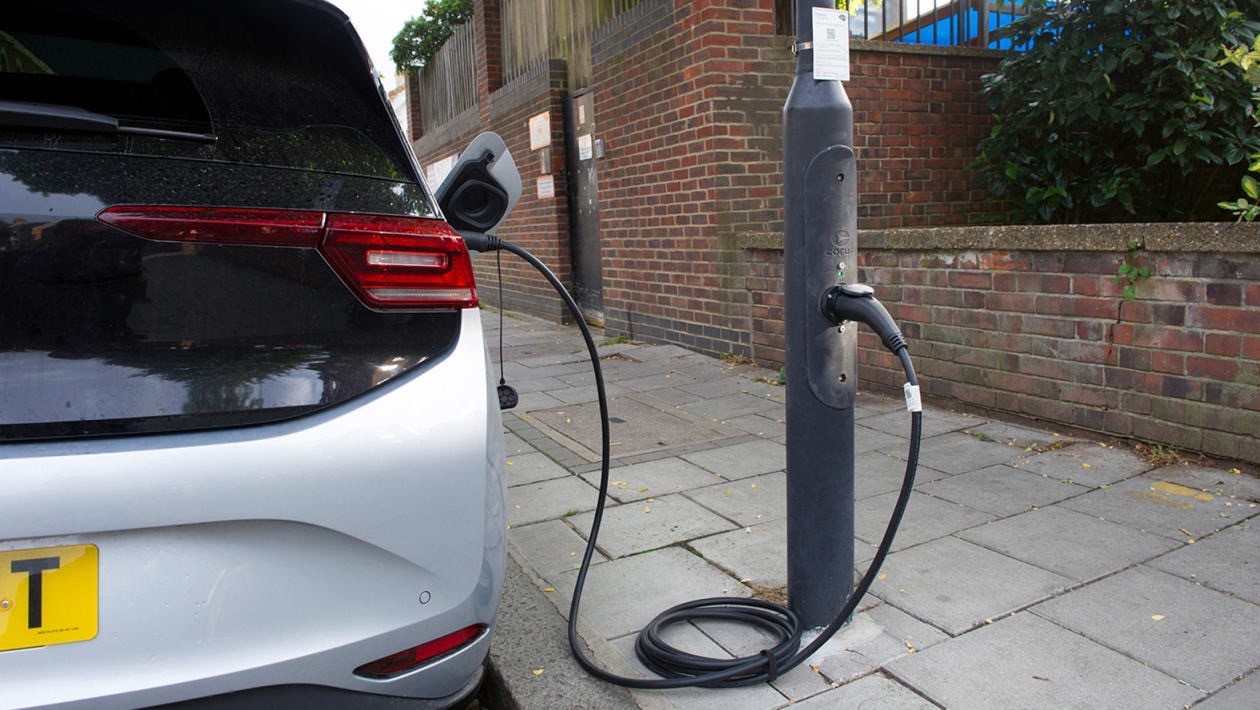
LUG West Africa is positioning itself as a key player in Nigeria’s emerging clean energy manufacturing space, unveiling plans to locally assemble street lighting infrastructure while expanding electric vehicle charging facilities across Lagos State.
The company announced that it plans to install more than 250 electric vehicle charging points across the state and establish a domestic assembly plant for street lighting components by 2026.
The move is part of a broader strategy to strengthen local manufacturing and reduce Nigeria’s dependence on imported urban infrastructure equipment.
The announcement was made during LUG West Africa’s 2025 end-of-year gathering in Lagos, which drew senior government officials and industry stakeholders.
See here: Pan-African EV maker Kemet Automotive secures 10,000+ pre-orders ahead of production
Speaking at the event, LUG West Africa’s Executive Chairman and Managing Director, Imran Hamzat, said the company is deepening collaboration with international partners to build manufacturing and assembly capacity within Nigeria.
“Each electric vehicle requires about 240 volts to achieve an hour of charging capable of covering approximately 40 miles, roughly the distance between Lagos and Abeokuta,” he said.
The managing director also explained that by integrating seven monocrystalline solar panels, each producing 36 volts, “the system can generate sufficient power to charge one electric vehicle, covering an estimated 200-metre stretch of roadway.”
As reported by The Punch, he further elaborated that locally produced street lighting systems would be designed to integrate seamlessly with electric vehicle charging technology, particularly solar-powered solutions.
Hamzat noted that the company’s existing footprint provides a strong platform for scaling local production.
“Lagos State alone can conveniently support an average of 250 EV charging stations. 250 charging stations across Lagos State would be sufficient to support the projected number of electric vehicles nationwide,” Hamzat added.
LUG West Africa has already deployed more than 50,000 solar-powered street lights across Lagos State, infrastructure that can be leveraged to support domestically assembled EV charging systems.
The company’s manufacturing push aligns with Nigeria’s broader industrial policy direction.
Nigeria’s recent EV deal with YJT
Only recently, the Nigerian government announced a manufacturing-driven partnership with Chinese infrastructure and Internet of Things firm, You Jie Te Environment Technology Ltd, aimed at developing local production lines for clean transport infrastructure.
That agreement, executed through the Presidential Initiative on Compressed Natural Gas and Electric Vehicles, focuses on establishing in-country manufacturing and assembly for CNG and electric vehicle infrastructure.
The objective is to deepen industrial capacity, cut import costs, and accelerate the adoption of cleaner transportation technologies across Nigeria.
Together, these initiatives reflect a growing shift toward local manufacturing as Nigeria seeks to build a sustainable clean energy ecosystem anchored in domestic production rather than imports.
