


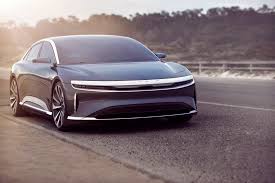
Pan-African electric vehicle manufacturer Kemet Automotive has announced that it secured over 10,000 pre-orders for its debut vehicles ahead of commencing full-scale production, marking one of the strongest early market responses for an African-made EV brand.
The company made this announcement on Tuesday, December 3, 2025, signaling rising consumer confidence in locally manufactured clean transportation solutions across the continent.
Company Background and Leadership
Kemet Automotive was co-founded by Nissi Ogulu, a former Land Rover engineer who brings international automotive expertise to the Pan-African venture.
The company describes its mission as going beyond vehicle manufacturing to proving that “global-standard innovation can spring from African soil.”
Co-founder and Co-CEO Ogulu stated, “Kemet is building vehicles that inspire pride and deliver real performance. We want Africans to see that world-class innovation can come from here and lead globally.”
Kemet Automotive is positioning itself to become one of the continent’s first globally competitive automotive manufacturers, demonstrating what is possible when Africa builds transportation solutions specifically designed for its markets, terrain, and climate conditions.
Design Philosophy: Functional Sculpting
At the heart of Kemet’s product development is a design philosophy the company calls “Functional Sculpting.” Led by Ogulu, this approach blends durability with emotional appeal, creating vehicles that reflect the resilience, identity, and aspirations of African drivers.
According to the company, its vehicles are engineered to handle the continent’s diverse and often challenging terrains without compromising style or performance.
The design emphasizes durability, recognizing that African consumers need vehicles that can reliably navigate infrastructure challenges.
Vehicle Portfolio
Kemet has completed the design and prototype phases of six concept vehicles, including the Gezo tricycle for micromobility, the Nandi compact SUV, the Mansa premium SUV, a high-performance GT, and a spacious shuttle bus.
The company’s first production car, expected to launch in Q1 2027, will feature an impressive range of up to 500-800 kilometers on a single charge, putting it on par with leading luxury EVs while being significantly more affordable due to local manufacturing that eliminates hefty import taxes.
Manufacturing Strategy and Locations
Kemet plans to establish a distributed manufacturing footprint across three strategic locations on the continent. The company planned facilities in Senegal, Ghana, and Côte d’Ivoire, with Nigeria serving as a secondary manufacturing site due to its massive market potential.
Ogulu has indicated that manufacturing site selection is based on several criteria: adoption readiness, progressive government policies, favorable investment incentives, proximity to market demand, and the ability to nurture the business in that environment.
Strategic Partnership with Africa Design School
To build the talent pipeline necessary for long-term growth and sustainability, Kemet has entered into a strategic partnership with Africa Design School (ADS) in Cotonou, Benin Republic.
The collaboration will train young designers and engineers in automotive design, mobility technology, and EV manufacturing, opening new career pathways in an industry that has historically had limited presence on the continent.
The partnership aims to strengthen Africa’s design capability and position African creativity at the center of the emerging global EV market.
Ogulu stated: “The ADS partnership will support that ambition by training young designers and engineers” to build a pipeline of innovation grounded in African identity.
Market Context and Growth Potential
The 10,000+ pre-orders come as Africa’s urban population is projected to reach 1.4 billion by 2050, creating massive demand for reliable, eco-friendly, and affordable transportation.
Kemet believes its localized production model positions it perfectly to meet that demand and lead what could become a multi-billion-dollar industry.
Currently, electric vehicle adoption in Africa remains limited.
As of early 2025, Nigeria has an estimated 15,000 to 20,000 electric vehicles (EVs) on its roads, which is well short of the government’s target of 7.5% EV adoption by the end of 2025.
The long-term goal is for EVs to constitute 60% of the total vehicle market by 2050.
Several factors, such as high costs, unreliable electricity supply, limited charging infrastructure, and underdeveloped transport and manufacturing systems in Nigeria, have hindered EV adoption.
Across Africa, governments are setting ambitious targets for cleaner transport, supported by tax incentives and import duty waivers. South Africa leads with over 300 charging stations, while Kenya, Ghana, and Rwanda are rapidly expanding their networks.
Addressing Charging Infrastructure Challenges
Charging infrastructure remains a major bottleneck for EV adoption across Africa. Kemet is addressing this through multiple approaches.
The company has established partnerships with charging station companies in Côte d’Ivoire, Senegal, Benin, and Kenya, to whom they provide technology support.
Kemet and its partners have installed charging stations in Victoria Island, Lagos, acknowledging the current sparsity of charging points in Nigeria.
The company is also exploring portable charging solutions and supercharging technology, aiming for vehicles with ranges of up to 800 kilometers per charge.
Ogulu explained: “We’ve created varying systems that can cater to all the varying conditions,” recognizing that charging infrastructure will develop gradually and vehicles must be designed to operate effectively during this transition period.
Looking Ahead
While Kemet has secured impressive pre-orders, the company has not disclosed a specific timeline for commencing full-scale production beyond indicating that its first production vehicle will launch in Q1 2027.
If Kemet successfully navigates these challenges and delivers quality vehicles at promised price points, it could catalyze a transformation in African mobility. For now, the pre-order milestone represents validation that African consumers are ready to embrace locally manufactured electric vehicles.
