


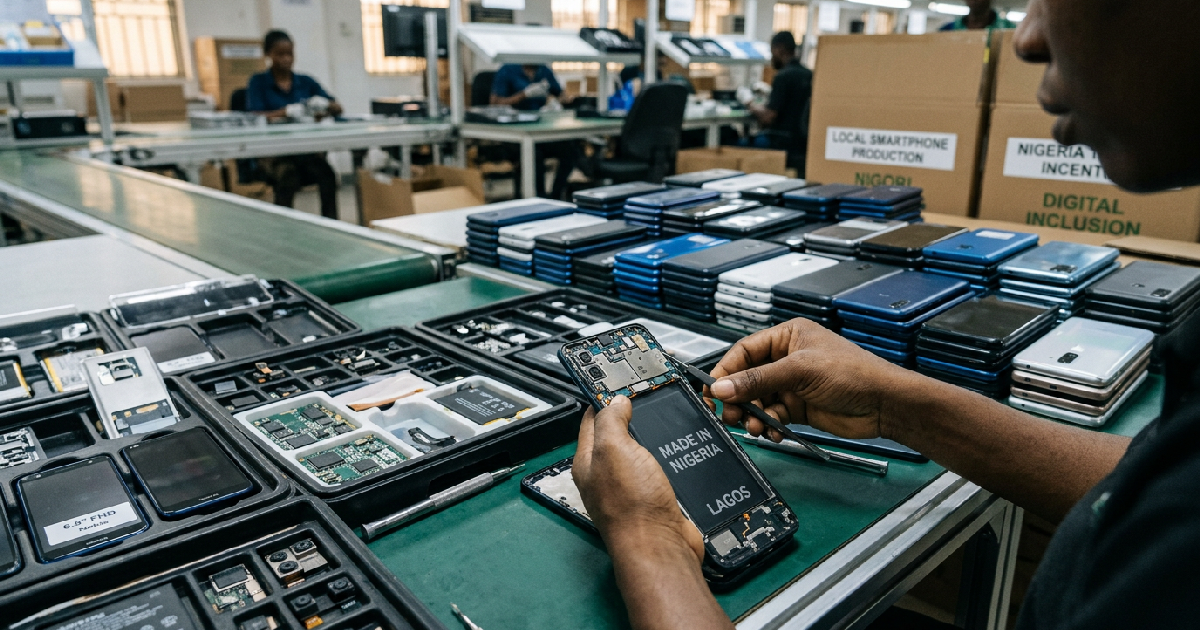
Nigeria has set a critical November 2026 deadline for companies to begin establishing local smartphone manufacturing plants, marking an escalated effort to curb reliance on imported devices. The government is extending tax waivers and other incentives to both international firms, notably Chinese phone makers, and Nigerian companies prepared to invest in domestic production facilities.
This strategic push aims to make smartphones more accessible for millions and strengthen the nation’s technological self-sufficiency.
Incentivising domestic tech production for Nigeria local smartphone manufacturing
This policy shift comes as soaring exchange rates continue to push device prices beyond the reach of many Nigerian consumers. By fostering local manufacturing, Abuja intends to stabilise retail prices, reduce production costs linked to foreign exchange, and generate thousands of direct and indirect jobs across the burgeoning tech sector.
The Nigerian government’s ambition is clear: it seeks genuine device manufacturing within its borders, moving beyond mere assembly. This package of incentives specifically targets established international players, particularly those from China, alongside indigenous companies ready to commit to local production facilities. The November 2026 construction commencement deadline underscores the urgency and strategic intent behind this industrial policy.
This initiative builds on recent declarations from key officials. Idris Olorunnimbe, Chairman of the Governing Board of the Nigerian Communications Commission (NCC), pledged to secure presidential backing for manufacturers at the Digital Africa Summit Roundtable in Shanghai on June 24, 2026. His commitments included tax incentives and crucial regulatory support for those establishing smartphone factories in Nigeria.
Mr. Olorunnimbe emphasised that local device production represents the most sustainable path to lowering smartphone costs. This approach is also seen as essential for closing Nigeria’s significant digital access gap. For a nation grappling with the economic impact of imported goods, local manufacturing offers a tangible step towards greater self-sufficiency and economic diversification.
Key details
The prohibitive cost of smartphones remains a primary barrier to digital inclusion in Nigeria. Many citizens find current device prices unattainable, largely due to ongoing currency fluctuations and the overall expense associated with imports. By localising manufacturing, the government directly addresses these affordability issues, aiming to make essential digital tools more widely available across the country.
This effort goes beyond simply providing cheaper phones; it seeks to unlock broader participation in the digital economy. Reduced device costs can improve access to education, financial services, healthcare information, and market opportunities for millions of Nigerians. Industry stakeholders, including major telecom operators and consumers, have largely welcomed the proposal, acknowledging its potential to strengthen Nigeria’s manufacturing base and expand access to vital digital services.
Moreover, the anticipated creation of thousands of direct and indirect jobs aligns with the government’s wider agenda for youth employment and economic empowerment. From assembly line technicians to component suppliers and logistics personnel, a thriving local smartphone industry could create a cascading economic effect.
This move highlights a deliberate policy to foster a more resilient internal economy, reducing reliance on external market forces for critical goods.
Lessons from prior local assembly attempts
Nigeria’s aspiration to produce its own smartphones is not a new concept; the country has initiated similar programmes in the past. These earlier efforts offer valuable lessons for the current push. In 2017, AfriOne launched locally assembled smartphones from its factory in Lagos.
AfriOne positioned its devices as a foundational step towards expanding Nigeria’s nascent electronics manufacturing sector. The following year, Imose Technologies broadened its range of affordable smartphones and tablets, specifically targeting everyday Nigerian consumers. These initial initiatives did succeed in creating some jobs and encouraging local assembly.
However, they encountered considerable challenges. A significant hurdle was their continued heavy dependence on imported parts, which limited their capacity to genuinely reduce costs tied to foreign exchange. This reliance meant that local assembly struggled to decouple from global supply chain volatilities and currency fluctuations, often negating the benefits of local production.
Key details
These earlier local brands also faced intense competition from established international players who dominated the market. Issues such as inconsistent product quality, inadequate after-sales support, and low consumer confidence further hindered their growth trajectory. Ultimately, imported brands maintained their market supremacy, leaving local assembly efforts struggling to gain significant traction and market share.
Government officials maintain that this new initiative differs fundamentally from previous attempts. The goal this time extends beyond simple assembly; it aims to build devices that can compete directly with imported smartphones on quality while still selling at lower prices for the consumer. This requires a deeper level of manufacturing integration and control.
Officials also hope that developing stronger local supply chains will make the entire sector less vulnerable to exchange rate volatility and global supply disruptions. This focus on supply chain resilience marks a critical evolution in Nigeria’s industrial strategy, moving past mere assembly towards genuine manufacturing capability. The wider push to boost export growth through engineering initiatives reflects this broader strategic ambition.
Broader industrial and economic implications
If successful, this renewed push for Nigeria local smartphone manufacturing could significantly reshape the nation’s technology ecosystem well beyond just mobile devices. Local manufacturing inherently supports a broader network of related industries. This includes encouraging component suppliers to establish local operations, serving the phone makers directly.
It also benefits logistics providers, retailers, and independent repair businesses, all of which would see increased demand and activity. Such a shift enables Nigeria to retain more value from one of Africa’s largest smartphone markets, rather than seeing that value flow out through imports. Effective implementation could also spur greater demand for advanced operational solutions across all industrial sectors.
This initiative aligns directly with the Nigerian government’s broader industrialisation agenda. That agenda increasingly prioritises local production over imports across a range of strategic sectors. It’s a move towards building foundational capabilities rather than relying solely on external sourcing for critical goods, fostering long-term economic stability and technological independence.
The November deadline and the path ahead
The ultimate success of this latest drive hinges on whether manufacturers will take up the government’s offer before the November 2026 deadline. Their commitment to commencing construction on new plants will be the decisive factor in whether this effort succeeds where earlier attempts fell short. This period represents a critical test of policy effectiveness and private sector responsiveness.
This strategic shift represents more than just an economic policy; it’s a tangible commitment to industrial self-sufficiency and digital empowerment for Nigeria. By fostering local manufacturing, Abuja seeks to create a more resilient, accessible, and value-retaining technology sector.
The implications for wider industrial development are also significant, as the nation seeks to enhance its productive capacity. This type of domestic investment could also accelerate the adoption of new manufacturing technologies, such as those within the growing cobot market.
The coming months will demonstrate whether Nigeria can finally move beyond being primarily a major consumer market for smartphones to becoming a significant producer. The November deadline looms as a crucial marker for this ambitious industrial transformation. Meeting it would signal a profound shift in Nigeria’s economic trajectory, leveraging technology for sustained growth.
