


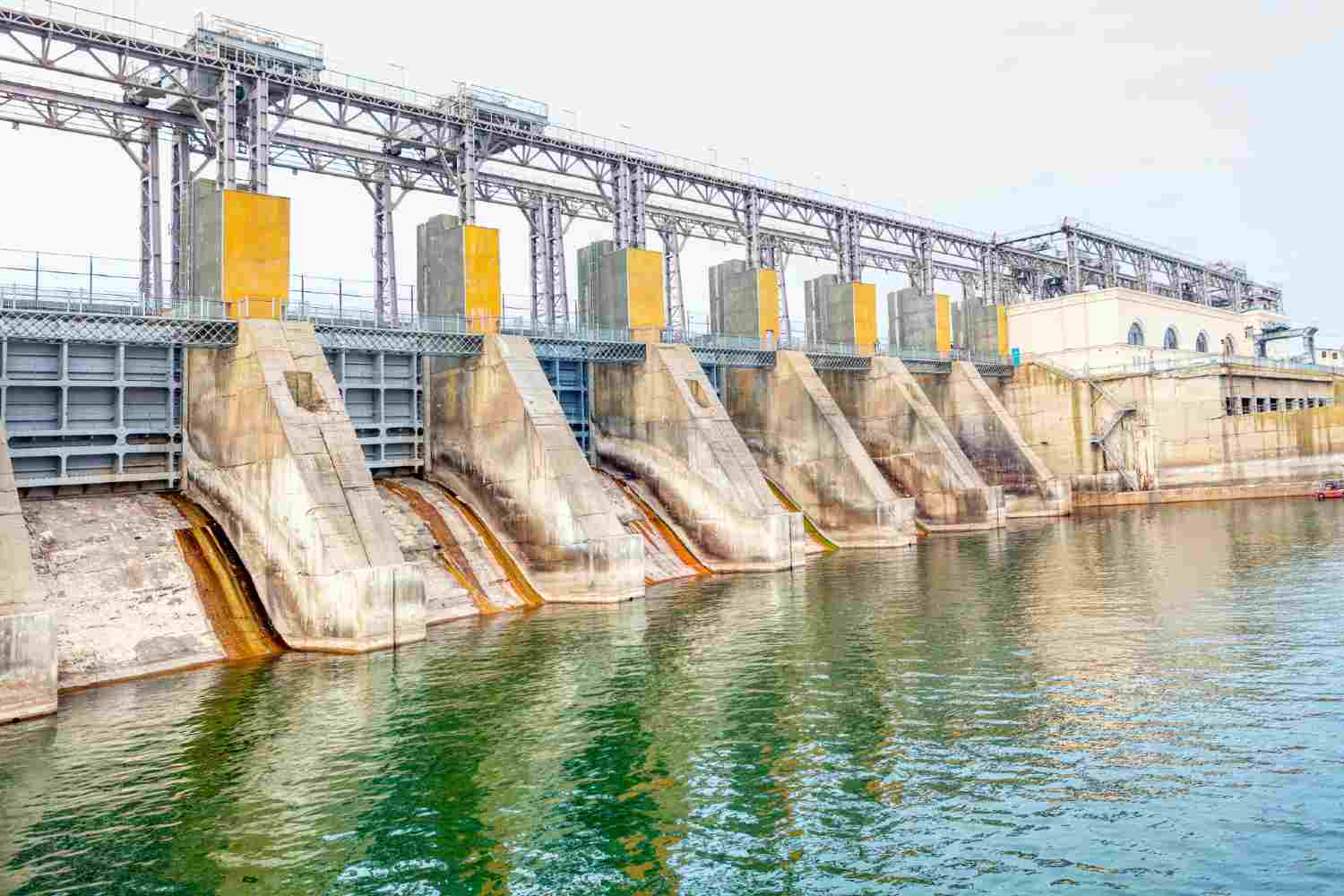
The Nigerian government has teamed with the United Nations Industrial Development Organization and the Chinese government to construct a Small Hydropower in the country’s capital, Abuja, to solve its power crisis via enhancing its engineering capacity and local manufacturing ecosystem.
The project, funded by the China International Development Cooperation Agency, aims to increase renewable energy generation while simultaneously developing technical skills in the design, manufacture, and maintenance of small hydroelectric systems.
The effort is expected to help build local supply chains for turbines, control systems, and other vital components, as well as improve rural energy access and agro-industrial processing capabilities.
The center, which will be located at the University of Abuja, is the first of its kind in Nigeria and the West African area.
It is intended to serve as a hub for applied engineering training, prototype development, and industry research, with an emphasis on small-scale hydropower technologies appropriate for local conditions.
At the launch, as seen in Punch, Philbert Johnson emphasised the critical importance of energy infrastructure in industrialisation, emphasizing that Nigeria’s renewable energy resources, despite their size, are mostly underutilized.
He emphasized that small hydropower in particular offers substantial prospects for modular energy deployment, localized manufacturing, and grid resilience.
However, adoption has been restricted, with less than 5% of the country’s potential currently realized, due mostly to shortages in technical capacity, financial, and legal frameworks.
At the opening event, Philbert Johnson, UNIDO’s Regional Director, emphasized the role of energy in promoting economic success.
He emphasized that, despite Nigeria’s abundant renewable energy resources, much of its potential remains unexplored.
“It is a special privilege and great pleasure for me to be with you today at this crucial launch of the China International Development Cooperation Agency-funded project on ‘Establishment of a Small Hydro Power Centre of Excellence in Nigeria’. Energy is indeed a critical input for sustainable economic growth and industrial development,” he said.
“Energy is indeed a critical input for sustainable economic growth and industrial development. Fortunately, Nigeria is endowed with a tremendous amount of renewable energy resources such as hydropower, solar, biomass, and wind.
Among these renewable energy sources, Small Hydropower holds great potential towards increasing access to affordable electricity and addressing climate change.
Despite Nigeria’s substantial SHP potential, less than five per cent has been developed. This underdevelopment is mainly due to technical, financial, and policy barriers,” he added.
As seen in the Punch, the regional director clarified that the new facility was set up to deal with these issues and assess the nation’s unrealized hydropower potential.
“The centre will serve as a hub for knowledge transfer, technical training, and policy guidance, benefiting not only Nigeria but the broader West African region,” he said.
“It will support the integration of renewable energy systems, combining small hydropower with solar and wind to enhance energy resilience and sustainability,” Johnson added.
