
Close Menu
Makers

    Subscribe to Updates

    Get the latest creative news from FooBar about art, design and business.

    What's Hot

    Aras launches Industry Accelerator for semiconductor workflows

    July 15, 2026

    AI chiplet platform developer TYLsemi raises $43 million

    July 14, 2026

    Humanoid robot power management: the real challenge

    July 14, 2026
    Facebook X (Twitter) Instagram
    Makers Wednesday, July 15
    • Send us an email
    Facebook X (Twitter) Instagram LinkedIn
    • Homepage
    • About us
    • News

      Chinese investment signals growing confidence in Egypt’s manufacturing sector

      June 9, 2026

      The AI startup taking on jet engines, chips, and Jeff Bezos’ new industrial lab

      June 8, 2026

      Egypt inaugurates a production project to generate as much as $500 million yearly

      June 8, 2026

      Nigeria to build 70,000 electric vehicles annually under ambitious $95 million plan

      June 6, 2026

      Mercedes unveils what it calls an ‘armoured private jet on wheels’

      June 5, 2026
    • Features
    • Contact
    Makers
    Email us
    Home»News»The fossil floor is dropping: China’s 2026 energy inflection
    News

    The fossil floor is dropping: China’s 2026 energy inflection

    Ned NwosuBy Ned NwosuMarch 2, 2026No Comments3 Mins Read20 Views
    Facebook Twitter Pinterest Telegram LinkedIn Tumblr Copy Link Email
    Follow Us
    Google News Flipboard
    Share
    Facebook Twitter LinkedIn Pinterest Email Copy Link

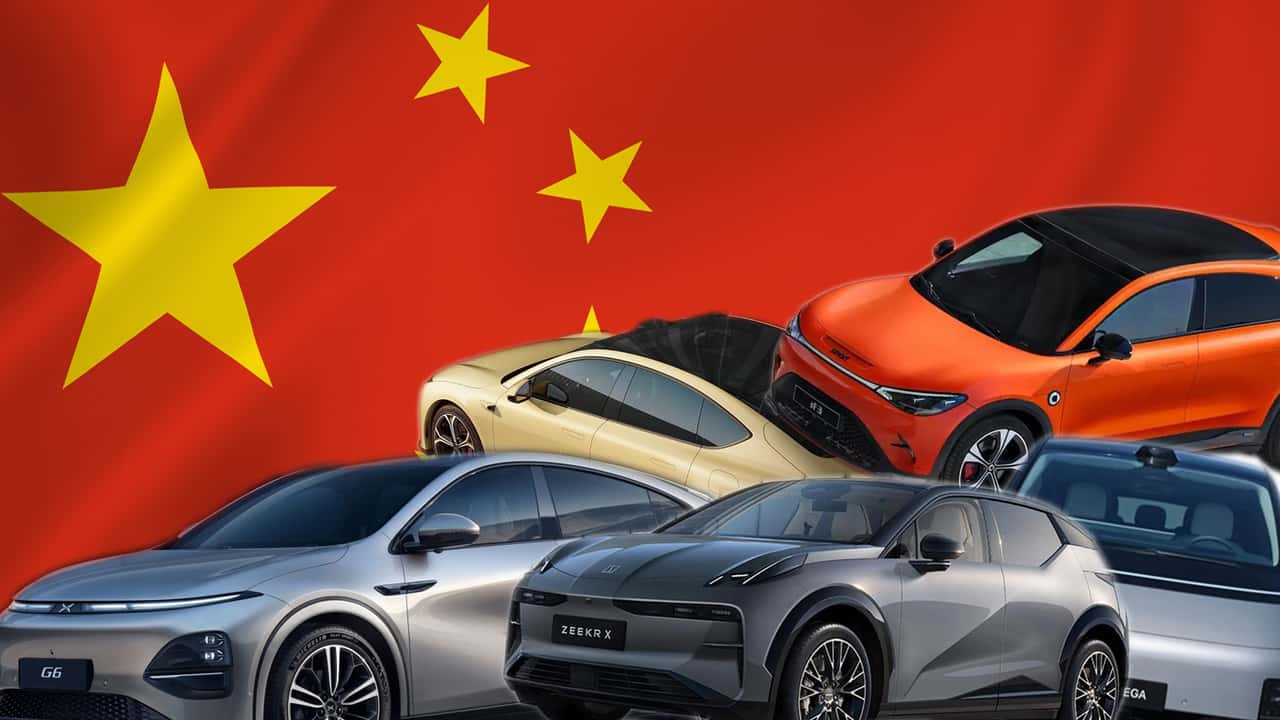
    On the 1st of March 2026, Elon Musk pointed to a set of striking official Chinese metrics that confirm what many in the manufacturing space have been tracking for months: the “tipping point” for internal combustion is no longer a forecast; it’s basically a rearview mirror observation at this point.

    China’s vehicle fleet is now 12% New Energy Vehicles (NEVs), but the real story is in the displacement. In 2025, retail fuel sales across the country plummeted by 5.7%.

    For a market of that scale, a nearly 6% drop in a single year isn’t a fluctuation; it’s a structural collapse of demand.

    By the close of 2025, China’s NEV fleet stood at approximately 44 million units. The shift was driven by explosive growth: NEVs captured nearly 48% of total vehicle sales for the full year.

    The impact on transport fuel was immediate, with gasoline production falling 5.07% and diesel 4.54%.

    While China’s total crude oil demand grew slightly due to a booming petrochemical sector and strategic reserve filling, road-use gasoline has entered a structural decline.

    Parallel gains in renewables reinforced this trend. China added a record 315 GW of solar and 119 GW of wind in 2025.

    For the first time in history, combined wind and solar capacity (1.84 TW) has officially overtaken coal-fired capacity (~1.43 TW). 

    While China commissioned a decade-high 78 GW of new coal capacity in 2025, don’t mistake “infrastructure” for “usage.”

    These new plants are effectively being built as giant, expensive insurance policies for grid reliability rather than primary power sources. 

    In reality, coal’s utilization rates are cratering because the grid now operates on a “clean-first” dispatch model.

    Because of the massive influx of wind and solar, the “clean stack” met 100% of the country’s electricity demand growth in 2025, and the actual burning of coal for power fell for the first time. The engines are there, but they are sitting idle as renewables take the lead.

    The Leapfrog: Africa’s Industrial Pivot

    While China builds at a giga-scale, Africa is also trying to execute a “leapfrog” maneuver that mirrors the mobile phone explosion of the early 2000s. 

    The continent isn’t just importing these units; it’s starting to build them.

    Nigeria has transitioned from a niche import market to a structured industrial sector. With the 2025 Green Mobility Bill providing VAT waivers and local content mandates, domestic players are ramping up.

    There are now roughly 20,000 EVs on Nigerian roads, a 400% jump in five years. SAGLEV’s Imota plant is pushing local production of up to 2,600 units annually, with a roadmap to 10,000.

    Because of grid instability, the makers here are optimizing vehicles for 20kVA generator charging and modular solar-integrated hubs, bypassing the utility bottleneck entirely.

    Across other African countries, Ethiopia has made bold moves following a total ban on non-electric passenger vehicle imports in 2024; the EV share of its fleet hit 6% by early 2026.

    In Kenya, the “Boda Boda” (motorcycle) market is the real vanguard. Electric 2-wheelers captured 15.3% of the market share in 2025, with local manufacturer Spiro seeing a 660% growth spike.

    The drop in fuel sales (Gasoline -5.07%, Diesel -4.54%) proves that once the cost-per-kilometer flips, the market moves at a speed that traditional energy models can’t track. China has provided the blueprint for price-competitive hardware, and Africa is now building the localized infrastructure—from battery-swapping networks to off-grid charging, to make it operational at a national scale.

    The fossil floor may have gone beyond just cracking; it may be falling through.

    Africa China Electric Vehicle EV
    Follow on Google News Follow on Flipboard
    Share. Facebook Twitter Pinterest LinkedIn Telegram Email Copy Link
    Ned Nwosu

    Related Posts

    Chinese investment signals growing confidence in Egypt’s manufacturing sector

    June 9, 2026

    The AI startup taking on jet engines, chips, and Jeff Bezos’ new industrial lab

    June 8, 2026

    Egypt inaugurates a production project to generate as much as $500 million yearly

    June 8, 2026
    Leave A Reply Cancel Reply


    The reCAPTCHA verification period has expired. Please reload the page.

    Recent Posts

    • Aras launches Industry Accelerator for semiconductor workflows
    • AI chiplet platform developer TYLsemi raises $43 million
    • Humanoid robot power management: the real challenge
    • Helsing secures $1.8 billion for European defence AI platforms
    • Kenya’s AI Copyright Ruling Prioritises Human Authorship
    Stay In Touch
    • Facebook
    • Twitter
    • Pinterest
    • Instagram
    • YouTube
    • Vimeo

    Subscribe to Updates

    Get the latest creative news from SmartMag about art & design.

    About Us
    About Us

    Makers is Nigeria’s premier digital platform dedicated to manufacturing related news and content across Africa.

    Facebook X (Twitter) Instagram LinkedIn
    News

    Chinese investment signals growing confidence in Egypt’s manufacturing sector

    June 9, 2026

    The AI startup taking on jet engines, chips, and Jeff Bezos’ new industrial lab

    June 8, 2026

    Egypt inaugurates a production project to generate as much as $500 million yearly

    June 8, 2026
    Features

    Zimbabwe turns lithium export ban into a $1 billion manufacturing push

    May 31, 20269 Views

    How Dakar’s advanced lab manufacturing systems helped decode a deadly virus in 24 hours

    May 23, 20267 Views

    Africa in sight as Ukraine looks for new manufacturing partners to help with its weapons system

    May 16, 20265 Views
    • Homepage
    • Engineering
    • Technology
    • Get In Touch
    • Privacy Policy
    • Cookie Policy
    Makers © 2026. All right reserved.

    Type above and press Enter to search. Press Esc to cancel.