


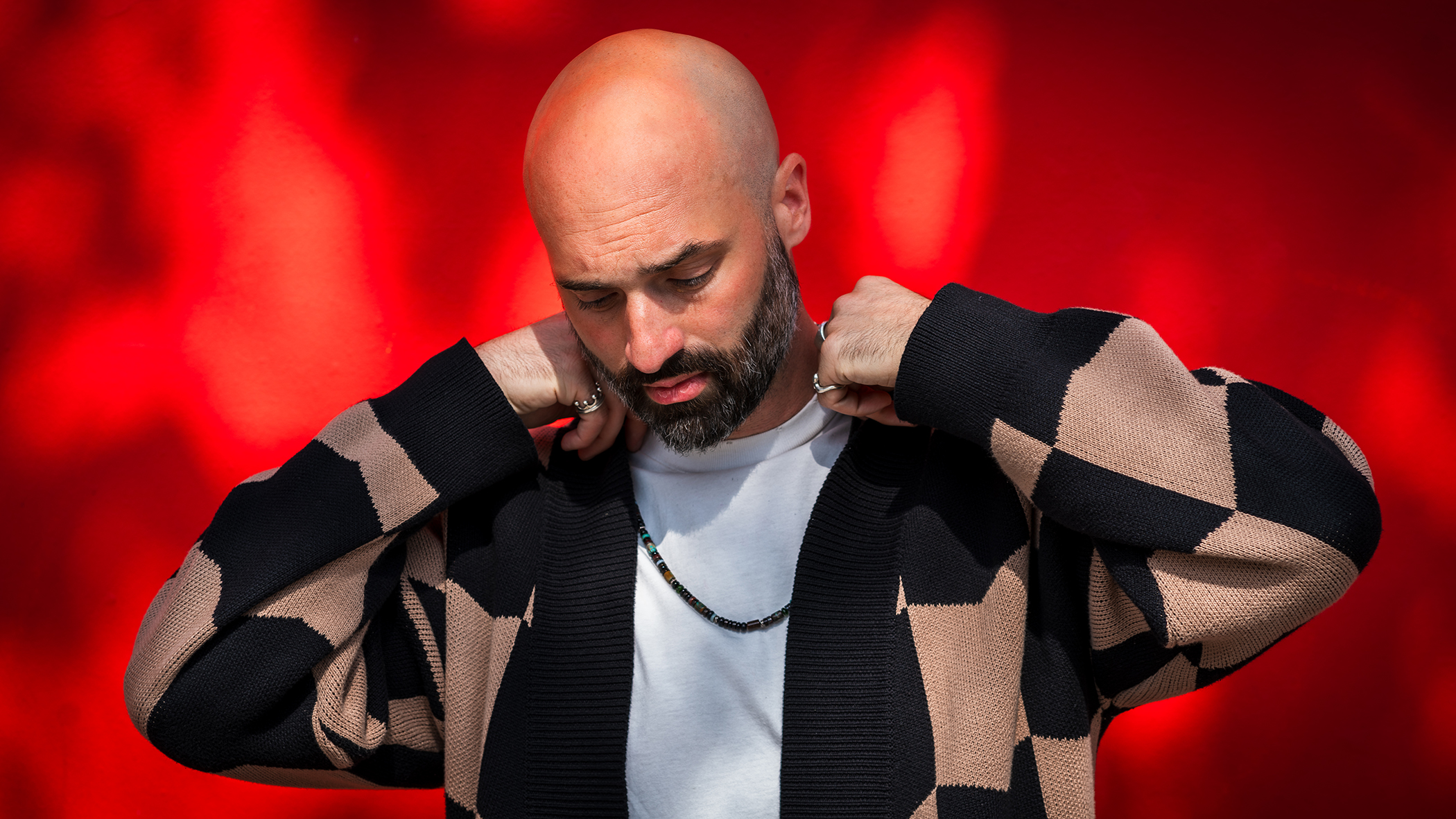
Nicholas Piantedosi, known professionally as Decap, has become a recognised figure in contemporary music production through his Drums That Knock series of sample packs, which have been used in tracks by artists around the world.
Since its debut in 2016, the series has been used in music by artists including Kendrick Lamar, Olivia Rodrigo and Charli XCX, as well as in Ludwig Göransson’s score for Christopher Nolan’s Oppenheimer.
The Global Reach of Drums that Knock
Piantedosi’s work extends beyond individual production credits, with his sample packs being used across a range of popular music. His tools, developed in San Francisco, provide producers with access to professionally produced percussion samples and production resources. The series has reached its eleventh volume and has recorded more than 5 million downloads, according to the figures cited by Decap.
Decap’s work focuses heavily on sound design, particularly the creation of drums that “knock” — a term commonly used by producers for sounds that stand out clearly in a mix. This sound is produced through a combination of digital audio workstation (DAW) techniques and audio-processing methods. He uses Ableton Live as a central part of his production workflow.
A key component of his processing workflow is the soft clipper. The tool can be used to add saturation and shape the character of drum sounds, from warmer tones to more aggressive textures. It forms one part of the processing techniques he uses in his production workflow. Advanced chip design processes often rely on similar precision engineering.
The Drums That Knock series provides a comprehensive toolkit for producers. This collection, which spans 11 volumes, includes over 400MB of original, royalty-free sounds. It features a diverse array of elements such as 29 808s and bass samples, 49 kicks, 82 hi-hats, and 72 snares, claps, and rimshots. The range of samples allows the packs to be used across multiple genres.
Decap’s Career and Musical Development
Decap’s journey into sound engineering began early. Born in Waltham, Massachusetts, in 1984, he developed a passion for hip-hop after acquiring Snoop Dogg’s Doggystyle album in 1995. This led him to purchase his first drum machine, initially to create beats for his rap group, Young Tribe, an experience that contributed to his subsequent development as a producer.
Relocating to New York City in 2007 to further his music career, Piantedosi honed his craft, eventually moving to San Francisco in January 2013. That same year, he released his debut instrumental album, Omni Love. The first volume of Drums That Knock launched in 2016, reaching No. 1 on Splice, a prominent platform for samples and loops.
His influence is clear across the music industry. Producer Kenneth Blume, widely known as Kenny Beats, succinctly summarised Decap’s impact, stating that he “changed a million lives with a single snare.” The comment illustrates how an individual drum sound can become an identifiable element within a production.
Decap’s work across music and film
Decap’s samples have appeared in work by a range of artists and across projects spanning hip-hop, R&B, pop and film scoring. His samples have been incorporated into a range of productions, although their role varies between tracks. Their use across different genres illustrates the range of applications for his sample-based production approach.
Major names like Beyoncé, Eminem, Dua Lipa, and Bad Bunny have incorporated Decap’s distinctive drum sounds into their work. Beyond mainstream pop and hip-hop, his influence extends to unexpected places, such as Ludwig Göransson’s critically acclaimed score for the film Oppenheimer. These examples show that his percussion has been used across several musical styles and formats.
Decap has amassed 17 production credits throughout his career, with 12 specifically as a producer and four as a co-writer. His single “Hot Box”, produced with Teeko and THRPY and featuring AzizTheShake, was released in July 2016 and reached No. 6 on the Billboard and Spotify USA Viral 50 charts. Another single, “Feeling”, released in June 2015, recorded 550,000 Spotify streams, according to the figures cited.
He also produced several tracks on Spose’s 2015 album, Why Am I So Happy, which reached [specific Billboard chart position], if the ranking can be verified. These releases provide examples of how Decap’s production and sound design work has been used commercially. The examples also illustrate how specialised production tools can become part of commercially released creative work.
Decap’s Approach to Music Production Equipment
Despite using a range of production tools, Decap takes a relatively equipment-agnostic approach to music production. He dismisses the notion of “gatekeeping over gear”, arguing that true production talent transcends specific hardware or software preferences. “If you’ve got a computer, you already have everything you need,” he contends, arguing that expensive equipment is not a prerequisite for producing music.
His own setup exemplifies this blend of old and new. While proficient with Ableton Live, he retains a fondness for his 1998 Boss SP-202 Dr. Sample. This sampler, his first ever, holds sentimental value and continues to be a part of his workflow.
The sampler connects to his early production work, when he learned to chop samples and build beats.
Decap’s comments may be particularly relevant to aspiring producers who have limited access to professional studios or expensive equipment. His assertion that “the dopest producer might be a kid in North Africa with Skullcandy headphones” offers an empowering message. His comments emphasise skill and creativity rather than access to expensive equipment.
Accessibility, Production Tools and Sound Quality
Decap’s work has contributed to current developments in sample-based music production. His “Plugins That Knock” software, alongside his sample packs, provides producers with additional tools for drum processing and music production. The royalty-free sample packs give producers access to pre-produced sounds that can be incorporated into their own projects.
However, Decap also highlights a challenge in modern music consumption: the limitations of phone speakers. He has discussed how mobile devices can struggle to reproduce the low-end frequencies of an 808, despite the importance of bass to modern music production.
