


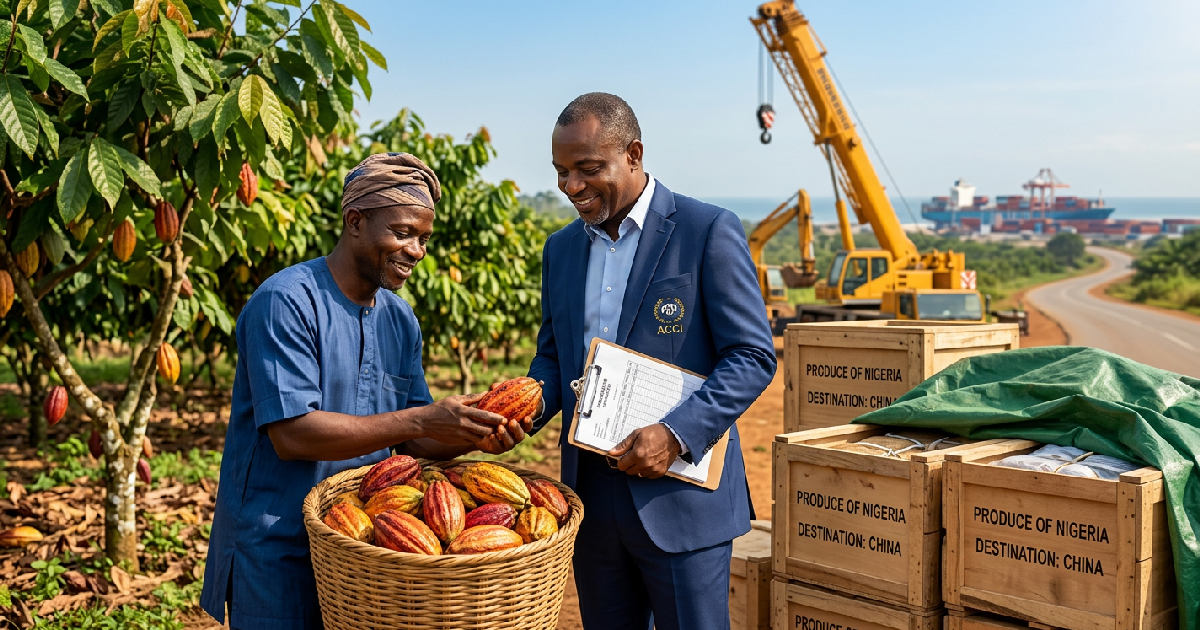
The Abuja Chamber of Commerce and Industry (ACCI) has identified China’s new zero-tariff policy as a significant opportunity for Nigerian exporters to expand their presence in the Asian market. According to reports from the chamber, the removal of import duties on various Nigerian goods is expected to help address trade imbalances by reducing the barrier of entry for local manufacturers and agricultural producers. This policy shift marks a change in the bilateral trade relationship between the two nations.
The adjustment is projected to stimulate activity across Nigeria’s industrial and agricultural sectors, which have often faced challenges due to the high costs of international trade. By eliminating these specific tariffs, the Chinese government provides a platform for Nigerian commodities, including solid minerals and processed agricultural products, to compete more effectively. This development coincides with the Nigerian government’s efforts to diversify foreign exchange earnings and reduce dependence on crude oil exports.
For the engineering and manufacturing sectors, this change creates potential openings for specialized components and raw materials integrated into industrial supply chains. Experts suggests that removing financial barriers will likely encourage Nigerian firms to focus on quality control and standardized packaging to meet regulatory requirements. This focus on technical standards aligns with broader initiatives such as the Agromeqa engineering initiative, which seeks to improve exports through technical innovation and standardized production methods.
Improving Trade Relations Between Abuja and Beijing
The trade relationship between Nigeria and China has traditionally been defined by the importation of finished electronics, machinery, and textiles into Nigeria. The zero-tariff regime is reportedly viewed by the ACCI as a practical mechanism to foster a more balanced economic partnership rather than a purely diplomatic gesture. The chamber is expected to assist Nigerian businesses in understanding the technicalities and logistics of the updated trade rules.
To benefit from these changes, Nigerian exporters must manage complex international standards and logistics. The Abuja Chamber of Commerce and Industry (ACCI) plans to facilitate business matchmaking sessions to ensure that the benefits reach small and medium-sized enterprises (SMEs). Without a corresponding improvement in the physical infrastructure to support these exports, analysts suggest the policy may not reach its full potential for the local workforce.
Agricultural and Engineering Infrastructure Needs
Agriculture is considered an immediate beneficiary of the tariff removal, particularly for commodities where Nigeria holds a substantial global market share. However, the engineering sector is also expected to see a secondary boost. As trade volumes increase, the demand for advanced storage, processing machinery, and transport logistics will likely grow, requiring a more technical infrastructure within Nigeria.
The logistics of moving goods efficiently remains a central challenge for the private sector. Ensuring that ports and transport networks can handle an increase in outbound cargo is essential for the success of the policy. Furthermore, as industries modernize to manage international contracts, the focus on infrastructure reliability for digital payments and logistics tracking becomes vital to prevent disruptions in the trade cycle.
Implementation and Quality Assurance Challenges
Authorities at the ACCI have indicated that the zero-tariff policy does not guarantee automatic success, as Nigerian products must still comply with high-quality benchmarks. This requirement means Nigerian engineers and quality assurance officers must oversee production processes to ensure goods meet entry specifications. The chamber is reportedly advocating for more testing laboratories and certification centers within the country to streamline the export process.
Currency volatility also remains a factor for exporters to navigate as they plan long-term shipments. While the Naira has recently fluctuated at the official market, a zero-tariff environment may provide a necessary buffer for profitability. By reducing duty-related overheads, Nigerian firms can potentially offer more competitive pricing globally.
The Abuja Chamber of Commerce and Industry (ACCI) is expected to work with the Federal Ministry of Industry, Trade and Investment to develop a long-term roadmap for engagement with Chinese markets. The priority remains moving from the export of raw materials to value-added products. This transition will require sustained capital investment and a commitment to maintaining international engineering standards across the manufacturing sector.
