


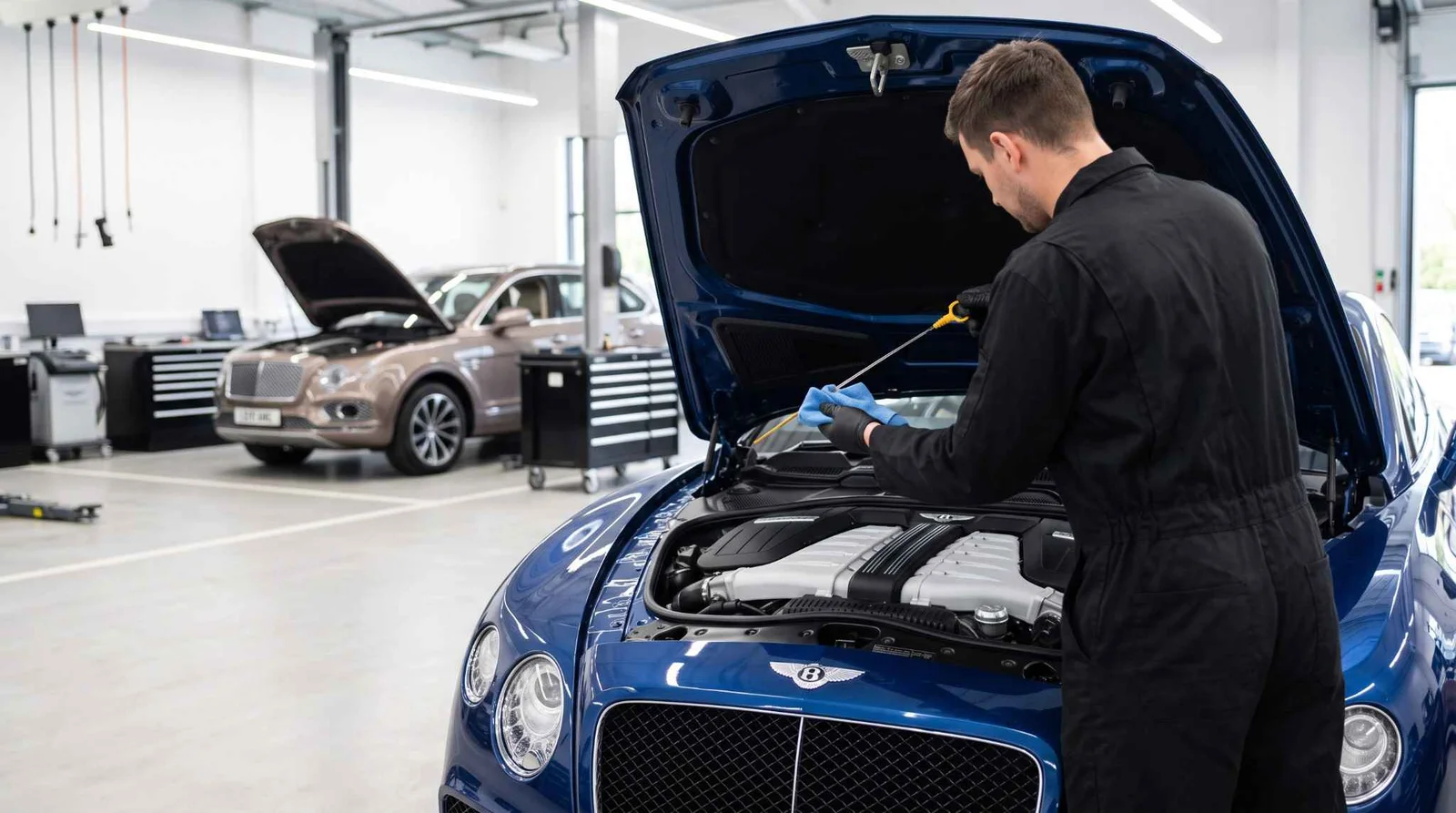
Bentley Motors is re-evaluating its maintenance operations, repositioning the function as a core strategic asset to improve competitiveness. This shift was outlined by Jonathan Pedel, Head of Maintenance at Bentley Motors, during Smart Manufacturing Week 2026, held from June 3-4 at the NEC in Birmingham, UK.
The luxury automaker is addressing rising operational costs, economic uncertainty, and the need to maximise the use of its existing manufacturing infrastructure.
Elevating Bentley Motors Maintenance as a Strategic Imperative
Pedel highlighted how maintenance has evolved beyond merely reactive support. It now plays a crucial role in safeguarding profit margins and extending the lifespan of valuable equipment. This transformation is part of a broader industry trend where adaptability and financial prudence are driving a more proactive approach to plant upkeep and asset management.
The transition of maintenance from a background task to a strategic imperative reflects the current economic climate impacting manufacturers. “UK manufacturing, in particular, is operating in a highly cost-conscious environment, navigating economic downturns, Brexit, the COVID-19 pandemic and geopolitical conflicts. This environment demands that companies extract maximum value from every existing asset.
Manufacturers are increasingly viewing their facilities as sources of value rather than simply as cost centres. Pedel explained that maintenance functions are uniquely positioned to capitalise on this, moving beyond simply ensuring technical uptime. Extending machinery life and deferring new capital expenditure can provide financial benefits.
Predictive Maintenance: Opportunities and Integration Gaps
AI and advanced analytics are changing industrial maintenance, with the potential to improve operational efficiency. Bentley Motors, for instance, has been utilising AI-driven predictive algorithms for approximately three years. These systems can identify equipment anomalies before traditional monitoring methods would detect a problem, allowing for timely intervention.
The real challenge, however, lies in achieving full end-to-end integration. Many manufacturers have the data, sensors, and AI models but struggle to translate these insights into action. Disconnected systems and manual processes often create a gap between identifying a potential failure and implementing a definitive solution. Bridging this gap is important for realising the full potential of AI-driven maintenance strategies.
Bentley’s AI in Action
Bentley’s experience illustrates some of the benefits of early AI adoption. Its algorithms have helped identify several equipment breakdowns. By detecting anomalies, maintenance teams can decide between immediate action or scheduled work, preventing costly unplanned downtime. This capability moves beyond standard machine learning environments that simply wait for control limits to be breached.
Pedel noted that integrating these AI insights into a wider system that can automatically trigger or guide corrective actions is the next logical step. Such integration would further streamline maintenance processes, reduce reliance on manual interventions, and enhance overall operational resilience. This represents an area of development for manufacturers seeking to expand their predictive maintenance capabilities.
Modernising Ageing Assets to Extend Equipment Life
For many manufacturers, completely replacing ageing equipment is not a viable option, especially in tight economic conditions. Instead, the focus has shifted to modernising existing assets through digital retrofitting. Implementing sensors, IoT devices, and other digital technologies on older machinery can significantly improve monitoring and reliability.
This approach allows companies to gain a deeper understanding of asset condition, thereby extending equipment life and deferring the need for substantial new investments. Pedel highlighted that even 35-year-old pieces of equipment can be successfully upgraded with these modern solutions. This can allow manufacturers to extend the useful life of existing assets.
Sustainability and Longevity in Operations
Asset sustainability and longevity are increasingly critical, not just for financial reasons but also for environmental goals. Maintenance functions can also improve equipment efficiency through energy management. This can include selecting more efficient components, such as upgrading motors from IE2 to IE4, as well as optimising operational parameters.
Replacing an entire asset with a newer, theoretically more energy-efficient model is not always the most sustainable path. The environmental cost of replacing existing equipment can, in some cases, offset the benefits of purchasing newer, more efficient equipment. Instead, maintenance professionals can identify ways to improve the efficiency of existing assets, promoting a circular economy approach within manufacturing operations.
Bridging Workforce Skills Gaps and Retaining Talent
The evolution of maintenance also brings into focus the critical role of human capital. Maintenance professionals are in high demand across industries, making talent retention a significant challenge. Providing roles that involve advanced technologies such as AI and digital solutions can help manufacturers retain skilled maintenance professionals.
Pedel emphasised that curious individuals in maintenance thrive when given opportunities to work hands-on with new technology. Companies that fail to offer such experiences risk losing their valuable talent to organisations that do. Greater exposure to digital technologies could also create new career opportunities within maintenance.
The discussion at Smart Manufacturing Week also covered the importance of fostering digital fluency. As industrial operations become more interconnected, maintenance teams need a broader understanding of integrated systems. This means investing in ongoing training and development that aligns with the rapid pace of technological advancements, ensuring teams are equipped to handle complex digital environments.
Bentley’s Broader Digital Transformation
Bentley’s strategic re-evaluation of maintenance is not an isolated initiative; it sits within the company’s ambitious “Beyond100+” transformation strategy. This roadmap focuses on electrification, sustainability, and leadership in luxury manufacturing. The goal is to build only fully electric cars from 2035, requiring extensive modernisation across its production facilities.
To support this, Bentley has engaged Capgemini as its digital transformation lead. This partnership aims to modernise manufacturing systems, bolster AI and data capabilities, and integrate back-office processes at Bentley’s Crewe headquarters. The programme is intended to transform the Crewe site into what Bentley describes as its ‘Dream Factory’, as part of an investment programme covering more than a century of production.
The company also uses Tableau for self-service analytics, enabling more than 50% of its office workforce to manage their own data analysis needs. Andy Moore, Chief Data Officer at Bentley Motors, said the ‘Bentley100’ strategy is underpinned by data. This includes how data is gathered, communicated, and acted upon across the entire organisation, from customer insights to manufacturing efficiencies.
The Path Forward: Holistic Understanding Over Technology Alone
As manufacturing evolves, the success of maintenance strategies will depend on more than adopting the most advanced AI solutions. Instead, it will depend on organisations having a broad understanding of their operational environment. This holistic view integrates technology, skilled teams, cohesive data, and deep asset knowledge.
The objective is to improve reliability, sustainability, and operational performance. Companies must foster an open-minded approach and ensure all stakeholders are committed to maintaining optimal technical uptime. While technology, particularly AI, can offer significant benefits, its effectiveness depends on how well it is integrated into operational processes, data systems, and maintenance practices.
