


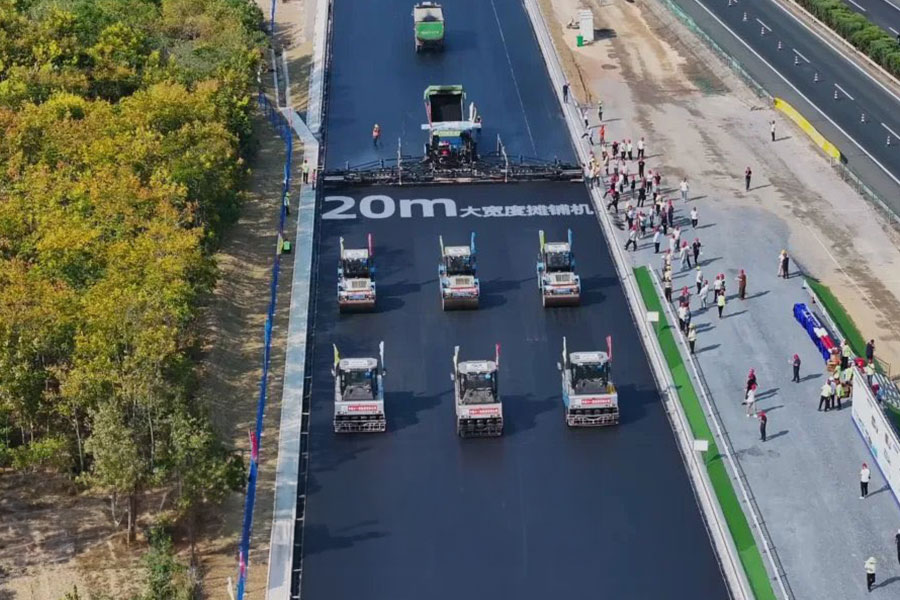
China has completed what is being billed as the world’s first large-scale highway project built with almost no direct human intervention, signaling a fundamental shift in infrastructure development.
A large part of the Beijing-Hong Kong-Macao Expressway, one of the country’s busiest transportation routes, has been rebuilt and expanded using a fully coordinated system of AI-powered robots.
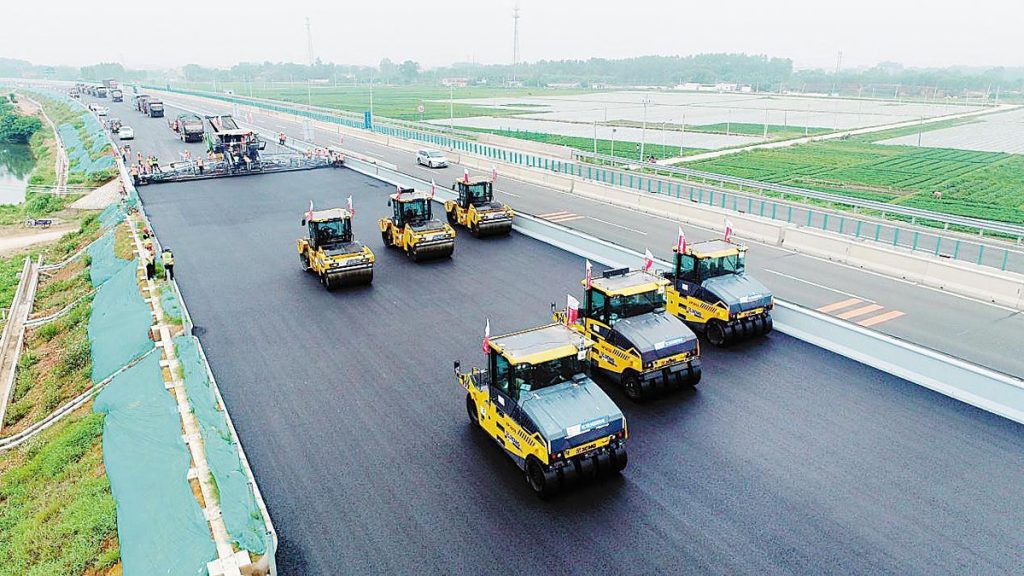
Instead of traditional construction teams, the operation used autonomous drones, smart paving equipment, and robotic rollers that worked in tandem.
The endeavor was spearheaded by prominent equipment manufacturers Sany Group and XCMG, both of whom provided modern machinery capable of functioning with extraordinary precision.
At the heart of the project was a centralized artificial intelligence system that oversaw every stage of building.
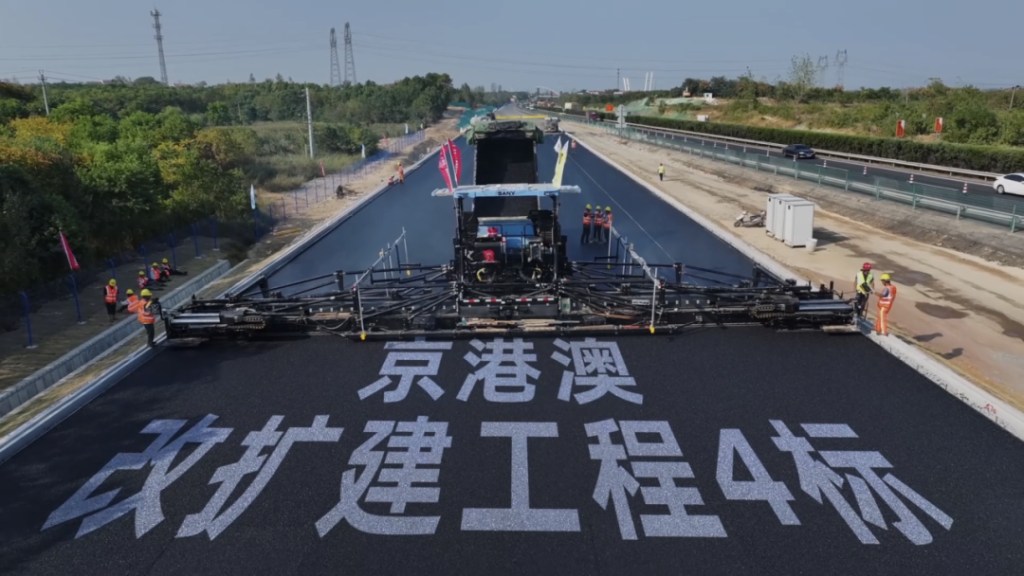
Instead of workers manually guiding equipment, autonomous pavers equipped with precise sensors completed the asphalt laying operation.
These machines were able to maintain thickness uniformity that outperformed what human operators can routinely achieve.
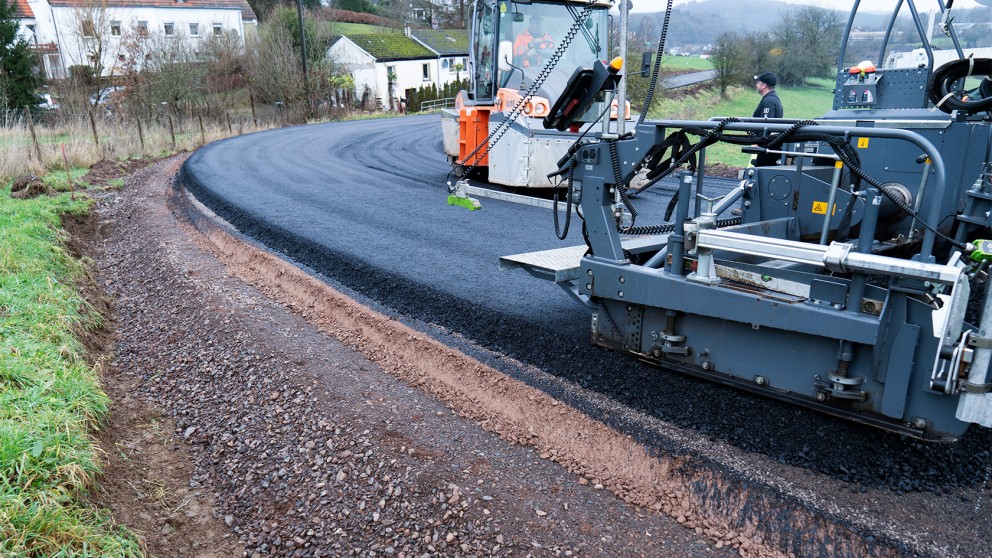
A synchronized fleet of heavy-duty rollers weighing between 13 and 30 tons was used to compact the material.
The rollers used China’s BeiDou satellite navigation system to coordinate their movements, resulting in a smooth and durable road surface.
Above the location, swarms of AI-enabled drones were constantly monitoring progress.
They generated real-time 3D maps of the topography while simultaneously tracking important variables like asphalt temperature and density, enabling for quick modifications during construction.
Engineers involved in the project reported that automation considerably reduced the possibility of human error, BusinessDay reports.
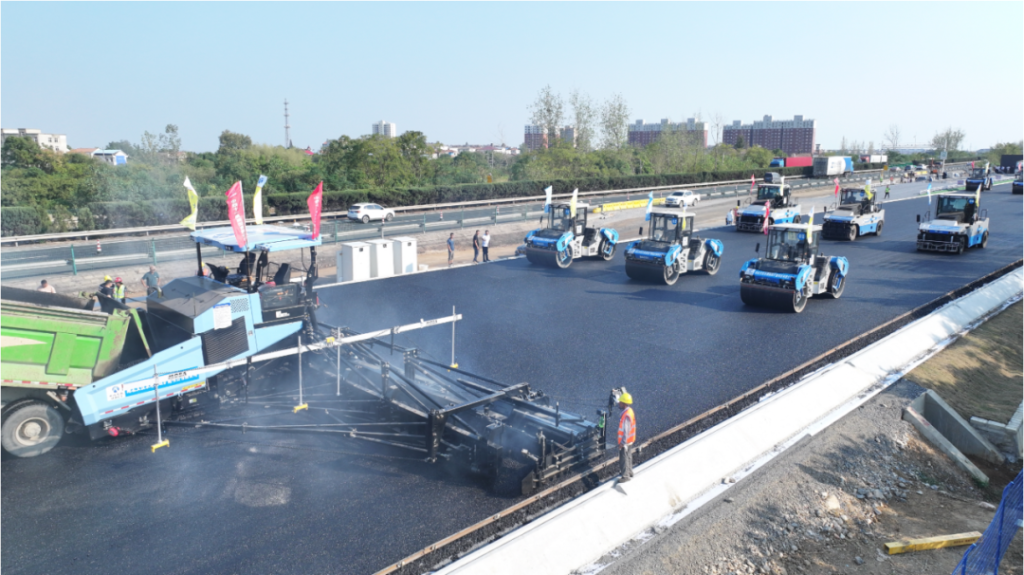
The method also allowed for continuous paving from edge to edge, eliminating the need for hand finishing work along curbs and boundaries.
This initiative, also known as the “Golden Channel,” is a significant step forward in China’s overall “AI Plus” plan, which aims to integrate artificial intelligence into traditional sectors such as construction and transportation.
Looking ahead, China’s Ministry of Transport intends to build comparable smart highway systems nationwide by 2026.
Future enhancements are likely to include built-in charging infrastructure for electric vehicles and smart sensors that can communicate directly with self-driving automobiles.
