


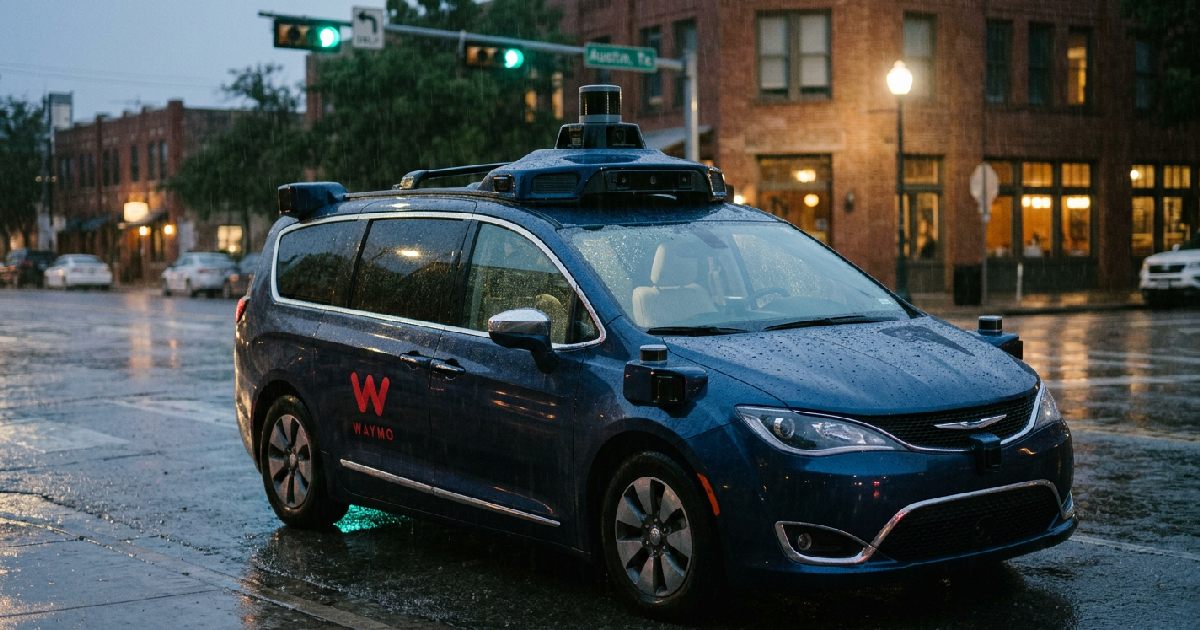
The robotaxi industry is grappling with a significant reality check as technical flaws and regulatory scrutiny temper the initial enthusiasm for fully autonomous transport. According to reports from TechCrunch Mobility on May 24, 2026, Waymo has paused operations in Atlanta, Dallas, Houston, and San Antonio because its vehicles are struggling to navigate heavy rain or identify when to avoid flooded roads. The company extended these suspensions to Austin and Nashville following a persistent pattern of weather-related performance issues that prompted a formal recall.
These operational pauses highlight the persistent “edge cases” that continue to occupy the engineering teams at the world’s most advanced autonomous vehicle (AV) firms. While Waymo remains a commercial leader, facilitating 500,000 paid rides per week, its expansion remains conditional. The company has restricted its robotaxis from freeways in San Francisco and Los Angeles while it refinement how its systems identifies and reacts to construction zones.
com/ijeoma-eti-ai-infrastructure-trust-security-compliance/”>Ijeoma Eti has addressed how overlooked infrastructure faults can fundamentally undermine public trust in these automated systems.
Waymo faces federal scrutiny and recurring safety incidents
The National Highway Traffic Safety Administration (NHTSA) is currently investigating Waymo following a series of safety violations and incidents. In Austin, the local school district reported that Waymo robotaxis illegally passed school buses 19 times during 2025. Federal regulators are also examining a January 2026 incident where a robotaxi struck a child who emerged from behind a parked SUV in a school zone.
These events, alongside a 2025 incident where a vehicle killed a cat in San Francisco, have intensified the focus on how autonomous perception systems handle unpredictable urban environments.
Waymo’s financial backing remains deep despite these hurdles. The company raised $16 billion in February 2026, reaching a valuation of $126 billion. Much of this capital is directed toward the deployment of its sixth-generation robotaxis, built on electric vehicle platforms from Chinese manufacturer Zeekr. This new hardware aim to reduce the operational costs associated with human-assisted interventions, as Waymo vehicles still frequently rely on first responders to clear them from emergency scenes or navigate obstacles the AI cannot process.
Tesla targets year-end driverless rollout amidst history of delays
Tesla CEO Elon Musk is maintaining an optimistic outlook, stating at the May 2026 Samsung Smart Mobility Summit that a “US-wide roll out of driverless robot taxi” is targeted by the end of this year. Musk believes AI will account for 90% of all distance driven on Earth within a decade. However, this target follows a long history of missed projections, including a 2019 promise to have over a million robotaxis on the road by 2020. As of May 25, 2026, Tesla operates a fleet of 39 unsupervised robotaxis across three cities in Texas.
The interconnected nature of Musk’s industrial activities was further detailed in recent SpaceX IPO filings. The documents reveal that xAI has merged with SpaceX, consolidating various inter-company transactions under one entity. In 2025, SpaceX purchased $506 million of Tesla Megapack energy storage products, nearly triple the previous year’s volume. These financial links support collaborative projects like Terafab, a chip-manufacturing facility, and Macrohard, an AI platform designed to augment human work with autonomous agents.
Strategic shifts in the global autonomous market
While U.S. firms navigate technical setbacks, Chinese startups like Baidu Apollo and Pony.ai are accelerating testing in Beijing and Shanghai, supported by a favourable regulatory environment. In the West, ride-hailing platforms are recalibrating their expectations for full automation. Lyft recently confirmed it will maintain a hybrid model, using human drivers alongside robots to manage total demand. This recognition of current technical limits suggests the transition to autonomous fleets will be an iterative process requiring significant improvements in reliability.
This shift mirrors broader trends in technical adoption where foundational systems must be perfected before scale is achieved. com/african-iot-sector-growth-industrial-impact/”>African IoT sector growth through industrial connectivity shows how reliable data networks are a prerequisite for smarter machines. The current robotaxi reality check suggests that while driverless cars have arrived, establishing them as a permanent fixture of urban infrastructure requires solving the specific, messy problems of real-world physics that still baffle even the most sophisticated sensors.
