


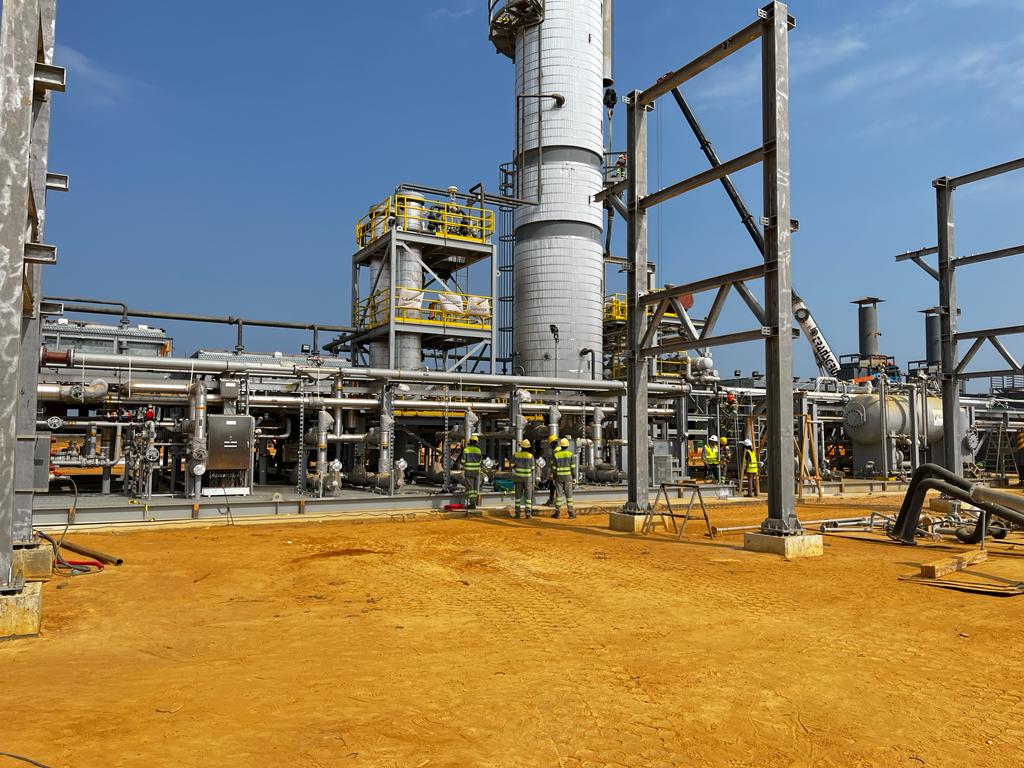
Angola has achieved a crucial milestone in its quest for energy independence, as the Cabinda Refinery has officially commenced producing fuel, a huge step forward for the country’s downstream oil sector.
Although the refinery was technically commissioned in September 2025, the move from building and testing to full gasoline production has only recently occurred, with commercial operations starting in April 2026.
The move marks the beginning of a new era for Angola, in which more of its crude oil will be refined domestically rather than transported abroad for processing.
The launch is especially significant for a country that has long relied on imported refined petroleum products, while having one of Africa’s major crude oil producers.
By bringing the Cabinda Refinery online, Angola expects to cut its fuel import cost, increase domestic supply security, and strengthen its ability to meet local demand for refined products like diesel and gasoline.
Bloomberg reports that the plant, which cost more than $470 million to build, is already selling diesel to the local market while exporting naphtha, a crucial feedstock for petrochemicals, and heavy fuel oil to foreign consumers.
Gemcorp Capital LLP, which owns 90% of the facility, claims that the project’s main goal was to improve Angola’s energy security.
About six years ago, Gemcorp acquired the refinery, which is situated in the oil-rich Cabinda area of Angola. With its present capacity of 30,000 barrels per day, it can supply around 10% of the country’s gasoline needs.
The refinery’s first phase is designed to process 30,000 barrels per day, with plans for future expansion that could increase output to 60,000.
According to the African Petroleum Producers’ Organization, Africa still imports around 70% of refined petroleum products while exporting about 75% of its crude oil.
This structural imbalance costs the region an estimated $50 billion a year.
According to Sonangol, 72% of Angola’s gasoline needs, roughly 3.3 million metric tons per year, are imported. To maintain value on the continent, officials have been urging more local refining.
