


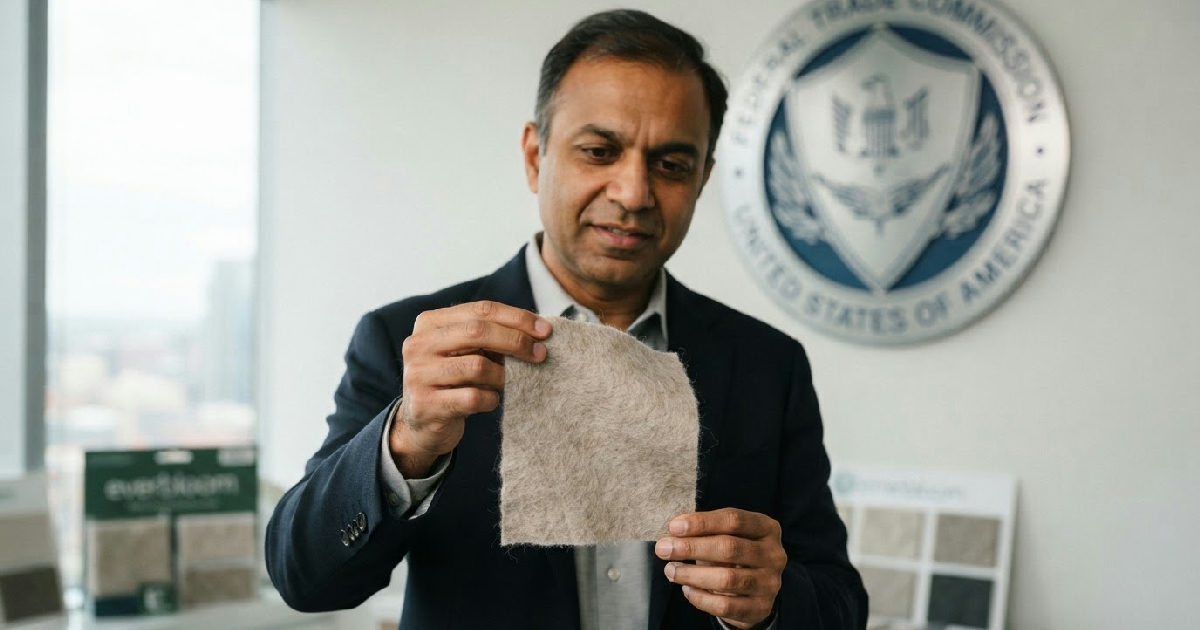
The US Federal Trade Commission (FTC) granted renoa a new generic fibre classification on 15 September 2026.
Developed by New York-based Everbloom, renoa is a regenerated protein fibre designed to offer a washable and potentially more affordable alternative to cashmere. Everbloom was co-founded by Sim Gulati, who leads the company’s efforts to address environmental and affordability challenges in the textile industry.
FTC Approval: A Quarter-Century Breakthrough in Textiles
The US Federal Trade Commission’s decision to recognise renoa under a new fibre classification on 15 September 2026 represents a significant development for Everbloom. The designation is reportedly the first new fibre classification issued by the FTC in nearly 25 years.
The previous comparable classification was for polylactic acid (PLA) in 2002. The interval between the two classifications highlights the relative rarity of new generic fibre designations by the agency.
Paving the Way for New Material Innovation
The FTC’s classification process required Everbloom to provide information supporting the proposed fibre designation. The designation establishes a recognised identity for the fibre based on the information and requirements considered by the FTC.
The classification could help Everbloom communicate the material’s identity to manufacturers, suppliers and other industry partners as it moves towards commercialisation.
Although materials science has advanced considerably over the past 25 years, relatively few developments have resulted in new generic fibre classifications by the FTC.
Everbloom’s proposed fibre designation distinguishes renoa from materials that are identified simply as blends of existing fibre types. This sets a precedent for future innovations offering novel characteristics and environmental benefits.
The Engineering Behind Renoa Fiber Production
Renoa is produced using waste-derived protein materials, an approach that could support the recovery and reuse of textile and other protein-rich waste streams. Everbloom uses waste materials such as cashmere and wool scraps, as well as down and feather fibres.
These materials can be recovered from bedding and textile manufacturing waste streams. Rich in keratin, they provide the protein base for the regenerated fibre.
The process begins by grinding the protein-rich waste materials into a fine powder. The powder is then blended with a biodegradable polymer.
The polymer acts as a binder and structural component, helping the protein material form a consistent fibre.
From Waste to Wearable: The Extrusion Process
The resulting mixture is then extruded. During extrusion, the material is forced through spinneret openings to form fibres with controlled diameters.
The process is designed to produce fibres with characteristics similar to those of natural cashmere. Everbloom has also developed an artificial intelligence model to support material development and optimise renoa’s properties.
The model is intended to help Everbloom predict and adjust the fibre’s characteristics during development. It ensures renoa can replicate the softness, drape, and feel of high-end natural materials. At the same time, it maintains enhanced durability and washability.
The ability to tailor fiber properties through advanced process engineering is a significant advancement for textile manufacturing. This represents a new frontier in material development.
Renoa Fiber: A Sustainable Answer to Cashmere’s Challenges
The rise of cashmere in fashion presents notable environmental and economic challenges, despite its luxury appeal. Its production relies on goats whose grazing patterns contribute to rangeland degradation across Central Asia.
Cashmere is also inherently expensive and requires delicate care. This often necessitates dry cleaning, which further adds to its environmental footprint.
Renoa fiber directly addresses these issues by offering a sustainable, washable, and potentially more affordable alternative. By utilising waste proteins, Everbloom reduces the demand for virgin resources.
This also mitigates the environmental impact associated with traditional animal-derived fibers. This closed-loop approach is central to its appeal in a market increasingly demanding eco-conscious options.
Performance and Practicality in Blended Fabrics
Early tests and prototypes of renoa demonstrate its potential to deliver on its promises. Products developed by Everbloom, including knit gloves and a scarf, showcase the fiber’s ability to match cashmere’s softness and lightness.
A particularly notable example is a renoa scarf that endured repeated washing and tumble-drying. It showed no signs of pilling or shrinkage, a common issue with pure cashmere. Industrial technology such as this redefines expectations for textile performance.
Everbloom is collaborating with various companies to introduce renoa into consumer products. The first items are expected to reach the market in the second quarter of 2027.
These initial offerings will likely feature renoa as a blended fiber. It will typically make up around 20% of the material in garments like cashmere sweaters.
The blend, even at this ratio, is reported to closely emulate the feel of pure cashmere. Further commercial finishing should eliminate any perceived differences, while preserving washability and stability.
Scaling Innovation: Everbloom’s Path to Commercialisation
Everbloom has spent three years meticulously developing renoa fiber, culminating in its recent FTC classification. The company is now focused on scaling up production to meet anticipated industrial demand.
This phase involves translating laboratory-scale success into high-volume manufacturing capabilities. This is a critical step for any novel material aiming for market entry.
The use of an AI model for material science has been instrumental in Everbloom’s rapid development cycle. This advanced computational approach allows for faster experimentation and optimisation of fiber properties.
Everbloom says the model could also reduce the time and resources needed to develop new material formulations. Such digital tools are becoming indispensable in accelerating the path from concept to commercial viability in manufacturing.
Market Entry and Broader Industrial Impact
Renoa’s expected commercial launch in 2027 could introduce another alternative fibre into the textile supply chain. Its adoption could affect how manufacturers source raw materials, process blended fabrics and market products to consumers.
Although its initial applications may target the luxury apparel segment, the material could eventually be used in a wider range of fashion products. Its commercial success will depend on production costs, material performance, manufacturing scalability and the extent to which brands adopt it.
