


Four U.S. states are investing in manufacturing workforce development in response to ongoing skills and recruitment challenges. New York and Illinois recently celebrated grand openings and significant grant allocations, while Ohio and New Mexico actively expand their training capabilities.
These initiatives, including a new 100,000-square-foot facility in Brighton, New York, and over $20 million in Illinois grants, aim to equip a new generation of industrial professionals. They directly address the urgent need for skilled talent across various advanced manufacturing sectors.
New York Opens Advanced Manufacturing Training Centre
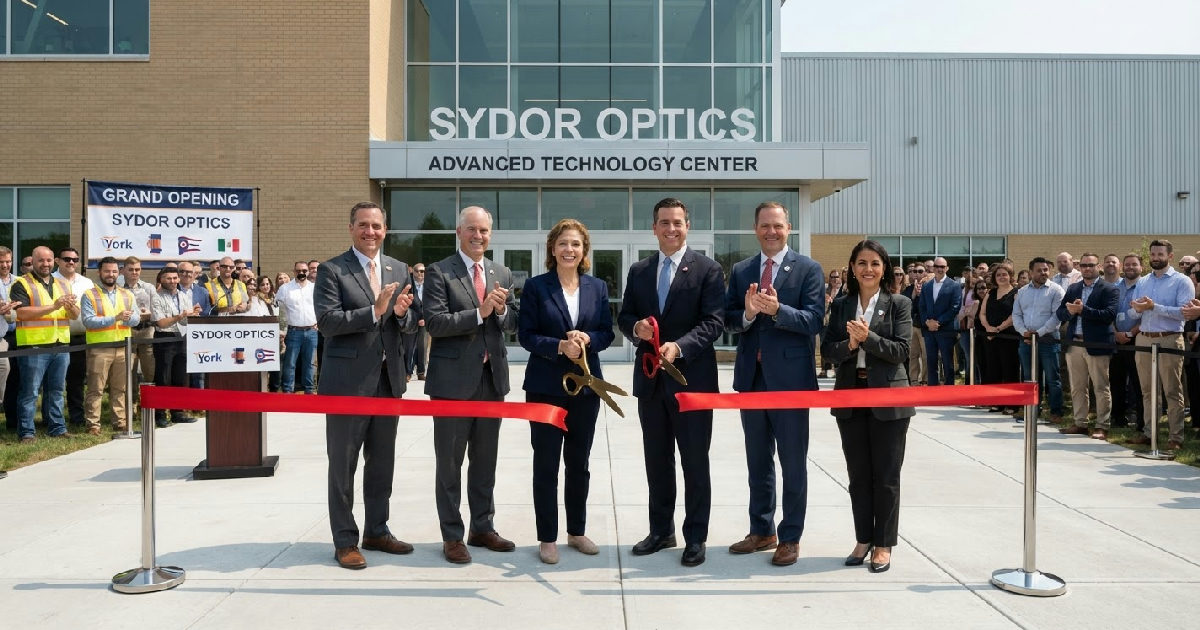
New York marked a milestone on 14 September 2026 with the opening of the Sydor Optics Advanced Technology Center. The 100,000-square-foot facility on Monroe Community College’s (MCC) main campus in Brighton is designed to expand technical education and workforce training.
The $69.6 million centre is designed to support workforce development programmes in areas relevant to advanced manufacturing and the semiconductor industry. The centre is named after flat-optical-component manufacturer Sydor Optics, which contributed $3 million to MCC’s Optical Systems Technology programme in 2025.
During the opening ceremony, MCC Board of Trustees Chair Allen Williams highlighted demand for technical training facilities. Monroe Community College President DeAnna Burt-Nanna and Governor Kathy Hochul were also present, highlighting the state’s commitment to this sector.
Training programmes at the centre cover areas including optical technology, automotive technology, precision machining and HVAC. It also offers programmes in renewable energy.
Illinois Funds Five Manufacturing Training Academies
On the same day, September 14, 2026, Illinois Governor J.B. Pritzker and the Illinois Department of Commerce and Economic Opportunity (DCEO) announced grants exceeding $20 million. These capital grants will establish new manufacturing training academies at five community colleges across the state.
Recipients include Illinois Central College in East Peoria, Kaskaskia College in Centralia, and Lake Land College in Mattoon. Lewis and Clark Community College in Godfrey and Parkland College in Champaign also received funding for training infrastructure.
Parkland College received a $6 million grant for a training facility focused on biomanufacturing and metal fabrication. Lake Land College received $3 million for an academy focused on automation and robotics training.
Lake Land College President Josh Bullock said the grant would accelerate the college’s strategic vision. It expands workforce training from traditional manufacturing skills to areas involving automation and AI-enabled systems.
These programmes target fields such as industrial maintenance, machining and biomanufacturing and build on earlier state workforce-development initiatives. The plan previously supported academies at Heartland Community College and Southwestern Illinois College, as well as clean energy manufacturing programmes elsewhere.
New Mexico and Ohio Prepare for Growth
New Mexico officials are also actively developing their workforce to meet industrial needs. Central New Mexico Community College (CNM) is participating in the CAMINO Collaborative alongside Sandia researchers and industry partners.
This collaboration focuses on adapting programmes for technician students in advanced manufacturing, aligning with broader economic goals. These include advanced energy, quantum technologies, aerospace, and national security sectors.
CNM is moving forward with plans to acquire land from Albuquerque Public Schools for the initiative. The strategic land purchase signals a long-term commitment to expanding local training capacity.
Ohio has also introduced legislation and developed industry partnerships with local schools to support workforce development. These measures are designed to enhance workforce development across the state’s industrial base.
In May 2024, Ohio ranked among the 10 states with the highest number of new industrial manufacturing projects, with 10 projects recorded. The investment increases demand for workers with relevant technical and manufacturing skills.
Addressing the Persistent Manufacturing Workforce Shortfall
These state investments address a broader U.S. manufacturing workforce challenge. A 2024 Deloitte and Manufacturing Institute study estimated that U.S. manufacturing could have a net need for up to 3.8 million workers between 2024 and 2033.
The study estimated that up to 1.9 million of those positions could remain unfilled if workforce challenges are not addressed. This deficit stems from several factors, including the retirement of experienced employees and expanding production capacities.
Furthermore, technological advancements continually create new occupations, demanding updated skills. In August 2025, approximately 409,000 manufacturing job openings were recorded in the United States.
In a 2024 survey cited by Deloitte, more than 65% of manufacturers identified attracting and retaining talent as their primary business challenge. Workforce shortages can constrain manufacturers’ ability to expand production and respond to demand.
Shifting Perceptions and Economic Momentum
Recent data indicate changes in vocational and community-college participation, with enrolment at high-vocational community colleges having increased by nearly 20% since spring 2020. Undergraduate certificate programmes have also seen four consecutive years of growth, signalling renewed interest in practical skills.
Generation Z is increasingly recognising the value of skilled trades. A 2026 Thumbtack survey found that 82% of Gen Z respondents believe skilled trades offer better long-term job security than many office-based jobs.
Nearly half of Gen Z respondents said they were learning about or seriously considering a career change into the skilled trades, according to the same survey. The findings suggest changing perceptions of skilled trades among younger workers.
The findings suggest changing perceptions of skilled trades among younger workers. Manufacturing construction spending more than doubled between 2021 and 2024, reaching an annual average of $235.6 billion in 2024.
Foreign direct investment also remained concentrated in U.S. manufacturing, which accounted for $2.42 trillion, or 42.3%, of the total U.S. inward FDI position at the end of 2024. Manufacturing accounted for 42.3% of the total U.S. inward FDI position.
The Future of Industrial Talent Development
The initiatives in New York, Illinois, New Mexico, and Ohio form part of broader efforts to expand the U.S. manufacturing workforce. These state-level initiatives provide models for responsive workforce strategies across the country.
Partnerships between educational institutions and industry, such as those described in New York and Illinois, are being used to align training with manufacturing needs. They ensure training programmes remain current with rapidly evolving technological demands in manufacturing.
Beyond state actions, private sector collaborations are also gaining traction. The Lowe’s Foundation launched a skilled-trades coalition in September 2026 involving more than 75 organisations, with a stated goal of training 1 million people by 2035.
The combination of public and private-sector initiatives reflects a wider focus on expanding the skilled workforce. A larger skilled workforce could support manufacturing capacity and innovation.
Long-Term Economic Implications and Global Context
The long-term economic implications of addressing the skilled trades shortage are significant. A previous study estimated that the U.S. skills gap could leave up to 2.1 million jobs unfilled by 2030, with potential economic costs approaching $1 trillion.
Investment in industrial training and facility development could help address these workforce challenges. Such investment could support future productivity and workforce capacity.
For African countries pursuing industrialisation and job creation, these U.S. initiatives may provide examples for consideration. Developing robust vocational training frameworks and fostering industry-education partnerships could accelerate local manufacturing growth.
Such models could be adapted to address specific regional needs, strengthening African manufacturing bases and creating sustainable employment opportunities. The workforce challenges faced by manufacturers in different markets highlight the importance of investment in technical training and human capital.
