
Close Menu
Makers

    Subscribe to Updates

    Get the latest creative news from FooBar about art, design and business.

    What's Hot

    Cape Town to produce 38 electric buses for 2027 service

    July 27, 2026

    Siemens and HD Hyundai partner on digital shipyard model

    July 27, 2026

    PJM grid voltage spikes after AI data centers trigger power line fault

    July 26, 2026
    Facebook X (Twitter) Instagram
    Makers Monday, July 27
    • Send us an email
    Facebook X (Twitter) Instagram LinkedIn
    • Homepage
    • About us
    • News

      Chinese investment signals growing confidence in Egypt’s manufacturing sector

      June 9, 2026

      The AI startup taking on jet engines, chips, and Jeff Bezos’ new industrial lab

      June 8, 2026

      Egypt inaugurates a production project to generate as much as $500 million yearly

      June 8, 2026

      Nigeria to build 70,000 electric vehicles annually under ambitious $95 million plan

      June 6, 2026

      Mercedes unveils what it calls an ‘armoured private jet on wheels’

      June 5, 2026
    • Features
    • Contact
    Makers
    Email us
    Home»News»Lenovo unveils world-first 1,000 Wh/L Silicon-anode battery concept for laptops and workstations
    News

    Lenovo unveils world-first 1,000 Wh/L Silicon-anode battery concept for laptops and workstations

    Adeyemi MuseBy Adeyemi MuseMarch 23, 2026Updated:March 31, 2026No Comments3 Mins Read11 Views
    Facebook Twitter Pinterest Telegram LinkedIn Tumblr Copy Link Email
    Follow Us
    Google News Flipboard
    Share
    Facebook Twitter LinkedIn Pinterest Email Copy Link

    Lenovo has announced a groundbreaking proof-of-concept battery technology that could dramatically extend laptop and workstation life without increasing size or weight.

    At NVIDIA GTC 2026 (which opened March 16), the company revealed the ED1000, described as the world’s first battery to achieve 1,000 Wh/L energy density using silicon-anode chemistry.

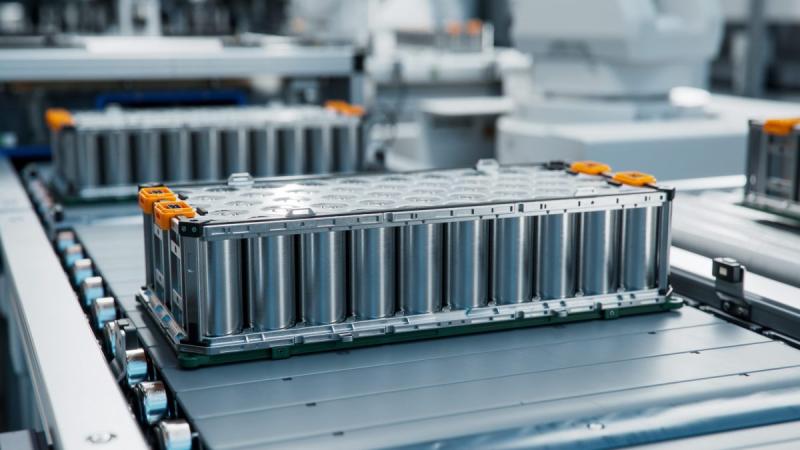
    This new silicon-anode battery delivers a capacity of up to 99.9 Whr while maintaining the same physical footprint as current high-end laptop batteries.

    Lenovo says it provides more than a 10% improvement in energy density over previous generations, translating to significantly longer runtime and higher sustained performance for demanding workloads like AI, creative apps, and professional software.

    The development was done in collaboration with Shanghai Jiao Tong University, a leading Chinese research institution known for advancements in materials science and energy storage.

    Silicon anodes have long been seen as the next frontier in battery tech because silicon can store up to 10 times more lithium ions than traditional graphite anodes.

    However, silicon expands and contracts during charging, causing cracking and degradation. The ED1000 overcomes this with new engineering that stabilizes the anode structure, enabling higher capacity and longer cycle life.

    Laptop and workstation users (from students and remote workers to engineers, creators, and researchers) often struggle with battery life during long sessions. A battery that packs more energy into the same space means all-day productivity without frequent plugging in, even under heavy loads.

    This is especially valuable in regions with unreliable power grids or limited access to outlets, including many parts of Africa, rural Asia, Latin America, and island nations.

    The technology also supports the shift to more energy-efficient computing. As AI and high-performance tasks become standard on mobile devices, better batteries reduce the need for constant charging, lower energy consumption, and extend device lifespan, all of which help reduce electronic waste and carbon footprint.

    Lenovo emphasized that the ED1000 is a proof of concept for now, not a product ready for immediate sale. It sets a new benchmark for what future laptops and workstations could achieve, and the company plans to integrate similar advancements into upcoming models.

    This announcement arrives as battery technology becomes a key battleground in the laptop market. With silicon anodes already appearing in some smartphones and EVs, Lenovo’s move brings the same high-density promise to professional computing devices.

    The ED1000 is part of Lenovo’s broader push to make AI-ready, high-performance machines more efficient and portable; a goal that could benefit users everywhere as computing demands continue to grow.

    Battery Lenovo Silicon-Anode
    Follow on Google News Follow on Flipboard
    Share. Facebook Twitter Pinterest LinkedIn Telegram Email Copy Link
    Adeyemi Muse

    Related Posts

    Chinese investment signals growing confidence in Egypt’s manufacturing sector

    June 9, 2026

    The AI startup taking on jet engines, chips, and Jeff Bezos’ new industrial lab

    June 8, 2026

    Egypt inaugurates a production project to generate as much as $500 million yearly

    June 8, 2026
    Leave A Reply Cancel Reply


    The reCAPTCHA verification period has expired. Please reload the page.

    Recent Posts

    • Cape Town to produce 38 electric buses for 2027 service
    • Siemens and HD Hyundai partner on digital shipyard model
    • PJM grid voltage spikes after AI data centers trigger power line fault
    • Engineers reshape power systems for dynamic conditions
    • Electra to create 2,000 Ohio manufacturing jobs with $850m plant
    Stay In Touch
    • Facebook
    • Twitter
    • Pinterest
    • Instagram
    • YouTube
    • Vimeo

    Subscribe to Updates

    Get the latest creative news from SmartMag about art & design.

    About Us
    About Us

    Makers is Nigeria’s premier digital platform dedicated to manufacturing related news and content across Africa.

    Facebook X (Twitter) Instagram LinkedIn
    News

    Chinese investment signals growing confidence in Egypt’s manufacturing sector

    June 9, 2026

    The AI startup taking on jet engines, chips, and Jeff Bezos’ new industrial lab

    June 8, 2026

    Egypt inaugurates a production project to generate as much as $500 million yearly

    June 8, 2026
    Features

    Zimbabwe turns lithium export ban into a $1 billion manufacturing push

    May 31, 20269 Views

    How Dakar’s advanced lab manufacturing systems helped decode a deadly virus in 24 hours

    May 23, 20267 Views

    Africa in sight as Ukraine looks for new manufacturing partners to help with its weapons system

    May 16, 20265 Views
    • Homepage
    • Engineering
    • Technology
    • Get In Touch
    • Privacy Policy
    • Cookie Policy
    Makers © 2026. All right reserved.

    Type above and press Enter to search. Press Esc to cancel.