


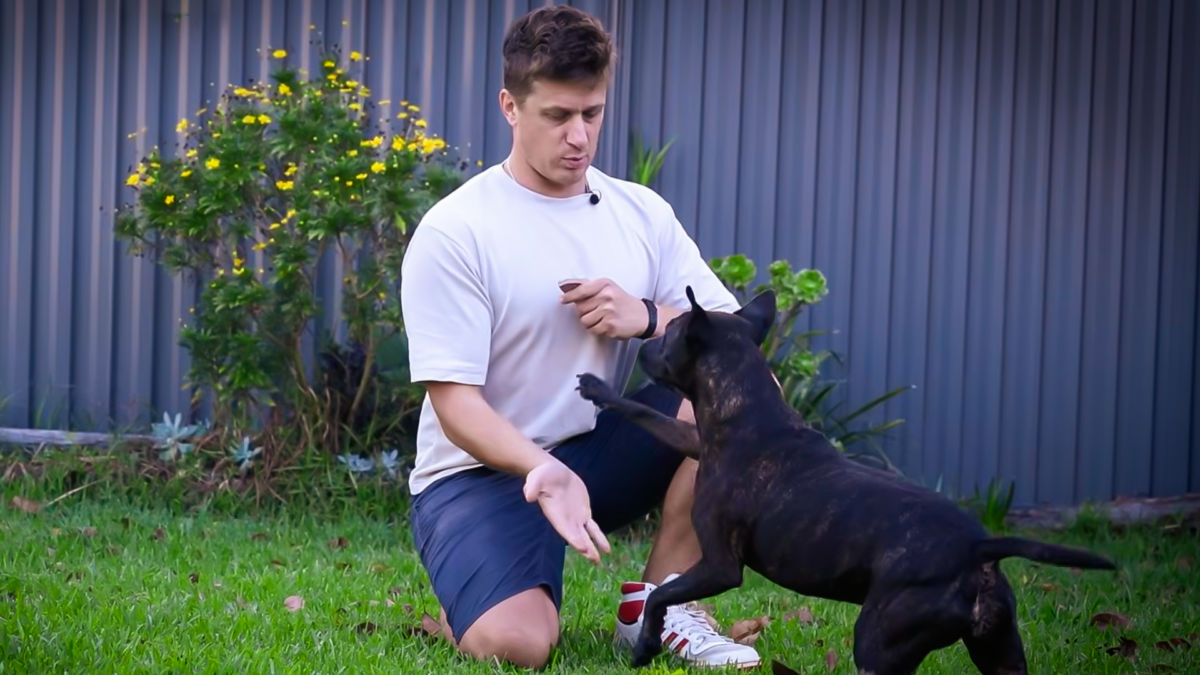
When an eight-year-old rescue dog named Rosie was diagnosed with aggressive mast cell cancer in 2024 and given only months to live, her owner refused to accept the prognosis.
Paul Conyngham, a Sydney-based tech entrepreneur and AI consultant with no formal biology training, turned to artificial intelligence tools and collaborated with top Australian scientists to design the world’s first personalized mRNA cancer vaccine specifically for a dog.
Rosie had large tumors on her hind leg that surgery and chemotherapy could not fully control. Determined to try everything, Conyngham used OpenAI’s ChatGPT to brainstorm possible treatments and explore immunotherapy options.
The chatbot suggested sequencing Rosie’s DNA and pointed him toward the University of New South Wales (UNSW) Ramaciotti Centre for Genomics. Conyngham spent about $3,000 to have both her healthy DNA and tumor DNA sequenced.
He then used Google DeepMind’s AlphaFold (an AI system that predicts protein structures) along with other tools to analyze gigabytes of genetic data.
This allowed him to identify the specific mutations driving Rosie’s cancer and pinpoint potential targets for treatment.
With a half-page formula derived from the AI analysis, he approached Professor Páll Thordarson, director of UNSW’s RNA Institute and a leading nanomedicine expert.
Thordarson’s team synthesized a custom mRNA vaccine based on Conyngham’s blueprint in less than two months.
Rosie received her first injection over the Christmas break in December 2025.
By mid-March 2026, the tennis ball-sized tumor on her leg had shrunk by roughly 75%, her coat improved, and her energy returned; she was even jumping fences to chase rabbits again.
The treatment has not eliminated the cancer, but it has significantly extended Rosie’s life and quality of life.
“This is the first time a personalized cancer vaccine has been designed for a dog,” Thordarson told The Australian.
He emphasized that the speed and success of the process show how mRNA technology (the same platform used in COVID-19 vaccines) can be rapidly customized for individual cases.
Conyngham, who has no biology degree but 17 years of experience in data science and machine learning, described the approach as “democratizing” personalized medicine: anyone with access to AI tools and sequencing could potentially contribute to treatment design.
The story has captured global attention because it demonstrates how accessible AI is becoming for non-experts to tackle complex medical problems.
While this is a single case and not a controlled clinical trial, it highlights the potential of personalized mRNA vaccines for veterinary and human oncology.
Companies like Moderna and Merck are already investing billions in similar approaches for human cancers, with promising early results in melanoma and pancreatic cancer.
For pet owners and families worldwide, where veterinary cancer care can be limited, this case offers hope that innovative tools and collaboration could one day make advanced treatments more reachable.
It also raises exciting questions about how AI and mRNA technology might accelerate personalized medicine for both animals and humans in the years ahead.
