


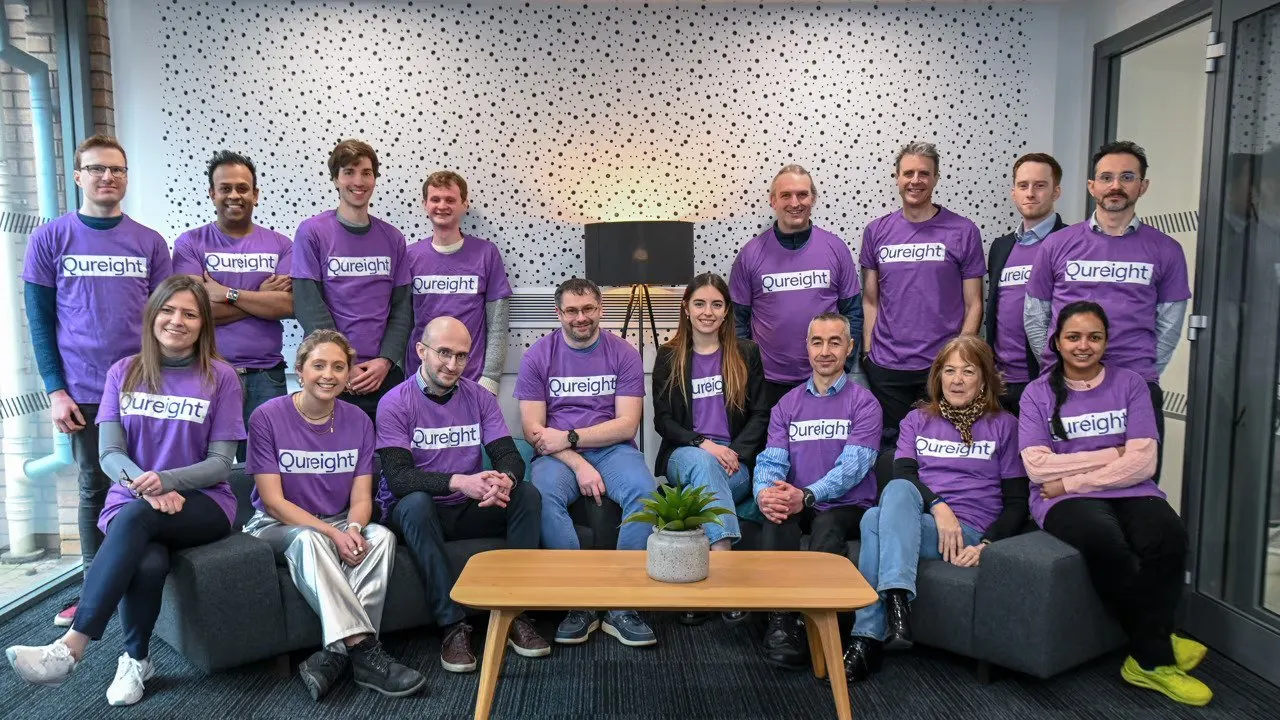
Qureight has secured $20 million in Series B funding, led by Molten Ventures, to advance its AI lung and heart clinical trials.
Co-founded by Dr. Muhunthan Thillai and Dr. Alessandro Ruggiero, the capital injection aims to accelerate drug development, establish a dedicated in-house AI imaging laboratory, and broaden its reach into new therapeutic areas. Long-standing investors, including Hargreave Hale AIM VCT, XTX Ventures, Guinness Ventures, Meltwind, and Ascension, also participated in the successful round.
Engineering precision in AI lung and heart clinical trials
Qureight tackles a persistent bottleneck in pharmaceutical research: the inherently subjective and often protracted interpretation of complex thoracic scans. Manual assessment can delay critical imaging decisions by up to two weeks, severely impeding clinical trial progress and extending drug development timelines.
The company’s engineering solution deploys an end-to-end, regulatory-compliant digital infrastructure built around advanced 3D deep learning algorithms. This system transforms unstructured CT and MRI data into objective, compartment-specific quantitative biomarkers, providing pharmaceutical companies with more precise, reproducible, and timely insights.
Accelerating imaging decisions with AI workflow
Qureight’s platform currently features two core products designed to enhance trial efficiency for its pharma clients. The first, Workflow, drastically reduces imaging decision times from approximately two weeks to just 48 hours.
This dramatic speed-up is achieved through automated image management and sophisticated processing algorithms that streamline data flow and analysis. It allows researchers to make quicker, data-driven choices, which is critical in fast-moving clinical studies.
The second product, AI Lung, employs advanced models of airways and blood vessels to quantitatively demonstrate a drug’s precise effect on disease progression. Engineers developed this tool to offer objective, measurable data on how treatments impact the physical structures of the lung.
By mapping and analysing these complex anatomical changes, AI Lung provides an unprecedented level of detail into therapeutic efficacy. This level of precision helps drug developers understand treatment mechanisms far better than traditional, qualitative assessments.
The foundational model: a paradigm shift in medical AI
Both Workflow and AI Lung are underpinned by Qureight’s proprietary general-purpose foundation model of the chest. This engineering marvel acts as a comprehensive digital twin of human thoracic anatomy, built from vast datasets of medical imaging.
The model enables the rapid development of highly specific deep learning modules for individual diseases in just one to two months. This contrasts sharply with the approximately one year it would take to build such specialised models from scratch, representing a significant acceleration in development.
The computational demands for developing and maintaining such a foundation model are substantial, requiring sophisticated data pipelines and high-performance computing infrastructure. This investment in core AI engineering is what allows Qureight to adapt quickly to new therapeutic areas without starting anew each time.
Strategic capital injection drives AI expansion
The recently secured $20 million Series B funding will underpin several pivotal strategic initiatives, directly impacting Qureight’s engineering and operational capacity. A significant portion is allocated for constructing a specialised in-house AI imaging laboratory.
This new facility will house and further develop Qureight’s proprietary 3D chest imaging foundation model, enabling continuous expansion of its 3D deep learning imaging portfolio. It represents a tangible investment in the physical and intellectual infrastructure required for advanced medical AI development.
The funding will also fuel the development of new disease models and broaden Qureight’s therapeutic focus beyond its existing expertise in fibrotic lung diseases. This expansion will cover critical areas such as asthma, pulmonary hypertension, bronchiectasis, and drug-induced lung toxicity.
Moreover, Qureight plans to intensify its efforts in lung cancer research, building on its existing capabilities. This strategic move positions the company to address a wider range of cardiothoracic conditions, promising improved outcomes for more patient populations.
Beyond technological enhancements, the investment will accelerate Qureight’s commercial expansion and scale its commercial team. This growth involves navigating the complex challenges of deploying advanced AI tools and integrating them into diverse pharmaceutical research workflows globally.
Industry collaborations and market trajectory
Qureight operates not in isolation but as an integral component of the pharmaceutical research ecosystem, actively collaborating with major industry players. The company currently conducts global clinical trials with pharmaceutical giants like AstraZeneca and Bristol Myers Squibb, alongside various biotech partners.
A notable three-year strategic partnership with AstraZeneca, for instance, deploys Qureight’s quantitative imaging analytics across AstraZeneca’s respiratory disease pipelines. This collaboration provides crucial insights into novel drug responses and optimises patient selection for trials.
Similarly, Qureight works with Vicore Pharma, accelerating Phase II trials for their drug C21, which targets idiopathic pulmonary fibrosis (IPF). These ongoing partnerships underscore the practical application and rigorous validation of Qureight’s AI platform in real-world clinical settings.
The global market for lung and heart clinical trials is projected to reach $27.5 billion by 2030, demonstrating a robust compound annual growth rate of 6.9%. Qureight is strategically positioning its advanced engineering solutions to capture a substantial share of this expanding and critical market segment.
While Oxford-based Brainomix, with its FDA-cleared e-Lung platform, serves as a European competitor, the companies target different niches. Brainomix primarily delivers diagnostic software to hospitals, whereas Qureight focuses on trial design and imaging contract research for pharmaceutical companies, highlighting distinct engineering applications within medical AI.
Molten Ventures’ backing and future engineering frontiers
Molten Ventures, a prominent European venture capital firm known for its investments in high-growth technology companies, spearheaded the Series B round. This significant backing signals strong confidence in Qureight’s technological prowess and its potential to redefine clinical research.
Dr. Inga Deakin, a Partner at Molten Ventures and now a Qureight board member, articulated the firm’s perspective. “Qureight demonstrates how AI, powered by real-world data, can accelerate discovery and transform clinical research,” she remarked, highlighting the tangible impact of AI in this field.
Molten Ventures typically invests in companies pushing technological boundaries, and its support for Qureight underscores the recognition of advanced medical AI as a critical engineering frontier. The firm’s due diligence likely focused on the robustness and scalability of Qureight’s deep learning architecture.
Looking ahead, Qureight plans to nearly double its headcount to 100 employees by December and open a second London office next month. This expansion indicates a significant scale-up of its engineering, research, and development teams, essential for tackling complex biological and computational challenges.
The company also aims to have asthma, lung cancer, and pulmonary hypertension trials running before the end of the year. This ambitious roadmap demonstrates Qureight’s commitment to extending the practical applications of its AI platform, directly impacting how new treatments for severe cardiothoracic diseases are brought to market.
This isn’t just about deploying software; it’s about continually engineering sophisticated tools that fundamentally change how drugs are developed and evaluated. For engineers and medical professionals, Qureight represents a compelling example of applied AI pushing the boundaries of medical science and industrial productivity.
