


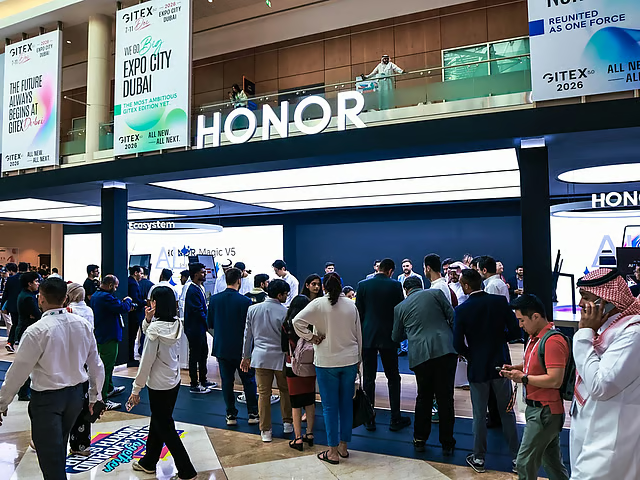
On April 19, 2026, things shifted swiftly for Egypt, looking to be a regional technology powerhouse, when top government officials had a discourse with HONOR, the international smartphone brand. That day unfolded quietly but carried weight far beyond the room.
Leading it was Raafat Hindy, Deputy Minister for Communications and IT infrastructure. Their talk wasn’t about small steps; it revolved around expanding how much HONOR builds inside Egypt, especially the factory in 10th of Ramadan City stood front and center.
Growth there could reshape more than just output numbers. Talks pointed toward deeper ties between national plans and private tech muscle. Nothing was signed then yet, momentum was built behind closed doors. Decisions made that afternoon may echo through the coming years. A single meeting, yes – but one charged with long-term possibility.
This push ties into the wider “Egypt Makes Electronics” effort, a countrywide plan led at the highest level to make Egypt a key exporter across the Middle East and Africa. Set on shipping 15 million homegrown gadgets by late 2026, teaming up with HONOR now stands central to building local strength in tech manufacturing.
Three Million Units Goal for Industrial Growth
Talks centered on moving HONOR’s site in Egypt past testing mode into full manufacturing use. Working alongside Etisal Trading, a homegrown supplier, output could hit three million phones each year. Far beyond basic assembly, the factory includes cutting-edge Surface mount Technology (SMT) systems, sending skilled knowledge from HONOR’s main base straight to Cairo. Instead of just putting parts together, real tech muscle lands here.
One thousand skilled positions could soon open for engineers and tech workers across Egypt. What stands out is how much talent might stay within the country because of this project. Instead of just assembling parts, the aim leans toward real manufacturing done locally.
Government support comes through tailored benefits meant to boost long-term operation. A push exists to hit 40% homegrown production inside these plants. According to Minister Hindy, true value shows when products carry an authentic national footprint. Labels saying “Made in Egypt” should reflect actual work performed on soil, not foreign-made goods relabeled later.
See here: New experimental drug appears to reverse osteoarthritis damage in animals
Export hub focused on Middle East and Africa
East meets west through Egypt’s location, now more than just sand and history. A factory rises (HONOR’s first beyond Chinese borders), taking root where continents almost touch. From here, phones move west into the Maghreb, south across Sub-Saharan regions, east toward Gulf cities.
The government agency overseeing tech progress, the Ministry of Communications and Information Technology (MCIT) sees this moment as feeding to bigger plans. Digital trade gains strength when companies plant flags like these. Nine billion dollars becomes possible, not by wishful thinking but grounded steps such as this one.
Now pushing hard into industry, Egypt finds itself in the middle of deep changes. A fresh analysis from Fitch Ratings places it at number 27 worldwide for how open it is to investors. Because of the new “Golden License,” which skips old layers of red tape, companies such as HONOR, Samsung, and Vivo have chosen to set up operations there. That single permit system has made all the difference so far.
Digilians Initiative Prepares Workforce
Beside shiny machines, people power production. Right now, Egypt shapes close to a million minds via its “Digilians” push, sharpening skills for advanced factory life. Team-ups between the Egyptian Military Academy and three dozen global tech players make certain firms such as HONOR find ready hands, versed in circuit logic, built-in electronics, plus smart-system fabrication – at a moment’s notice.
Later this year, when the HONOR plant opens its doors, it won’t merely start building devices. Instead, it becomes a test run for Egypt’s plan to power growth through smart tech, where invention happens locally and products travel globally. While machines hum on the floor, the real goal takes shape: shifting from buyers to builders. This site isn’t only about output; it reflects ambition. Because behind every circuit made here lies a broader shift – from using tools others design to shaping them ourselves.
Right now, HONOR’s move fits tightly into worldwide shipping patterns. With the smartphone industry expected to hit $1.12 trillion by 2035, companies keep hunting for balanced locations; places where wages stay small but internet speed stays fast. Instead of relying on traditional bases, they’re shifting toward zones seen as politically steady, yet still connected.
Right now, Egypt links 21 global undersea cables, handling nearly all digital flow from Asia to Europe (a spot where land routes and data lines cross). Setting up production there gives HONOR more than tariff relief; being close cuts delivery paths to Europe and Africa and letting updates roll out quicker when tastes shift, unlike brands stuck waiting weeks for ships from East Asia.
