


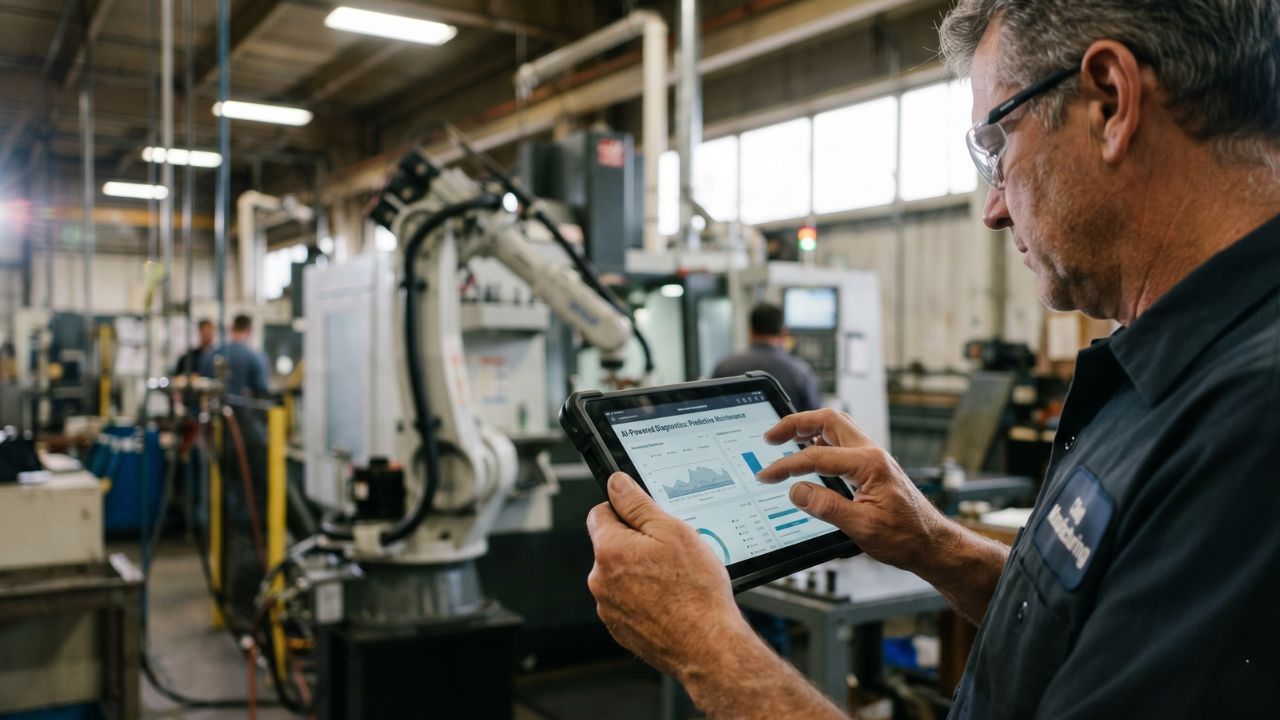
The U.S. manufacturing industry is facing a tough situation. Technology has never been more advanced, yet the number of workers who can use it is shrinking fast. The National Association of Manufacturers predicts almost 1.9 million jobs will go unfilled by 2033.
To tackle this, Google.org is giving $10 million to the Manufacturing Institute, aiming to boost human workers with AI skills instead of replacing them with machines.
There’s a gap that needs fixing: while most managers want workers skilled in AI, very few frontline employees have actually been trained. This program plans to quickly train 40,000 workers, helping them go from beginners to confident users of AI tools as reported by busenq.
The training is split into two main tracks, blending Google’s tech know-how with real-world factory experience. One track, AI 101, teaches workers to use data to improve production, showing how tools like language models and computer vision can keep tabs on the line and quality control.
The other track is for more advanced technicians, focusing on AI-powered Predictive Maintenance (PdM) to spot and fix machine problems before they cause costly downtime, which costs manufacturers billions each year.
A big part of this effort is growing the FAME (Federation for Advanced Manufacturing Education) program, known for hands-on apprenticeships. Google’s money will help start new FAME chapters in 15 more areas, adding the advanced AI courses.
There’s also support from the mikeroweWORKS Foundation, which offers scholarships, tying AI training to financial help and trade skills. This combo aims to make factory jobs more appealing and tech-savvy, especially to younger folks who usually avoid manufacturing careers.
The push for AI skills also stands on solid economic ground. Early surveys show workers who regularly use AI save about eight hours a week. In manufacturing, even small time savings can mean a big difference.
Plus, those trained in AI report better job security and higher pay compared to their peers without training. By offering this education for free, Google and the Manufacturing Institute hope to protect American manufacturing and encourage growth based on skilled local workers instead of relying on foreign labor.
Applications for partners and employers opened in April 2026. As the initial 40,000 workers start training, the whole industry will be watching to see if this hands-on approach can finally move beyond the debate over automation versus human jobs. The end goal is to build a “Factory of the Future” where skilled humans and smart machines work side by side.
