


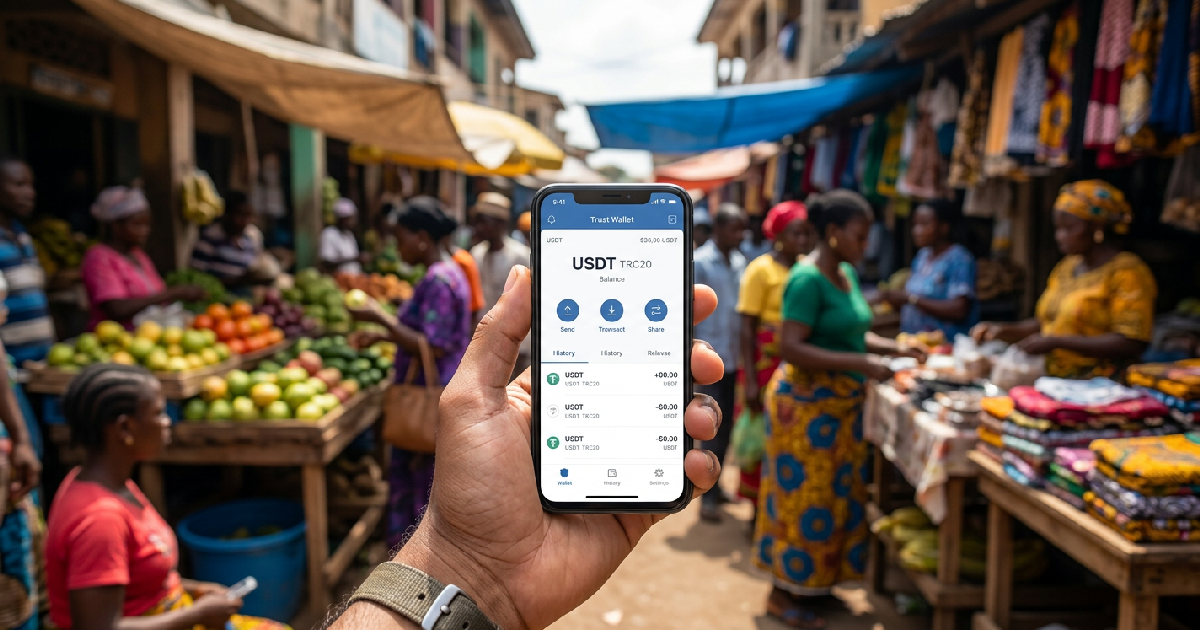
The rise of stablecoins has fundamentally altered the financial landscape across the African continent. As national currencies face volatility, USDT (Tether) has emerged as a preferred medium for cross-border trade, remittances, and savings. In particular, the TRC20 standard—running on the Tron network—has gained traction due to its lower transaction fees compared to some older Ethereum-based alternatives.
For users in Nigeria, Kenya, South Africa, and beyond, choosing the right digital gateway is no longer just about access; it is about security, speed, and local integration. While many global platforms exist, a selection of applications has distinguished itself by offering features that aim to cater to the unique infrastructure challenges of the region. The demand for these tools is driven by a broader shift toward decentralized finance. As Africa digital payments shift focus to infrastructure reliability, the efficiency of TRC20 wallets becomes a critical component for small business owners and freelancers who seek to avoid the high overhead of traditional banking.
Leading Platforms for USDT TRC20 Management
The current market offers a mix of centralized exchanges and self-custody wallets. Each serves a different profile of user, from the casual saver to the high-frequency trader who needs deep liquidity and peer-to-peer (P2P) options. Selecting the right fit depends largely on whether a user prioritizes ease of use or total control over their digital assets.
Binance and the Integration of P2P
Binance maintains a significant presence in the African crypto space. Its primary draw is a robust P2P marketplace that allows users to swap USDT using local payment methods like mobile money or bank transfers. The app’s integration with the Tron network is designed to be seamless, allowing for the generation of a TRC20 deposit address. For many, it serves as an all-in-one tool, though users must typically complete identity verification (KYC) to access the full suite of features. This shift toward digital identity and structured systems mirrors broader regional trends, such as how Enugu State builds smart schools to overhaul education, showcasing a move toward modernized, tech-driven infrastructure.
Trust Wallet for Self-Custody
For those who prefer the “not your keys, not your coins” philosophy, Trust Wallet is a widely used choice. As a non-custodial wallet, it gives users control over their private keys rather than leaving them in the hands of an exchange. It supports a vast array of tokens, and its handling of TRC20 USDT is reported to be particularly stable. It is often used as a bridge for individuals who want to interact with decentralized applications (dApps) without relying on a central authority.
TronLink: The Native Ecosystem Choice
Since TRC20 is a Tron-native standard, TronLink provides a specialized experience designed specifically for that ecosystem. It supports network features—such as “freezing” or “staking” TRX to potentially lower transaction costs—that generalist wallets might not carry. It is frequently cited as a preferred choice for users who are deeply embedded in Tron-based decentralized finance protocols and require direct network interaction.
Localized Solutions and Emerging Alternatives
Beyond the global giants, several platforms have carved out niches by focusing on the specific needs of African users, such as localized customer support and simplified on-boarding processes. Platforms like Yellow Card and Busha have gained visibility in various regions by focusing on the “on-ramp” and “off-ramp” experience, making it easier to move from a local fiat currency into USDT.
KuCoin and Bybit
KuCoin and Bybit are often noted for their fee structures and trading tools. Their popularity in certain African markets has grown because they frequently list a wide variety of emerging tokens. For a USDT TRC20 holder, these platforms provide liquidity, which helps ensure that trades can be executed without excessive slippage. Their mobile interfaces are generally optimized for performance, which is a vital feature in areas where mobile hardware varies significantly in processing power.
Exodus for User Interface Simplicity
Exodus is often recommended for those new to the space because of its polished, intuitive interface. While it is a multichain wallet, its support for the Tron network is reported to be reliable. It allows users to swap between different assets within the app, which is useful for someone who wants to move their USDT into other assets like Bitcoin without sending it back to a centralized exchange. However, users are encouraged to be mindful of internal exchange spreads that may apply.
Security and Future Outlook
As the adoption of USDT grows, so do the risks associated with digital asset management. Phishing attacks and fraudulent apps remain persistent threats in the digital space. Users are increasingly advised to look for wallets that offer multi-factor authentication (MFA) and to never share their recovery phrases with anyone. The emphasis on safety is a recurring theme across the tech sector; for instance, as Ijeoma Eti addresses AI infrastructure faults and security, the industry is reminded that technical robustness and user vigilance are the foundations of trust in any digital system.
Looking ahead, the reliance on the TRC20 standard is expected to remain high until competing networks can provide a similar combination of speed and cost-effectiveness. The growth of these applications represents a maturing ecosystem where African consumers are increasingly active participants in a decentralized economy, utilizing digital tools as a viable alternative to traditional financial systems.
