


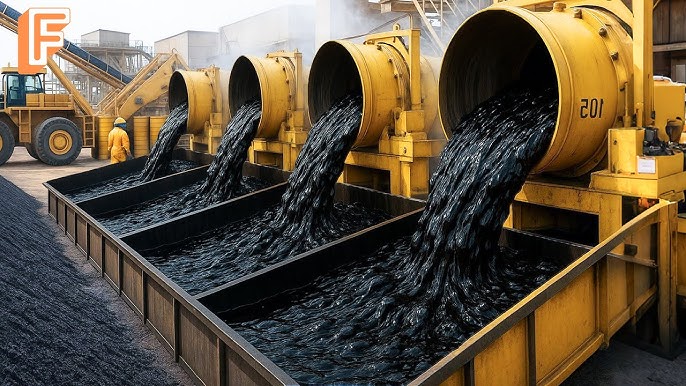
The Dangote Petroleum Refinery is proposing a substantial expansion that will greatly enhance its crude processing flexibility and boost output beyond present levels, as it positions itself to act more like a global trading and refining center.
The refinery, which has already reached its maximum installed capacity of 650,000 barrels per day, aims to handle up to 130 different crude grades in the future, up from roughly 40 now.
The move is part of a larger aim to reduce reliance on a limited crude supply base and create a more flexible, merchant-style refining operation.
According to the Chief Executive Officer of Dangote Petroleum Refinery, David Bird, the facility is designed to function like major refining hubs in Europe and Asia rather than a traditional refinery tied to a single domestic crude stream.
“This is not a traditional refinery in an oil-producing country that just sits at the end of a crude pipeline and processes one crude.
This is a fully merchant refining model that you could see in Europe or Asia,” the CEO was quoted as saying in the interview, obtained by the Punch.
The projected expansion will also raise overall refining capacity to around 1.4 million barrels per day, more than double the existing production.
At that level, the refinery is likely to rely more heavily on foreign oil, particularly Middle Eastern and US grades, in addition to Nigerian supply.
Industry estimates predict that the $10 billion expansion may lower operational costs to less than $2 per barrel as efficiency increases with scale.
See here: Dangote’s refinery slashes fuel import cost by a whopping $4 billion
The refinery is also including petrochemical and logistical infrastructure, such as storage terminals and future regional distribution networks, as part of its overall industrial plan.
Bird noted that the refinery has already proved export capabilities in products such as aviation fuel and can manufacture in large volumes using crude blending and imported feedstock components.
According to management, the long-term ambition is for Nigeria to become a net exporter of refined petroleum products while competing with established refining centers in Asia and the Middle East.
