


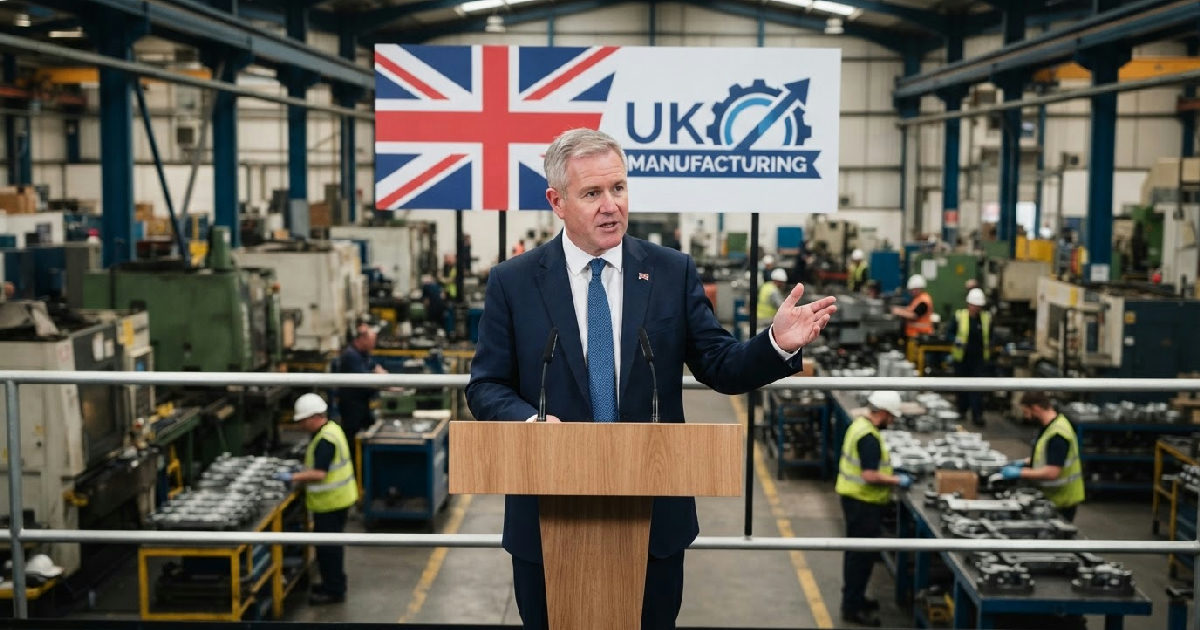
Chancellor John Healey faces significant pressure from UK manufacturers to use his upcoming October 28, 2026 Budget as a pivotal moment for industrial growth. Industry bodies are urging immediate action on soaring energy costs and policies designed to revitalise the country’s investment appeal, with a strong focus on manufacturing.
These measures are seen as critical for turning political reindustrialisation ambitions into tangible economic gains, particularly as manufacturers grapple with Europe’s highest industrial electricity prices.
chancellor budget manufacturing investment
The manufacturing sector contends that the UK has become notably less attractive for investment over the past five years. This sentiment, shared by 56% of manufacturers, largely stems from high operational costs and a challenging economic landscape. Make UK, the manufacturers’ organisation, insists the government must act now to encourage domestic expansion and technology adoption.
Manufacturers are clear about their priorities for the upcoming Budget. A significant 62% of firms considering a major expansion still want to prioritise growing their operations within the UK. However, the prevailing high industrial electricity prices in Europe, coupled with rising global tariffs and increased material costs, are draining confidence and limiting investment headroom.
This challenging environment has already impacted spending, with average investment in plant and machinery slipping from 6.8% to 6.4% of turnover. Research and development (R&D) investment has seen an even sharper decline, falling from 6.2% to 5.1%. These figures highlight a sector under strain, needing direct support to maintain its competitive edge.
Beyond energy costs, a supportive tax environment is increasingly crucial. Over a third of manufacturers, 35% specifically, now cite tax policy as a key influence on their investment decisions, a notable increase from 24% just last year. This reflects a broader demand for fiscal policies that actively encourage long-term industrial growth rather than simply managing immediate pressures.
Stephen Phipson CBE, Chief Executive of Make UK, emphasised this point directly. He stated that these elevated costs shape daily decisions on recruitment, production, and investment. If the government truly wants firms to choose Britain for their next factory or digital manufacturing AI investment, immediate and decisive action is essential to create a more favourable operating environment.
Targeted Relief for Industrial Growth
Paul McFadyen, Chairman of metals4U, has outlined four key areas for the Chancellor to address, starting with a construction stimulus. The construction sector is currently struggling due to rising costs and a subdued buyer market, particularly impacting new private investment such as housebuilding. Government investment in public infrastructure projects could provide a much-needed boost, supporting jobs and output.
Initiatives like ‘Your First Home’ aim to kickstart the new-build housing market and address the national housing shortage. However, housing developers must also increase their investment and resist inflationary pricing, which could undermine the scheme’s effectiveness by discouraging first-time buyers.
Targeted industrial relief is another critical demand. Manufacturers face pressures from global tariffs, material costs, and energy prices. Make UK specifically calls for electricity policy levies to be moved into general taxation, easing the burden on industrial users. They also advocate for expanding the British Industrial Competitiveness Scheme (BICS) to all manufacturers and accelerating its implementation.
The BICS is designed to reduce electricity costs by exempting eligible businesses from indirect costs of schemes like the Renewables Obligation, Feed-in Tariffs, and the Capacity Market. This could provide support worth up to £40 per MWh, potentially cutting electricity costs by up to 25% for qualifying businesses. The scheme’s expansion and earlier activation are crucial for broader industrial competitiveness.
Streamlining Operations and Bureaucracy
The Chancellor has also signalled his intent to cut approximately £800 million worth of red tape for businesses. This aims to provide manufacturers with “breathing space” by reducing the administrative burden. The government’s ambition is to slash regulatory administration by 25% by the end of this Parliament.
Specific measures include streamlined reporting requirements, projected to save £290 million. Easing duplicative reporting burdens for asset managers could free up another £105 million. Additionally, cutting red tape related to buying and selling homes is estimated to save businesses in the transaction chain some £116 million, contributing to overall economic efficiency.
Further relief comes from the extension of tariff suspensions on over 250 products, including chemicals, plastics, and automotive components. This measure is expected to save up to £155 million, providing a tangible benefit to UK Manufacturing PMI expansion. John Healey underscored this commitment, noting that British firms are “fed up with form-filling and pointless paperwork that eats into valuable time and money.”
Fostering Innovation and Skills Development
Investment in innovation and skills forms a cornerstone of future manufacturing competitiveness. Artificial intelligence (AI) has rapidly risen as a key investment priority, now identified by 41% of manufacturers, up from 27% last year. It now stands on par with plant and machinery, and labour and skills, reflecting a strategic shift towards advanced technologies.
Make UK is therefore urging the expansion of the Made Smarter scheme. This programme, launched in the North West in 2019 and now rolling out across the UK, offers grants, expert advice, and training to SME manufacturers for adopting new industrial technologies and fostering energy efficiency.
The scheme has already engaged over 2,500 manufacturers and is forecast to add £242 million to North West Gross Value Added.
The aviation industry, represented by trade body ADS, which encompasses 1,100 companies and 113,000 jobs, also calls for significant investment. They advocate for creating the “next generation” of air travel to attract investment into UK factories and generate skilled jobs within the aerospace supply chain. This focus on future-oriented industries is vital for sustained economic growth.
Kevin Craven, Chief Executive of ADS, stressed that decisions on where the next generation of commercial aircraft will be designed and built are being made currently. The UK must demonstrate its attractiveness for such investments, which could lead to more fuel-efficient aircraft and lower costs for consumers, alongside creating new tackle global skills and supply chain opportunities.
The Broader Economic Landscape
Healey’s Budget comes amidst a complex economic backdrop. Observers describe the UK economy as “resilient,” with Gross Domestic Product (GDP) growth recording the joint-fastest expansion in the G7 alongside the United States during the first half of 2026. This growth has seen particular strength in the information and communications technology sector, partly attributable to the increased rollout and adoption of AI technologies.
However, inflation has proven higher than initially forecast, especially following the escalation of the Israel/US conflict with Iran. This geopolitical tension continues to exert pressure on global energy markets and supply chains. Public finances also remain a concern, with government borrowing rising by more than expected last month to £24.5 billion, underscoring ongoing fiscal constraints.
The Office for Budget Responsibility (OBR) is set to publish revised forecasts on October 28, 2026, extending to 2031/32. These updated projections will fully account for the potential impacts of the escalated Middle East conflict, which the OBR acknowledges could have “very significant impacts on the global and UK economies.”
Against this backdrop, the Chancellor’s decisions on supporting manufacturing will be closely scrutinised for their potential to stabilise and stimulate industrial activity.
An Opportunity for Industrial Rejuvenation
Chancellor John Healey’s inaugural Budget on October 28, 2026, represents a critical juncture for UK manufacturing. The sector’s calls for reduced energy costs, a supportive tax regime, streamlined regulation, and investment in future technologies like AI and aerospace are not merely asks for relief, but strategic proposals for national economic resilience.
How Healey navigates these demands will largely determine the pace and scale of the UK’s industrial rejuvenation in the coming years.
