


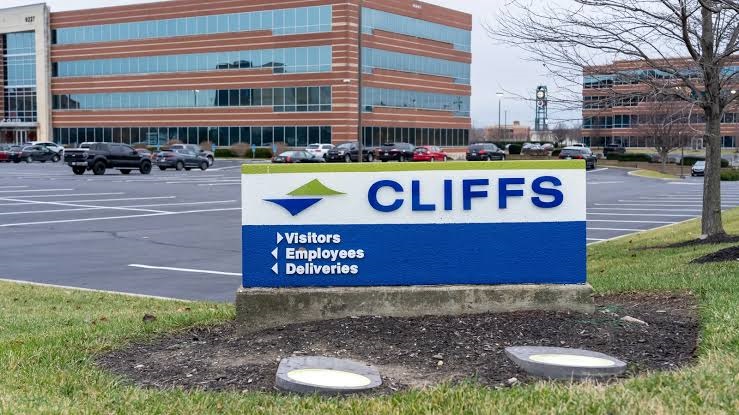
Cleveland-Cliffs Inc. is investing $1 billion to upgrade its Middletown operations, incorporating artificial intelligence and cogeneration technologies.
This four-year optimisation project involves a $500 million grant from the U.S. Department of Energy (DOE), matched by Cleveland-Cliffs’ own $500 million commitment. The decision, however, represents a departure from a 2024 plan that would have used the same federal funds to construct a direct-reduced-iron (DRI) plant, a proposal that environmental groups had previously supported.
Cleveland-Cliffs embraces AI and energy efficiency
The revised investment strategy centres on refurbishing and upgrading the existing blast furnace rather than replacing it. Construction is set to begin in the coming weeks, according to Cleveland-Cliffs. The company aims to improve operational reliability, productivity, energy efficiency, and cost competitiveness at the plant, which produces approximately 3 million tons of raw steel annually for the automotive sector.
A core component of the upgrade is the installation of an advanced cogeneration facility. This system will capture blast furnace gas to generate electricity and steam for on-site consumption. Cleveland-Cliffs says this will improve overall energy efficiency and reduce the plant’s reliance on externally supplied electricity.
The project also incorporates artificial intelligence to advance the plant’s operations. AI-powered control technologies will be deployed to optimise the upgraded furnace and its advanced materials-handling infrastructure. This aligns with a wider industry trend towards data-driven manufacturing processes.
The comprehensive blast furnace rebuild is slated for completion in the first quarter of 2030. Cleveland-Cliffs says the upgrade should help ensure that Middletown Works remains a premier steelmaking facility in North America for decades. The project is expected to create more than 1,500 jobs during the peak construction phase, drawing heavily on local union building trades and supporting employment in the region.
Pivoting from decarbonisation to domestic steelmaking
Overhauling the existing blast furnace represents a notable change from the original vision for the Middletown plant. In 2024, the Biden administration awarded Cleveland-Cliffs up to $500 million through its Industrial Demonstrations Program. That funding was initially designated for a project that would replace the furnace with a hydrogen-ready DRI plant and two electric melting furnaces.
That original project was expected to eliminate roughly 1 million tons of carbon emissions annually and generate production cost savings of $150 per net ton of liquid steel, or an estimated $450 million annually. Environmental groups considered it a crucial part of the Biden administration’s decarbonisation efforts.
However, market conditions have shifted, according to both Cleveland-Cliffs and the DOE. The Trump administration has rolled back federal decarbonisation projects and cancelled billions of dollars in clean energy grants. These developments, coupled with tariffs that have disrupted the global trade landscape and made U.S. steel prices more competitive, have created a favourable backdrop for domestic producers.
The Energy Department stated in a news release that “Cleveland-Cliffs determined that the business case for the original project scope no longer made sense given customers’ unwillingness to pay a ‘green premium’ for steel.” Working with the DOE, Cleveland-Cliffs developed the revised project, which focuses on upgrading the existing coal-fired blast furnace and capturing co-product blast-furnace gas.
Official support and environmental pushback
Vice President J.D. Vance and U.S. Secretary of Energy Christopher Wright attended the announcement in Middletown on 21 August 2026, highlighting the investment as a significant achievement for American manufacturing. Vice President Vance declared, “This is a great day to be a resident of Middletown, Ohio.” He added, “The future of America… is going to be built right here in Middletown, Ohio.”
Lourenco Goncalves, Cleveland-Cliffs’ Chairman and Chief Executive Officer, emphasised the project’s goal of keeping Middletown Works among the region’s leading steelmaking facilities. The focus is firmly on productivity, operational reliability, and cost competitiveness through advanced technologies and process controls.
This pivot has drawn criticism from environmental groups, who see it as a step backward. The Sierra Club, a California-based environmental organisation, pushed back against the revised project, claiming that Cleveland-Cliffs had abandoned its “clean steel” plans. The group argues that the funding will now prolong the life of a coal-fired facility.
Elena Saxonhouse, Sierra Club’s managing attorney, stated: “DOE is redirecting half a billion taxpayer dollars away from Congress’s intended purpose. Using this massive amount of money to reinvest in out-of-date production methods proven to cause harm to people and the environment is bad business and bad policy.” Critics warned the cogeneration plant would increase pollution and health risk impacts.
The Sierra Club also noted that the cogeneration plant is a standard-efficiency technology already in use at other Cleveland-Cliffs blast furnace operations, suggesting that it is not a significant environmental upgrade. The steelmaker is seeking an air permit for the cogeneration plant. Critics have warned that the facility could increase pollution and health risks, according to the Ohio newspaper Journal-News.
Furthermore, an analysis by environmental think tank Industrious Labs, drawing on U.S. Environmental Protection Agency data, places the Middletown facility among Ohio’s top 10 industrial sources of carbon monoxide, lead, and other pollutants.
The outlook for heavy industry
The Cleveland-Cliffs investment at Middletown Works highlights the competing challenges and priorities facing heavy industry. It highlights the tension between immediate economic stability and job preservation on the one hand, and the long-term imperative of industrial decarbonisation on the other.
The project shows that traditional manufacturing processes can be significantly modernised through AI and advanced control systems. These upgrades are expected to improve efficiency and productivity. Yet they also reinforce a carbon-intensive production model at a time when many global competitors are investing heavily in green steel and hydrogen-based technologies.
The Middletown project suggests that, while a cleaner industrial future remains the goal, the path to achieving it is complex. For now, factors such as economic viability, shifting political priorities, and customer demand for cost-effective steel appear to have taken precedence over a more ambitious technological transition towards lower emissions.
