


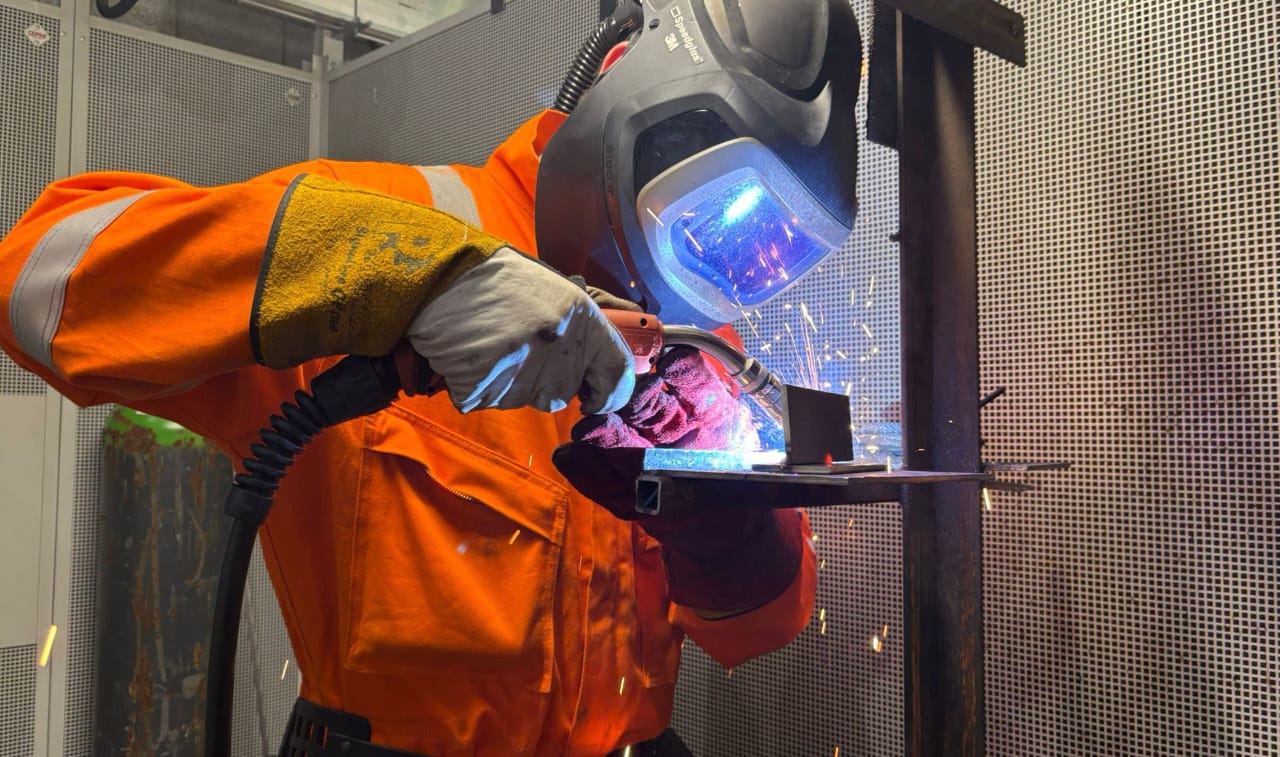
British Steel will welcome 70 new apprentices and graduates to its workforce in September 2026. This significant intake reinforces the company’s commitment to developing its future skills pipeline and comes just weeks after the UK Government nationalised the steelmaker to secure its long-term future.
The recruitment drive see 54 apprentices and 16 graduates join the company. It also marks the reintroduction of British Steel’s graduate recruitment programme, which is returning for the first time since 2022.
Bolstering engineering talent for British Steel apprentices
The new recruits will be deployed across British Steel’s core operations. Thirty-six apprentices will begin roles in electrical, mechanical, and structural engineering at the sprawling Scunthorpe site.
Further afield, 17 apprentices will take up similar positions across the company’s Northern mills, specifically in Teesside and Skinningrove. One apprentice will join the company’s research and development centre in Sheffield, underscoring British Steel’s focus on innovation.
Graduates will join various functions across the business. “Their roles span engineering, manufacturing, technical services, commercial operations, finance, and IT. This broad recruitment aims to develop specialist skills essential for the organisation’s continued operation and evolution.
Rigorous selection process reflects sector interest
The recruitment campaign proved highly competitive. British Steel received more than 1,000 applications when the roles were first advertised earlier this year.
Successful candidates navigated a multi-stage selection process, including assessment centres. British Steel HR Director Nick Ashton noted the exceptionally high standard of applicants.
Mr Ashton expressed enthusiasm for the new talent joining the business. He highlighted that these individuals would be pivotal to the company’s future, representing the next generation of engineers and technical specialists.
He added that these new hires would contribute significantly. They’ll work alongside experienced colleagues to manufacture the steel Britain requires, not just now but for decades to come, during what he described as an “exciting time for British Steel.”
Government backing for industrial renewal
Industry Minister Blair McDougall emphasised the critical nature of these appointments. He stated that “Reindustrialising Britain starts with steel,” positioning the new roles as fundamental to the UK steel industry’s future.
Mr McDougall stressed the need to build a new generation of skilled workers. This, he argued, is vital to securing British Steel’s long-term future and strengthening a foundational industry.
The government moved to safeguard British Steel because it views steelmaking as essential to the UK economy, national security, and industrial future. Mr McDougall sees today’s announcement as a positive indicator of a brighter outlook, creating new career opportunities for young people across the UK.
The role of skills in national security and economy
The strategic importance of steel cannot be overstated for the UK. Sustaining domestic steel production is crucial for national security, supporting critical infrastructure, and defence capabilities.
It also plays a fundamental role in the UK’s broader industrial strategy. The recruitment drive directly aligns with the government’s vision for a resilient and robust domestic manufacturing base.
The UK Government published its Steel Strategy on March 19, 2026. This plan aims to increase the market share of domestically produced steel to 50% of UK demand, up from the current 30%.
This ambitious strategy is backed by a substantial investment of up to £2.5 billion. The funding will come partly through the National Wealth Fund (NWF), highlighting the government’s commitment.
Investing in structured training and development
British Steel has also made recent investments in its training infrastructure. Earlier this year, the company reopened its apprentice training centre in Scunthorpe, reinforcing its commitment to skills development.
Apprentices based at Scunthorpe will undergo a structured training programme. Their first year will involve classroom-based learning with training provider CATCH, a specialist in the energy, process, and engineering sectors.
Following this initial period, Scunthorpe apprentices will gain three years of practical, on-site experience. This blend of theoretical knowledge and hands-on application ensures comprehensive skill acquisition.
Apprentices joining British Steel’s Teesside and Skinningrove operations will begin their studies with TTE. TTE, a leading technical training provider, partners with Middlesbrough College Group to deliver these programmes.
These apprentices will then transition into operational roles at their respective sites. This collaborative approach with established training institutions underscores a dedication to high-quality industrial education.
A future for British Steel under public ownership
This intake of new talent comes at a transformative time for British Steel. The UK Government officially brought the company into public ownership on July 16, 2026.
The nationalisation followed the Steel Industry (Nationalisation) Act 2026 receiving Royal Assent on July 15, 2026. This move was deemed necessary to protect domestic steel production and thousands of jobs.
For some time, British Steel, particularly its Scunthorpe site, faced significant financial challenges. Reports from 2025 indicated losses of around £700,000 per day at the facility.
The site is one of the few remaining in the UK capable of producing virgin steel and is a leading rail manufacturing site in Europe. Its continued operation is considered strategically vital.
“British Steel’s previous owner, Jingye Group, a Chinese firm, acquired the company in March 2020. The group had pledged a £1.2 billion investment, but negotiations with the UK government ultimately failed to secure a long-term private solution by April 2025.
The government intervened to prevent the closure of blast furnaces, which would have had devastating consequences for the industry and local communities. Jingye Group has since initiated consultation procedures under the UK-China Bilateral Investment Treaty of 1986, reserving its right to seek full compensation.
Allan Bell, who previously served as British Steel’s chief commercial and procurement officer, was appointed interim chief executive officer in April 2025. He leads the company through this transitional phase under public ownership.
Broader UK steel strategy aims
The nationalisation and subsequent investment in skills align with wider government goals. These include modernising the steel industry and transitioning towards low-carbon steelmaking.
The shift towards electric arc furnaces (EAFs) using recycled scrap steel is particularly emphasised. This is seen as critical for the UK to achieve its net-zero emissions targets.
Beyond domestic production targets, the UK government is also implementing trade measures. Effective July 1, 2026, steel import quotas were reduced by 60%, with a 50% tariff imposed on excess imports of products that can be manufactured domestically.
This combination of strategic investment, skills development, and trade policy aims to foster a more competitive and sustainable UK steel industry. It signifies a clear industrial policy direction from Westminster.
Implications for the workforce and supply chain
This significant investment in workforce development is a crucial step towards securing the long-term health of British Steel. It provides a vital pipeline of talent to replace retiring workers and introduce new expertise.
Community Assistant General Secretary Alasdair McDiarmid welcomed the announcement. He highlighted it as evidence of a brighter future for steel manufacturing in Scunthorpe and the wider region.
Mr McDiarmid noted that a strong steel industry is key to creating opportunities in areas that need them most. He pointed out that the industry has historically offered routes to skills training and well-paid jobs.
Companies like British Steel provide essential opportunities in regional communities. This allows workers to build careers without leaving their local communities or relocating away from their families, fostering stability and growth.
For the broader UK economy, a revitalised British Steel strengthens domestic supply chains. It reduces reliance on imports for crucial materials needed in construction, defence, and infrastructure projects.
The sustained presence of British Steel, supported by this new generation of skilled workers, is fundamental. It underpins confidence in the UK’s ability to produce essential industrial components.
Outlook for British Steel and UK manufacturing
Under public ownership, British Steel’s immediate focus remains on stabilisation and operational improvement. The long-term objective is to develop a commercially sustainable, low-carbon steelmaking operation.
The government is actively exploring opportunities for future private investment in the company. However, the current emphasis is on building foundational strength and capability.
This recruitment of apprentices and graduates represents more than simply filling vacancies. It represents a tangible commitment to the future of UK manufacturing and a belief in the sector’s long-term viability.
It underscores the idea that a strong industrial base, powered by skilled individuals, remains a cornerstone of national prosperity and resilience. The new cohort will be at the forefront of this industrial renewal.
