


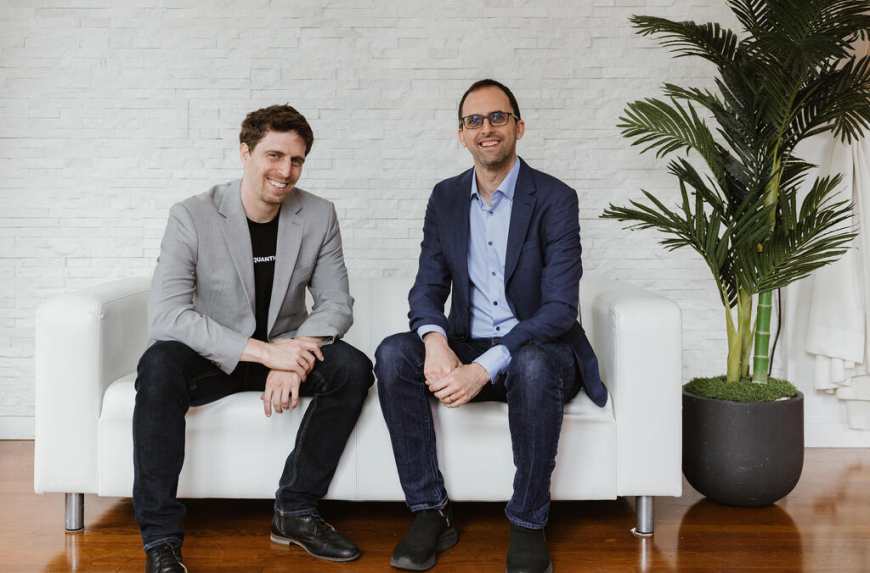
An AI-powered clinical trial engineering platform has secured $45 million in Series B funding to advance its technology.
Qumra Capital led this latest funding round, with participation from Sanofi Ventures, Pitango HealthTech, Bertelsmann, and Accenture Ventures. Such strategic backing highlights a growing industry consensus on AI’s potential to transform the traditionally slow and expensive process of pharmaceutical development.
Reengineering pharmaceutical development processes
Drug development remains a resource-intensive and high-risk undertaking for pharmaceutical companies worldwide. More than 90% of experimental drugs entering clinical trials ultimately fail. Critically, three-quarters of these failures stem from issues with efficacy or safety.
This translates into billions of dollars and years of research lost before a drug ever reaches patients. QuantHealth’s core innovation lies in its ability to simulate clinical trials virtually, well before any human patient enrols. The platform models how specific trial designs would perform by testing various protocols to identify efficacy and safety risks.
Predictive accuracy in clinical outcomes
QuantHealth’s AI platform empowers drugmakers to run thousands of simulated trials before committing significant capital or engaging patients. The system moves beyond historical benchmarks and subjective assumptions, instead modelling patient-level responses to treatments. This helps teams optimise their trial strategies.
CEO Orr Inbar emphasised that traditional drug development relies on “real-world iteration.” He noted QuantHealth is “fundamentally changing that model” by integrating vast biomedical, clinical, and epidemiological data. The platform processes insights from millions of patients, thousands of drugs, and numerous past trials.
Validating AI for trial design optimisation
The technology has already gained considerable traction. QuantHealth reports simulating over 600 clinical trials across 30 medical indications, achieving a predictive accuracy of up to 90%. This precision offers pharmaceutical firms a clearer picture of potential outcomes much earlier.
The company states its AI can predict Phase 2 trial outcomes with 88% accuracy, a significant improvement over the industry average of 28.9%. For Phase 3 outcomes, the platform boasts 83.2% accuracy, far exceeding the traditional 57.8% success rate. This capability is particularly valuable in designing clinical trials for conditions such as lung and heart disease.
Currently, 12 of the world’s top 20 pharmaceutical companies utilise QuantHealth’s platform to design trials and mitigate risk. In one notable instance, a top-10 pharmaceutical company leveraged QuantHealth’s simulation to redesign a Phase II trial for an autoimmune therapy. This led to a 15-month reduction in enrolment time, alongside projected cost savings of $31.4 million.
Funding fuels AI model and coverage expansion
The fresh capital from this Series B round will primarily fund three strategic areas of QuantHealth’s expansion. Firstly, the company plans to develop next-generation AI models and significantly increase its datasets. This aims to make simulations even sharper and more reliable.
Secondly, QuantHealth intends to broaden its disease coverage from 30 to more than 40 indications. The expansion will focus specifically on critical areas such as oncology, cardiometabolic, and inflammatory diseases. This move extends the platform’s utility to a wider array of drug development programmes.
Finally, the company will extend its platform beyond trial design to encompass the full drug development lifecycle, including commercial planning. This integrated approach aims to provide comprehensive support from the laboratory bench through to product launch. QuantHealth also plans to grow its team of 85 people in Tel Aviv and New York.
The changing engineering landscape of pharma R&D
The pharmaceutical industry faces immense pressure to innovate and deliver new therapies more efficiently. Drug development is a protracted process, often taking 10 to 15 years, with costs approaching $1 billion for a single drug. The return on investment for pharmaceutical research and development has declined steadily, reaching just 1.2% in 2022.
This challenging economic environment makes predictive technologies, like those offered by QuantHealth, increasingly essential. The global market for AI in clinical trials was valued at $2.34 billion in 2025. It’s projected to grow at a compound annual growth rate of 14% from 2026 to 2035, potentially reaching $8.67 billion. The growing adoption of enterprise AI platforms reflects a broader trend toward predictive technologies across industries.
The integration of predictive technologies is no longer a luxury but a core infrastructure component for pharmaceutical companies. This represents a significant shift in pharmaceutical engineering, moving from iterative testing to predictive modelling. Broader industrial applications, including industrial robotics automation, also show this trend.
Future challenges for medical AI engineering
While the prospects are considerable, the path forward for AI in healthcare, particularly in clinical trial simulation, isn’t without its hurdles. The primary challenge for companies like QuantHealth is continuously proving that their simulations accurately match real-world outcomes. This validation must extend across diverse diseases, patient populations, and regulatory environments.
The industry demands rigorous verification to build lasting trust, especially when dealing with life-saving medications. QuantHealth’s $45 million funding round demonstrates strong investor confidence in its ability to meet these challenges. The engineering behind these AI models could serve as a blueprint for improving predictive decision-making across multiple industries while accelerating the delivery of new therapies to patients.
