


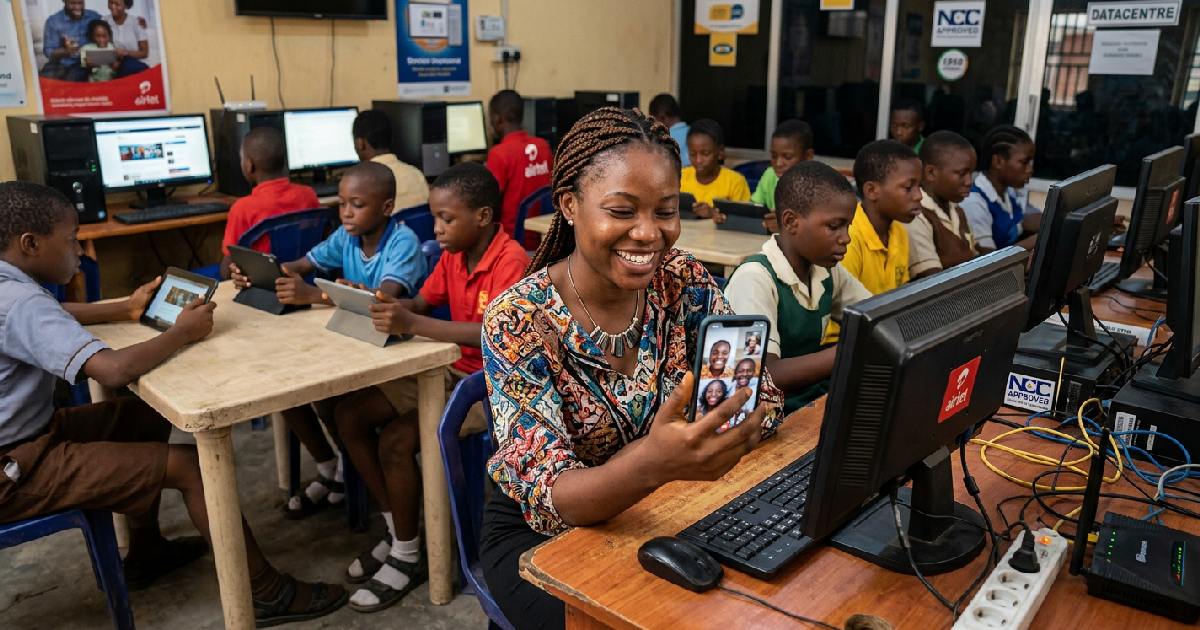
Nigeria’s digital landscape is undergoing a significant transformation as nationwide data consumption is reportedly reaching record-breaking levels. Reports from industry observers and early data patterns suggest that the country’s appetite for bandwidth is climbing toward a massive scale, moving far beyond previous annual averages. This surge is likely driven by a combination of booming social media engagement, the normalization of remote work, and the expansion of 4G and 5G services in major metropolitan areas.
The shift represents a move away from traditional telecommunications, where voice calls once served as the primary revenue source for service providers. Today, high-speed connectivity is the backbone of the economy. Major mobile operators such as MTN, Airtel, and Globacom have been forced to prioritize large-scale network upgrades to support a population that is increasingly reliant on digital platforms for their daily livelihoods, from trade to entertainment.
But the story isn’t just about the volume of traffic; it’s about the technology enabling it. The gradual transition from 3G to LTE and 5G has changed how Nigerians consume media, allowing for a shift toward high-definition video and cloud-based services. This evolution is putting new levels of pressure on the nation’s digital infrastructure, requiring constant maintenance and oversight from both the private sector and regulators.
Infrastructure Resilience Meets Growing Demand
The aggressive expansion of fiber optic networks and the deployment of new base stations are central to this growth. Telecommunications firms are reportedly committing substantial capital to ensure that the digital divide between urban centers and rural communities continues to narrow. This investment is crucial for creating a network that can handle high volumes of traffic without the connectivity failures that were common in previous years.
Digital finance is a major contributor to this trend. As Africa digital payments focus on infrastructure reliability, more Nigerians are transitioning their personal and business finances to mobile platforms. The move toward digital transactions has turned the smartphone into an essential tool for economic survival, making data access a non-negotiable expense for many households.
Operating in this environment remains complex. Analysts suggest that maintaining such vast infrastructure in a volatile economic climate presents a persistent challenge. The high cost of fueling base stations and the impact of currency fluctuations on imported hardware mean that the price of data remains a sensitive topic for most consumers. Whether increasing volume will eventually lead to lower consumer costs remains to be seen.
The Rise of Local Content and Educational Growth
The Nigerian internet experience is increasingly defined by local participation in the global creator economy. The popularity of local creators on video-sharing platforms has created a cycle where more content drives higher engagement, which then encourages more users to start producing their own media. This localized traffic is a major factor in the consistent rise of upload and download activity.
Technology is also being integrated into the public sector at a faster rate. Initiatives like the Enugu smart schools education project show how regional governments are attempting to standardize high-speed internet in the classroom. When thousands of students move from physical textbooks to digital portals, the national baseline for data usage is fundamentally altered.
Sector Breakdown of Digital Engagement
Understanding which industries are pulling the most weight in the digital economy helps explain the current trajectory. While hard figures fluctuate, industry reporting suggests that several key sectors are responsible for the vast majority of current network traffic.
| Category | Primary Usage Driver | Reported Growth Trend |
|---|---|---|
| Entertainment | Short-form Video & Social Apps | Consistently High |
| Finance | Mobile Banking & Payments | Stable Expansion |
| Education | E-Learning & Digital Literacy | Rising Rapidly |
| Corporate | Remote Teams & Cloud Storage | Steady Increase |
Entertainment continues to be the most visible driver of data consumption, but the “Corporate” and “Education” sectors are seeing more sophisticated usage patterns. Businesses are reportedly moving more of their operations to cloud environments to compete internationally, which requires more stable and symmetrical internet connections than simple web browsing.
Future Trends in Connectivity and Social Impact
Looking forward, the focus of the industry is expected to center on deepening 5G penetration. While 4G currently handles the majority of the country’s traffic, 5G technology is seen as the catalyst for more advanced applications like industrial automation and the Internet of Things. These technologies depend on the low latency that only the latest standard of wireless communication can provide.
There are also ongoing efforts to make digital tools more accessible to a broader range of the population. This includes the availability of more affordable hardware and specialized data bundles. As smartphone technology transforms health and recovery services in the region, the actual human impact of this data surge becomes clearer. Connectivity is no longer just about entertainment; it is becoming a tool for healthcare and social progress.
The path to this digital milestone has been paved by a decade of steady investment. As Nigeria cements its status as a leader in the African tech space, the current focus is shifting toward how to keep this data secure. This includes discussions on localizing data centers and ensuring that the country’s digital backbone remains resilient against global economic shifts.
Frequently Asked Questions
What is a terabyte in practical terms?
A terabyte (TB) is a massive unit of digital information. On a national scale, using hundreds of thousands or even a million terabytes is equivalent to a significant portion of the population engaging in high-bandwidth activities like video streaming or large file transfers on a near-constant basis.
What drives the high data usage in Nigeria?
The primary drivers are the mass adoption of social media, the digitalization of the banking sector, and a young demographic that favors streaming video over traditional media formats like radio or terrestrial television.
Is the cost of data likely to decrease soon?
While increased usage typically allows for economies of scale, Nigerian operators face high operational costs, specifically related to energy and logistics. Any future price adjustments will likely be influenced by the stability of the broader economy and the cost of maintaining physical infrastructure.
