


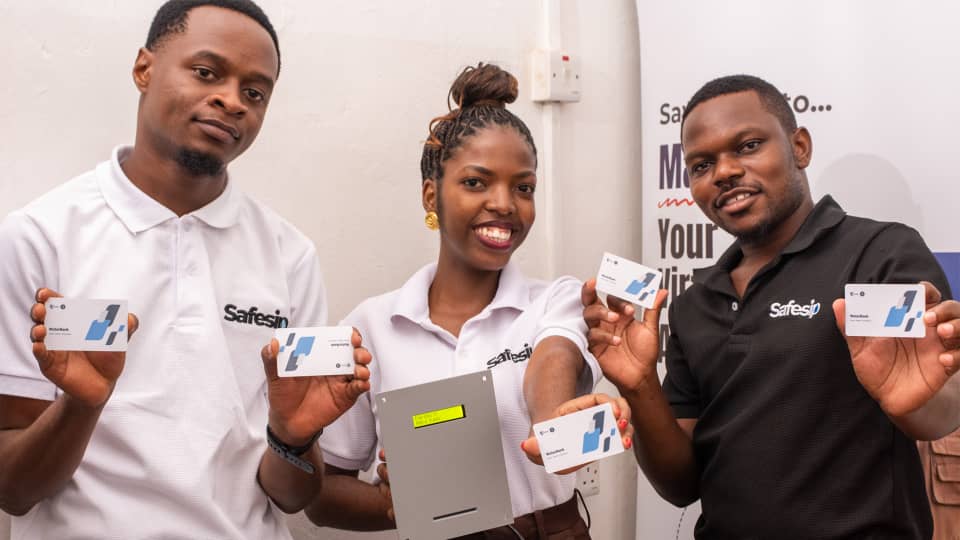
Constantine Edward and his brother Herman Edward, alongside Faith Kuya, have transformed their personal experience with contaminated water into SafeSip, a Tanzanian startup engineering autonomous water utilities. The company is actively building a digital water infrastructure designed to provide clean water as a self-sustaining service, rather than relying on traditional aid models.
Their initiative directly challenges the common perception that Africa faces a water scarcity problem. Instead, the brothers assert that the continent primarily grapples with an infrastructure deficit. This perspective underpins SafeSip’s commercial approach, aiming to create lasting solutions through viable business operations in underserved communities across Tanzania.
Engineering a self-sustaining water network
SafeSip’s core innovation lies in its “water bank” system, a Kiosk 2.0 concept that operates autonomously, twenty-four hours a day, seven days a week. Unlike conventional government-built boreholes and manual pumps that often fail within a few years due to lack of maintenance, SafeSip integrates artificial intelligence (AI) to ensure continuous operation and predictive care.
The AI monitors the system for potential issues, such as clogging filters, and dispatches alerts to local technicians before a breakdown occurs. This proactive approach significantly extends the operational lifespan of the water points and minimises service interruptions. The application of artificial intelligence in systems like SafeSip’s water banks demonstrates a growing trend of AI-powered engineering solutions to manage complex physical assets.
The genesis of SafeSip’s approach
The Edward brothers’ conviction formed early in life, drinking from contaminated rivers in rural Tanzania. A subsequent university internship in Dodoma, where they saw children suffering from preventable waterborne diseases, solidified their resolve. These experiences led them to question the effectiveness of existing water provision strategies.
Their journey towards SafeSip wasn’t linear. In 2023, they secured a $10,000 grant from Social Shifters for an initial idea involving water filtration and straws. This early financial backing validated their concept and shifted their discussions from abstract problem-solving to concrete business planning.
Redefining water access: business over charity
SafeSip deliberately positions itself as an autonomous water utility, a stark contrast to typical aid-funded development projects. Constantine Edward argues that aid models often fail because the funding for maintenance eventually runs out, leading to system collapse and a return to water scarcity. SafeSip’s revenue-generating model ensures funds for ongoing upkeep, making it inherently more sustainable.
This business-centric philosophy extends to their operational decisions, including pricing. The co-founders engaged in extensive debate over the cost of a 20-litre jerrycan. Some argued for 1,000 Tanzanian shillings for a premium product, while others advocated for 500 shillings to ensure accessibility.
They ultimately settled on 250 shillings for water collected directly from the water bank and 500 shillings for delivered water, balancing revenue generation with community affordability.
Overcoming initial skepticism and market understanding
Despite their innovative approach, SafeSip faced challenges in community adoption. Early on, a poster with a QR code and the slogan “Get clean water, quick quick” failed to resonate with residents. A man on a bicycle explained that the branding suggested a luxury service, not one for everyday use.
This feedback proved crucial. SafeSip subsequently redesigned its branding, making the water banks clearly identifiable and establishing points for purchasing access cards. Now, residents approach the water banks ready to pay, having understood the service is for them.
The human cost and ripple effects of clean water
Building SafeSip has demanded significant personal sacrifice from the brothers. Constantine Edward notes his relationships have suffered due to constant work, often losing touch with family for weeks. Herman Edward initially faced family disappointment for foregoing a Master’s degree and a family campaign to pursue his entrepreneurial dream.
But the tangible benefits of their work extend far beyond their personal lives. Accessible, clean water creates a cascade of positive ripple effects within communities. Families save money previously spent on treating waterborne diseases, and the time once dedicated to walking long distances for water is now free for productive activities.
Impact on local economies and social well-being
Constantine Edward highlights how SafeSip’s presence stimulates local economic activity. People buy water at 250 shillings and resell it for 500, creating small entrepreneurial ventures. The availability of reliable water infrastructure also enables new businesses, such as car washes.
Herman Edward points to the reduction in domestic conflicts caused by the arduous task of water collection. More importantly, children can remain in school, no longer needing to wake up before dawn to fetch water for their households. These profound social improvements demonstrate the far-reaching impact of robust engineering solutions.
Challenges and investor perception in African tech
SafeSip operates in a challenging investment landscape where many venture capitalists disproportionately favour software solutions. Herman Edward observes that while software has its place, particularly in the control systems of their water banks, physical infrastructure remains critical in their market. He suggests that investors often misunderstand the nuances of Africa’s biggest opportunities, where tangible assets and local adaptation are key.
Constantine Edward echoes this sentiment, noting a pervasive investor scepticism regarding the scalability of African businesses. There’s a misconception that continent-changing companies cannot be built from the ground up on the continent itself. SafeSip aims to disprove this, demonstrating that scalable, impactful ventures require both physical and digital integration.
Physical infrastructure meets digital intelligence
SafeSip’s model cleverly combines the physical with the digital. While the water banks are solid infrastructure, they are deeply integrated with a software layer that utilises the internet and control units. Community members receive smart cards that, when tapped, not only dispense water but also collect vital usage data.
This integrated approach allows SafeSip to optimise distribution, understand consumption patterns, and further refine its maintenance schedules. It’s a testament to the fact that while mobile apps might have seen a surge, the truly sustainable and scalable solutions in Africa often require a dual focus on robust hardware and intelligent software management.
SafeSip’s long-term vision for African water access
Looking ahead, the Edward brothers envision SafeSip becoming Africa’s largest rural water utility. Their definition of success, however, transcends typical financial metrics. For Constantine Edward, it’s fundamentally about giving millions access to safe, clean water, an achievement he hopes will be his lasting legacy.
Herman Edward concurs, stressing that the business exists to drive impact on a fundamental community problem, with sustainability built in through its commercial model.
This dedication to solving a foundational problem through engineering and a viable business model marks SafeSip as a critical player in Africa’s development narrative. Their work illustrates that addressing complex challenges like water scarcity requires not just goodwill, but intelligent, durable infrastructure designed for longevity and local economic empowerment.
