


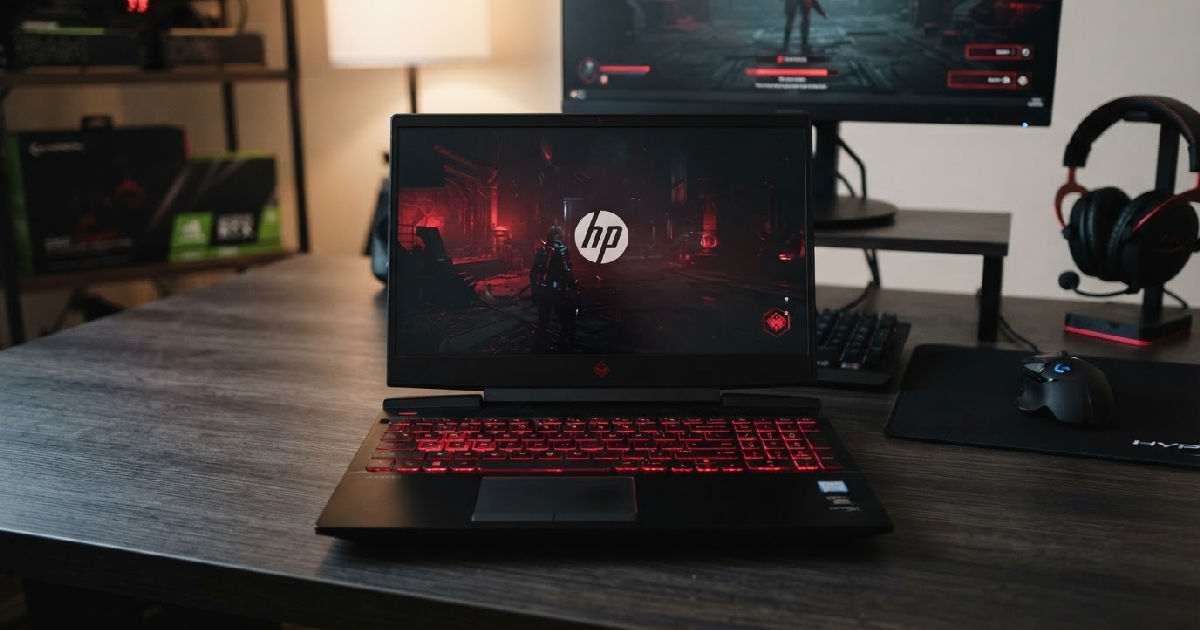
HP’s new HyperX Omen 15 gaming laptop, first unveiled at CES and extensively reviewed around May, July, and August 2026, carries a starting price of $1,200. This positions it well above its predecessor, the HP Victus 15, which was once a bestselling model known for its budget-friendly entry point of around $800.
The significantly higher cost reflects a substantial shift in the entry-level gaming hardware market. Industry-wide factors, including what has been termed “RAMageddon”—a period of memory shortages—have demonstrably pushed prices upwards across the technology sector.
Gaming laptop prices climb: the impact of RAMageddon
The $1,200 starting price for the HP HyperX Omen 15 establishes a new baseline for what consumers can expect to pay for a current-generation gaming machine. This represents a considerable leap from the HP Victus 15, which once offered an accessible gateway into PC gaming for approximately $800, often available for less on sale.
This upward price trend isn’t exclusive to HP products. Modern equivalents from other manufacturers, featuring advanced chips like Intel Core Ultra Series 3 “Panther Lake” processors, now routinely start at $1,999.99. This demonstrates how widespread the increase in hardware costs has become across the industry.
Market dynamics and component availability
Memory shortages, particularly affecting DDR5 RAM, have been a primary driver behind this pricing trend. The scarcity and rising cost of essential components, coupled with sustained high demand for advanced hardware in both industrial and consumer electronics, pressure manufacturers to adjust their pricing.
This situation directly affects the accessibility of gaming laptops, fundamentally redefining what once constituted an entry-level investment. Consumers now face higher costs for capable hardware, a clear indication of the re-calibration within the budget gaming segment. Manufacturers, meanwhile, must carefully navigate these market pressures, striving to maintain value and performance. AI for supply chains is increasingly important for companies seeking to mitigate such volatility.
HP HyperX Omen 15: key specifications and build
HP intends for the HyperX Omen 15 to occupy a distinct segment between its high-end Omen series and the more accessible Victus lineup. The laptop features a range of CPU options, including the Intel Core i7-14650HX with 16 cores and 24 threads, Intel Core Ultra Series 3 “Panther Lake,” Intel Core Ultra 7, and AMD Ryzen AI processors.
For graphics processing, configurations include NVIDIA GeForce RTX 5050 Laptop GPUs with 8GB GDDR7 VRAM and a 115W TGP, as well as options for NVIDIA GeForce RTX 5060 Laptop GPU (8GB) or NVIDIA GeForce RTX 5070 Laptop GPU.
Memory configurations range from 16GB RAM up to 32GB DDR5 RAM, with specific options like 24GB DDR5 RAM at 5600 MHz. For storage, it consistently offers a 1TB PCIe Gen 4 NVMe SSD.
Display and cooling system enhancements
The HyperX Omen 15 offers a variety of display options, representing notable upgrades over its predecessor. These include a 15.3-inch WQXGA (1600p) panel with a 180Hz refresh rate and 540 Nits brightness, boasting 100% sRGB colour accuracy.
Further options extend to a 120Hz OLED display, an 1800p OLED 120Hz display, or a 1600p IPS 180Hz panel, all featuring a 16:10 aspect ratio and a 1080p webcam.
To manage thermal output during intensive tasks, the laptop employs OMEN Tempest Cooling Pro, a sophisticated triple-fan system equipped with automated self-cleaning. The device’s exterior presents an abyssal black finish with a matte texture, distinguished by HyperX branding on the top plate. Its sturdy hinges allow for one-handed opening, and the build exhibits minimal top lid and keyboard flex.
Performance considerations and market criticisms
While capable of playing 2026’s latest games, the NVIDIA GeForce RTX 5050 Laptop GPU is positioned as an entry-level card primarily suited for 1080p gaming. Running games at the laptop’s higher native 1600p resolution can significantly impact frame rates, often necessitating lower graphics settings for smooth gameplay.
When the RTX 5050 is pushed to its operational limits, particularly when driving a 1600p screen, the cooling fans can become noticeably loud. This is a noted criticism, alongside criticism of its limited poor port selection.
Furthermore, the laptop lacks several gaming essentials like a hardware MUX Switch, NVIDIA G-Sync, and Advanced Optimus, which some users might expect in this price bracket.Although NVIDIA continues to expand its AI ecosystem through technologies such as PhysicsNeMo, the HyperX Omen 15 remains focused on mainstream gaming performance rather than AI-centric capabilities.
The OMEN Gaming Hub software provides a suite of performance controls, including eco, balanced, performance, and unleash modes, as well as fan cleaning and GPU overclocking options. It also manages RGB lighting. However, reviewers have observed the presence of advertisements within this companion application, a minor irritant for some users.
Value proposition and strategic positioning
HP’s strategy for the HyperX Omen 15 is to offer a more premium experience than the Victus, including a better screen, enhanced build quality, and improved RGB lighting. However, some reviewers have described the laptop as a “price-to-performance trap,” arguing that its current pricing translates to paying “5060 money for a 50/50 performance.”
This perspective gains traction when considering alternatives. For instance, an Omen 16 with an RTX 5060 GPU and a slightly larger, albeit dimmer, screen was available for just $100 more than the Omen 15. Such pricing overlaps complicate the HyperX Omen 15’s value proposition for discerning buyers seeking optimal performance for their investment.
Broader industry investments in AI infrastructure may also influence future component demand, pricing, and supply across the PC hardware market.
The evolving landscape of gaming technology
The launch of the HP HyperX Omen 15 at a $1,200 starting price clearly signals a significant re-alignment in the gaming laptop market. The era of readily available $800 entry-level gaming laptops offering current-generation performance has largely come to an end, compelling new buyers into a higher expenditure bracket for contemporary hardware.
This new, elevated baseline is likely to persist as long as broader component shortages, such as “RAMageddon,” continue to impact pricing across the wider technology sector. Both consumers and manufacturers must now navigate the challenge of balancing capable specifications with build quality and desirable features within these evolving economic realities, defining a new era for entry-level gaming hardware.
